


Quick Summary:
- “Or similar” guarantees a category, not a specific make or model.
- Expect similar seats and luggage space, but features can differ.
- Choose by passengers, bags, transmission, and key inclusions, not photos.
- If the car is not equivalent, ask for replacement or upgrade.
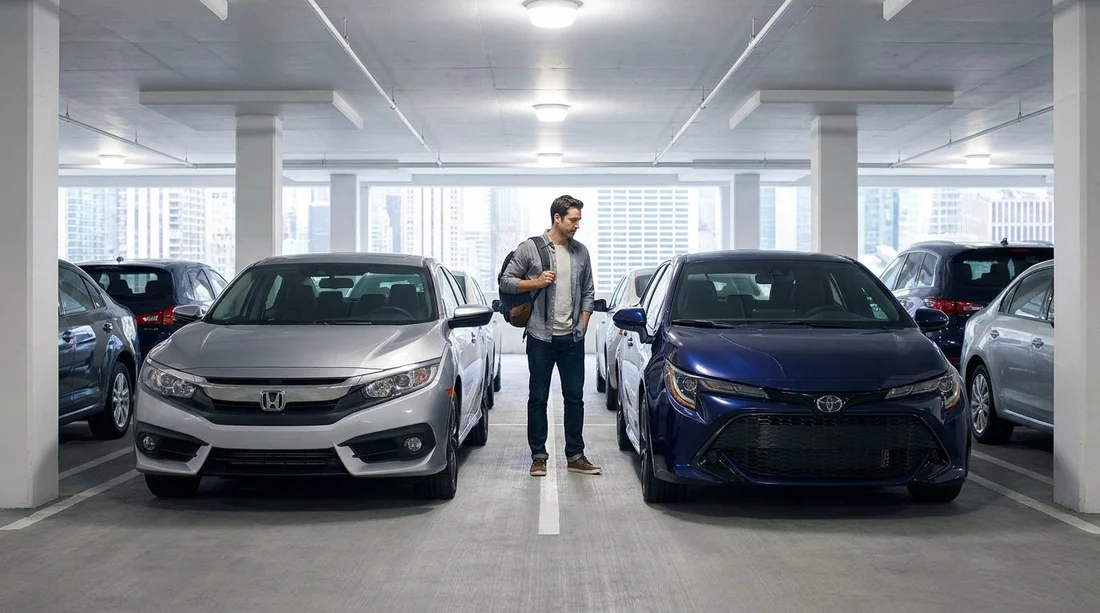
When you book car hire in New York, you will often see a vehicle shown with the words “or similar”. This phrasing can feel vague, especially if the listing features a familiar model in the photo. In practice, “or similar” is a standard industry way of describing how fleets are managed at busy locations, where exact vehicles move in and out constantly due to returns, cleaning, servicing, and last minute demand.
The key is understanding what is actually being sold. In most cases you are buying a vehicle category, sometimes called a class, group, or segment, rather than a specific make and model. The supplier aims to provide something equivalent to that category at collection, even if the badge on the bonnet differs from the image you saw online.
What “or similar” usually guarantees
Although “or similar” allows some flexibility for the rental desk, it does not mean “anything goes”. The most reliable guarantees are tied to the category definition rather than the exact model name.
1) Vehicle class and general size
Economy, compact, intermediate, standard, full size, premium, and similar labels are intended to reflect the overall footprint and comfort level. If you select an intermediate car, you should not be handed a tiny city car, because that would be a different segment.
2) Number of seats
Seat count is one of the clearest promises. A 5 seat category should deliver a 5 seat vehicle. If you need 7 or 8 seats for a family trip, you should choose a people carrier or minivan category rather than hoping an SUV will be large enough.
3) Luggage capacity, within reason
Listings typically indicate an estimated number of large and small bags. While boot shapes vary between models, the intention is that the category can handle the stated luggage. If you are travelling with bulky cases, prams, or sports gear, treat luggage estimates as a minimum and consider going up a class.
4) Transmission type when specified
In New York, automatic transmission is common, but always check. If the product clearly states “automatic”, that is part of the booked specification. If it says “manual or automatic” or does not specify, it may vary.
What can vary when it says “or similar”
“Or similar” mainly affects details that are hard for a supplier to guarantee because inventory changes daily.
1) Make and model
The headline model is an example, not a promise. You might book a listing showing a Toyota Corolla but receive a Hyundai Elantra, Nissan Sentra, or another comparable car in the same class.
2) Trim level and in car tech
Touchscreen size, sound system, built in navigation, USB port locations, and driver assistance features can differ. If Apple CarPlay or Android Auto matters to you, assume it is not guaranteed unless the listing explicitly includes it as a confirmed feature, not a hopeful highlight.
3) Body style within a class
Some categories mix similar shapes. For example, “intermediate” might include a compact saloon or a small crossover. Both can meet seat and bag expectations, but the driving position and boot opening could feel different.
4) Colour, wheel size, and small comfort details
These are rarely guaranteed. Even within the same model, you may see variations.
5) Exact fuel efficiency
Class gives you a broad idea, but economy will change with model, engine, and tyres.
Why New York makes “or similar” more common
New York area car hire locations are high volume. Vehicles cycle quickly between airport and city demand, and suppliers balance what is available against what customers need at the desk. Operational realities also play a role, including cleaning queues, damage checks, and vehicles being pulled for maintenance. “Or similar” gives the supplier the flexibility to keep fulfilment moving while still meeting the booked category.
If you are flying in, collection point matters. Airport locations can have larger fleets, but they also see intense peaks around flight banks. For context on airport collection logistics, see car rental at New York JFK. If you are landing in New Jersey and driving into Manhattan or beyond, you might compare options around car hire at Newark EWR.
How to choose wisely when “or similar” is listed
Start with passengers and bags, not the photo
Write down how many adults and children are travelling, and the number and size of suitcases. Then pick a class that comfortably fits, allowing for real world packing. A vehicle that is “fine on paper” can feel tight once you add winter coats, shopping, or a pushchair.
Decide what is non negotiable
If you must have three full rear seats, extra boot space, or higher driving position, choose a category that makes that likely. If you require 7 seats, select a minivan category rather than an SUV category, because many SUVs are 5 seaters. For larger groups arriving at EWR, the dedicated category pages such as minivan rental at Newark EWR can help you focus on the right segment.
Read the inclusions and policies as carefully as the car description
For car hire, value often sits in the terms: mileage limits, fuel policy, deposit amount, accepted payment methods, and what insurance is included or offered. Two “similar” cars can have very different overall costs once deposits and extras are considered.
Be realistic about “guaranteed features”
If a listing says “air conditioning”, that is normally safe to assume. If it highlights premium audio, panoramic roof, or advanced driver aids, treat these as model dependent unless the supplier clearly confirms them in the booking details.
Consider upgrading a class to reduce variance
Higher categories often have clearer expectations around space and comfort, and may reduce the chance of receiving a borderline fit for luggage. This can be especially helpful for long drives outside the city, where comfort matters more than parking ease.
What happens if the car is not similar at pick up?
If you believe what you were offered is not equivalent, focus on category fundamentals rather than brand preference. Ask whether the proposed vehicle matches the booked seat count, luggage guidance, transmission, and any explicitly confirmed features. If it does not, explain the mismatch calmly and request a like for like replacement in the same class, or an upgrade at no extra cost if that is the only way to meet the booking conditions.
Document the discussion. Note the time, the agent name if visible, and the vehicle details you were offered. If you accept a different category by choice, ask for the change and price difference to be confirmed in writing to avoid surprises.
Tips for reducing surprises on New York car hire
Plan for city driving and parking
If you will be mostly in Manhattan, smaller classes can be easier to manoeuvre and park, but you may sacrifice boot space. If you are leaving the city quickly for a road trip, prioritise comfort and luggage room.
Match the car to the route
Highway cruising to upstate New York, Long Island, or neighbouring states benefits from a slightly larger class. If your itinerary includes toll roads, confirm whether toll transponders are offered and how tolls are billed.
Keep flexibility in your expectations
The best way to think about “or similar” is that your booking sets a minimum standard for category and capacity. The exact vehicle is the supplier’s choice from what is ready and compliant at that moment.
Use location pages to compare like with like
When comparing offers, keep the pickup area consistent so you are not mixing different fees or taxes. If you are considering New Jersey pickup options, car rental in New Jersey at EWR can be a useful reference point for viewing comparable categories and terms.
FAQ
Does “or similar” mean I might get a completely different type of car?
It should still be the same category you booked, with similar size, seats, and expected luggage capacity. The make, model, and some features can differ.
Is luggage space guaranteed when I book car hire in New York?
Luggage guidance is an estimate for the class, not a promise for a specific boot shape. If you have bulky items, moving up a class is the safest approach.
Can I insist on the exact model shown in the photo?
Usually not. The photo is typically illustrative. What you can reasonably insist on is the booked class, seat count, transmission, and any clearly confirmed inclusions.
What should I do if the desk offers a smaller car than I booked?
Point out the mismatch in category basics, such as fewer seats or less luggage capacity. Ask for a like for like replacement, or an upgrade at no additional cost if necessary.
Will I at least get an automatic if the listing says automatic?
Yes, if the booking details specify automatic transmission, that is part of what you paid for. If it is not specified, it may depend on availability.





























































































