


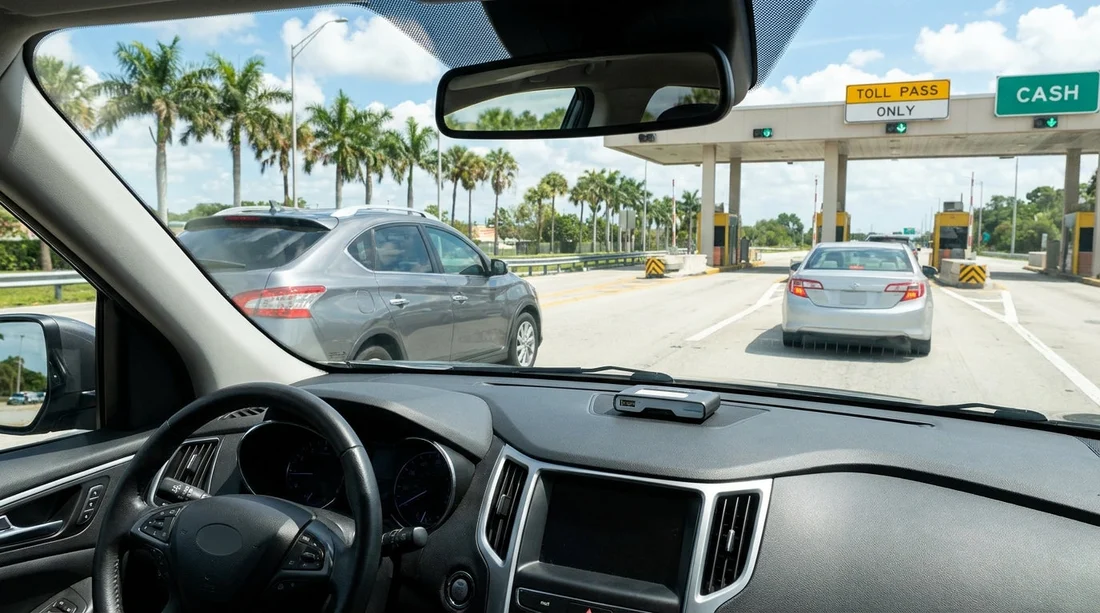
Quick Summary:
- Assume most Florida toll plazas are cashless, plan for electronic billing.
- Ask the rental desk about toll programmes, fees, and any daily caps.
- Compare likely toll routes against time saved, and budget accordingly.
- Keep travel notes and dates, so disputed tolls are easier.
Florida is famous for smooth highways and fast connections between airports, beaches, and theme parks, but it is also a state where tolls can quietly add up. The main reason is simple, many toll roads use cashless systems that photograph plates or read transponders. With a rental car, that can create surprise charges days or weeks after you return the vehicle, especially if you did not confirm how toll billing works at pick-up.
This guide explains Florida’s cashless tolling, which routes you are most likely to encounter, and the exact questions to ask so your car hire costs stay predictable.
How Florida’s cashless tolling works
Across Florida you will see two common tolling methods.
1) Transponder-based tolling. Drivers use a small device such as SunPass or E-PASS. When you pass under a gantry, the system reads the transponder and charges the linked account.
2) Toll-by-plate. If there is no transponder, cameras read the number plate and the toll authority bills the registered owner of the vehicle. For a rental car, the registered owner is typically the rental company, which then passes the toll on to you, often with an added administrative or convenience fee.
Cashless tolling does not mean all cash lanes are gone everywhere, but you should assume that many major routes either have no cash option or funnel drivers into electronic lanes. That is why the key to avoiding surprise charges is less about carrying change, and more about confirming the rental company’s toll process in writing.
Common places you will meet tolls in Florida
You can drive for days in Florida without a toll if you stick to certain interstates and local roads. However, visitors often land at large airports, head to attractions, then make cross-state trips, and that pattern frequently intersects with toll facilities.
Orlando area and theme parks. Around Orlando, toll expressways are woven into the fastest routes between the airport, resorts, and the theme park corridor. If you are collecting a vehicle for the attractions, check details on Orlando MCO car rental and consider whether your planned journeys justify toll roads or whether slower routes are acceptable.
Beach routes near Miami and Fort Lauderdale. South Florida has several tolled causeways and express lanes, plus busy commuter roads where tolling is common. If your trip centres on Miami, the vehicle type you choose, for example an SUV for family luggage, may influence whether you prefer faster tolled routes to reduce time in traffic. See SUV rental in Miami MIA for options that suit longer drives.
Airport-to-resort transfers. Visitors arriving for the theme parks sometimes use toll routes for a quicker trip to Disney-area hotels. If you are flying into Orlando for attractions, car rental from Orlando airport to Disney pages are a helpful place to plan pick-up, timings, and likely road choices.
Fort Lauderdale connections. Depending on where you are staying, toll roads can be the most direct way out of the airport area or towards certain coastal and inland destinations. If you are arriving there, Fort Lauderdale FLL car rental information can help you plan your first day’s route and reduce unexpected extras.
The takeaway is that tolls are not rare, they are simply concentrated on the faster, more convenient corridors that visitors often select by default when following sat nav instructions.
What to confirm about toll billing before you collect the keys
Most surprise charges come from mismatched expectations. The driver assumes tolls will be paid at the booth, but the road is cashless. Or the driver assumes their own transponder will work cleanly, but the rental car has its own programme enabled. Before pick-up, confirm the points below, and ask for them on your rental agreement or in a printed summary.
Is a toll programme automatically enabled? Some rental cars are set up so that any toll is automatically processed, then billed to your card later. Ask if you can opt out, and what happens if you opt out but still drive through a cashless toll point.
How are fees structured? There are typically two parts, the toll itself, and a separate fee. That fee may be charged per day of toll usage, per toll event, or as a flat rate for the rental period. Ask for the exact amount and whether there is a maximum daily cap.
When will charges appear? Toll authorities can take time to post transactions, and rental companies may invoice later. Ask the estimated timeline so you can recognise legitimate charges and avoid confusion with fraud alerts.
Can you use your own SunPass or E-PASS? If you already have a compatible transponder, ask whether it is permitted, and what steps you must take so you are not double-charged. In some cases you may need to ensure the rental company’s programme is disabled, or avoid using express lanes that read multiple identifiers.
How are disputes handled? If a toll is incorrectly applied, you will want to know whether you deal with the toll authority or the rental company. Ask what documentation they require, for example date, time, location, and a copy of your rental agreement.
How to plan routes and control toll spending
Once you understand billing, planning becomes straightforward. Use these habits to keep tolls intentional rather than accidental.
1) Check route options before you set off. Most navigation apps let you avoid tolls. Toggle that setting on and off to see the time difference. In many parts of Florida, a toll road may save only a few minutes outside peak times, which may not justify added costs and fees.
2) Expect tolls around airports and major attractions. If you have an early flight or a timed booking, you might prefer the reliability of an expressway even if it costs more. Planning is about choosing that trade-off deliberately, not being forced into it by a last-minute lane choice.
3) Learn the lane signage quickly. Cashless points are usually well marked with signs like “Toll By Plate” or transponder branding. If you see a last-minute split, do not make a dangerous manoeuvre. Take the toll route, then note the time and location so you can reconcile charges later.
4) Keep your own simple log. A note in your phone with the date and where you drove, such as “Orlando airport to resort via expressway”, is enough. If a toll charge appears weeks later, you can sanity-check it instead of guessing.
Choosing the right approach for your Florida trip
There is no single best option for everyone. If you are staying central and mostly doing short local trips, avoiding tolls may be easy. If you are doing airport transfers at peak times, driving between cities, or travelling with children where reliability matters, using toll roads can be worthwhile.
The key is to match your driving plan to your toll billing choice. A toll programme can be convenient, but only if you understand the fees and timing. Opting out can save money, but only if you are confident you can avoid cashless toll routes consistently. With a little planning, your car hire experience in Florida can stay transparent from pick-up to final receipt.
FAQ
Are Florida toll roads cashless everywhere? Many major toll facilities are cashless, especially on expressways near big cities and airports. Some locations still have cash options, but you should not rely on finding them.
Will I be charged after returning my rental car? Possibly. With toll-by-plate, the toll authority bills the vehicle owner, then the rental company passes the toll and any fees to you, often after the rental has ended.
Can I avoid tolls completely in Florida? Sometimes, yes. Many routes allow a “no tolls” alternative, but it may add time or complexity. Check your navigation settings before each long drive.
What should I ask the rental desk about tolls? Ask whether toll billing is automatic, what the administrative fees are, whether there is a daily cap, and how long after return charges may appear.
What if I think a toll charge is wrong? Gather your rental agreement dates, any travel notes, and the posted charge details. Contact the rental company first to understand the origin, then follow their dispute process if needed.





























































































