


Quick Summary:
- An upgrade can raise the excess because the vehicle value increases.
- Deposit holds often increase with higher car groups and coverage choices.
- Re-check what cover applies after upgrades, not just your voucher.
- Confirm the excess amount on the contract before you sign.
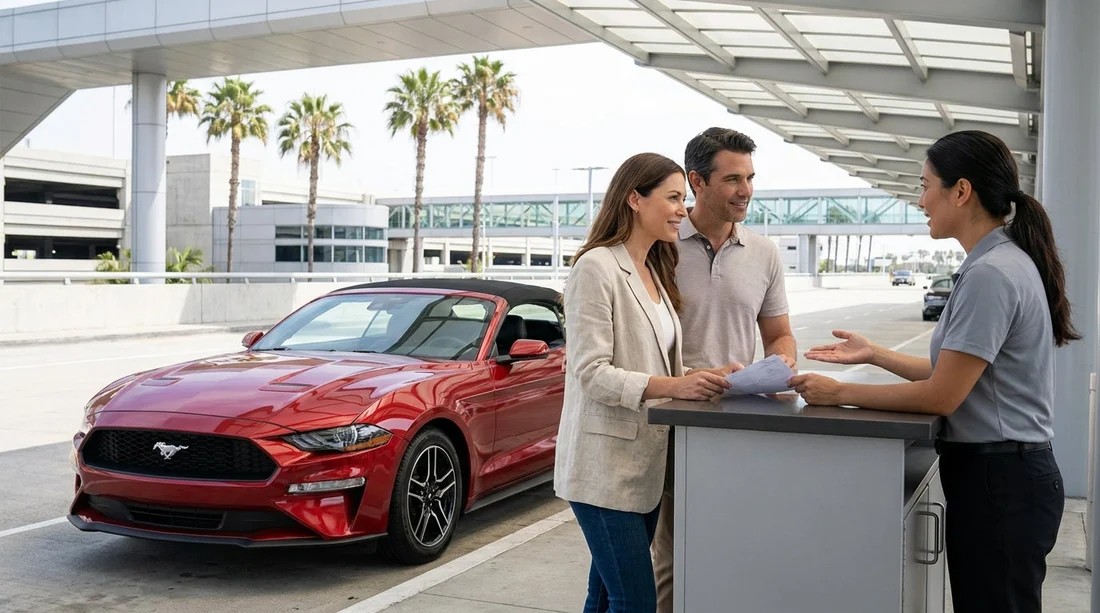
Upgrading at the rental counter in California can be convenient, for example if you want more luggage space, better comfort for long freeway drives, or you are offered a deal on the day. But it can also change the financial risk you carry, because excess, deposits and protection products are usually tied to the vehicle group on the rental agreement, not the car you originally booked online.
In plain terms, the excess is the amount you can be responsible for if the car is damaged or stolen, subject to the rental agreement. When you upgrade, you may be moved into a different vehicle class with a different excess. Your deposit hold, the amount temporarily blocked on your card, can also change at the same time. The key is to treat an upgrade as a new set of terms and confirm the numbers before you sign.
Why an upgrade can change your excess
Most rental companies in California set an excess (sometimes shown as “deductible” on US paperwork) based on risk and replacement cost. Larger, newer, or higher-spec vehicles can be more expensive to repair and replace, so the maximum amount you could pay can rise when you step up a class.
If you are arranging car hire around Los Angeles, it helps to understand the typical upgrade scenarios you might be offered on arrival. For location context, see car hire at Los Angeles Airport (LAX) or the wider overview for car hire in California via LAX.
How deposit holds often change with upgrades
The deposit hold is a temporary authorisation on your payment card, used to cover the excess and other potential charges. When you upgrade, the hold can increase for three main reasons.
Higher vehicle group, higher security amount. Many rental desks set a larger pre-authorisation for higher classes. Even if the excess stays similar, the deposit policy can be different.
Protection choices change the hold. In some cases, adding certain cover reduces the excess and may reduce the deposit, but it can also increase the total charge due at the counter. In other cases, declining cover can raise the deposit because the company is taking more risk.
Card type and eligibility rules. Some locations require a credit card for certain categories, or they apply higher holds to debit cards. An upgrade can push you into a category where a credit card is required or where the hold increases sharply.
Cover options, what can shift after an upgrade
The cover you arranged when you booked may have been priced for a specific vehicle class and policy rules. Upgrading at pick-up can change what applies in practice, because the rental agreement is what governs the car you drive.
Included protections. Your rate may include standard collision and theft protections with an excess. When the class changes, the included excess can change too. Do not assume it is fixed across all classes.
Counter-sold products. The desk may offer extra products that reduce the excess to zero or to a lower amount, or add cover for items not included. Before agreeing, ask what the new excess will be after the product is added, and whether the deposit hold changes.
If you are considering a larger vehicle class, it is useful to check typical category differences in advance. For instance, travellers often upgrade for seating and luggage on family trips, so an overview like minivan rental at LAX helps set expectations about vehicle group changes and likely terms.
What to check on the rental agreement before you sign
A counter upgrade is not just a verbal promise, it is a change to the contract. Take one minute to verify the key fields on the agreement screen or printout.
1) Vehicle group and rate line. Confirm the class shown matches what you are accepting. If you expected a small step up but the group looks much higher, ask for clarification.
2) Excess or deductible amount. Ask the agent to point to where the excess is shown. If it is not clearly stated, request it in writing on the agreement or the receipt notes. In California, the paperwork might use US terms, so ask directly, “What is the maximum I pay if there is damage?”
3) Deposit hold. Ask for the authorisation amount that will be placed on your card today. Confirm whether it is a fixed number or depends on fuel policy, return location, or one-way fees.
4) Protection products accepted or declined. Ensure the selected boxes match your decision. If you decline an item, it should not appear as accepted. If you accept an item to reduce the excess, confirm the revised excess amount.
How to decide whether the upgrade is worth it
An upgrade can be good value when it solves a real problem, such as luggage not fitting, needing extra seats, or wanting better visibility for freeway driving. It is less attractive when the only benefit is novelty but your financial exposure increases.
To decide quickly at the counter, compare three numbers: the extra daily cost, the new excess, and the new deposit hold. If the excess rises significantly, consider whether adding a protection product to reduce it would erase the perceived bargain. Also consider your payment card capacity, because a larger deposit hold can tie up funds for several days after return.
If you prefer to reduce surprises, compare suppliers and typical desk policies before travel. For example, you might look at operator-specific pages like Dollar car hire in California via LAX to understand how different brands present vehicle groups and cover options.
Practical checklist for upgrades at pick-up
Use this quick checklist when the agent offers an upgrade, whether paid or free.
Ask for the total cost difference. Confirm whether taxes, airport fees, and any upgrades are included in the new total.
Ask, “What is the excess on this car?” Do not accept “it is standard”. Get the number.
Ask, “What deposit hold will be placed today?” Confirm the exact amount and card requirements.
Confirm protection selections line by line. Ensure any products you declined are not added.
Match the paperwork to the keys. Verify the vehicle group, plate or VIN reference, and any pre-existing damage notes before leaving the lot.
When you treat an upgrade as a contract change rather than a casual add-on, you can enjoy the benefits of a better vehicle while keeping control of your excess and deposit exposure.
FAQ
Does upgrading at pick-up always increase the excess in California? Not always. Some upgrades keep the same excess, and occasional free upgrades may not change it. However, it can increase because excess is often linked to vehicle group, so you should confirm the amount on the new agreement.
If I accept a free upgrade, can my deposit hold still increase? Yes. Even if the rental price does not change, the deposit hold can rise if the higher category has a larger security authorisation, or if card rules differ for that vehicle group.
Will my pre-booked cover automatically apply to the upgraded car? It depends on how the cover is structured and what the rental agreement shows. The contract for the upgraded car governs the protections and excess, so re-check the selected cover items and the stated excess after the upgrade is applied.
What should I do if the agreement does not clearly show an excess amount? Ask the agent to explain the maximum amount you would pay for damage or theft and to point out where it is written. If it is still unclear, consider declining the upgrade until you can see the figure in the contract or receipt notes.
Can I change my mind after agreeing to an upgrade at the counter? Often you can, but it depends on availability and the desk’s process. If you have not driven away yet, ask immediately to revert to the original class and reissue the agreement with the original excess and deposit terms.





























































































