


Quick Summary:
- LDW usually covers the rental car, not stolen personal belongings.
- Travel or home insurance may cover items, subject to conditions.
- Report theft quickly to police and the rental company, keep paperwork.
- Reduce risk by hiding valuables, using boots, and hotel safes.
When you arrange car hire in Florida, the abbreviations can feel like a different language. LDW is one of the most common, and it is also one of the most misunderstood. Many travellers assume it works like a broad insurance policy for anything connected to the vehicle. In reality, LDW is mainly about the rental car itself.
This article clarifies what LDW typically covers in the US, whether it helps if your personal belongings are stolen from the vehicle, and what extra cover you may need to protect laptops, phones, passports, and luggage while driving around Florida.
What LDW usually means on US car hire
LDW stands for Loss Damage Waiver. In most US rental agreements, it is a waiver offered by the rental company that reduces or removes your financial responsibility if the rental car is damaged or stolen. It is not usually a standalone insurance policy you bring from outside, it is a condition of the rental contract that changes what you owe the rental company.
Because it is contract-based, the exact coverage, exclusions, and any excess (deductible) depend on the rental company and the package you selected. Some contracts describe CDW (Collision Damage Waiver) and LDW separately, others roll them into one product. The key point for the question in this title is that LDW is designed to address the vehicle’s loss or damage, not the belongings you place inside it.
Does LDW cover theft of personal belongings?
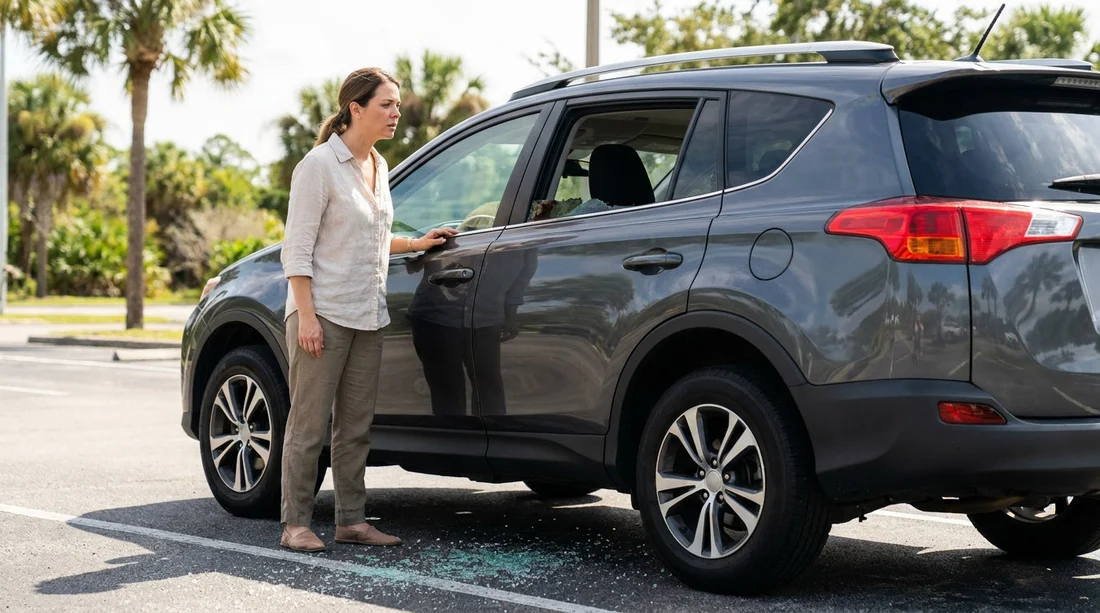
In most Florida car hire scenarios, no, LDW does not cover theft of personal belongings from the vehicle. If someone breaks a window and takes a backpack, suitcase, camera, or shopping bags, LDW may help with the damage to the car caused during the break-in, but it usually does not reimburse you for the items stolen.
This distinction matters because travellers often notice the word “theft” in LDW descriptions and assume it applies to everything stolen. What it generally means is theft of the vehicle (or damage to it during an attempted theft), not theft of your personal property.
If you are collecting a vehicle for car rental at Orlando MCO and heading straight to theme parks, it is worth confirming your personal possessions cover before the trip. Crowded car parks and busy tourist areas can increase opportunistic theft risk.
Theft-related products on the rental agreement: what they do and do not do
Some rental agreements mention Theft Protection (TP) or list theft under LDW. Even when theft protection is included, it is still primarily focused on the rental vehicle. It may limit what you pay if the vehicle is stolen, and sometimes it extends to attempted theft damage, like a broken lock or window.
However, it still generally does not convert into cover for stolen personal belongings. Think of it as protection against being billed for the car itself, not compensation for your luggage.
It is also common for coverage to depend on complying with contract terms. Leaving keys in the vehicle, failing to lock it, or ignoring reporting requirements can jeopardise the waiver. Even when your belongings are the main worry, those same behaviours can create complications if the car is damaged during the theft.
What to do if your belongings are stolen from a hire car in Florida
If theft happens, speed and documentation matter. The steps below help protect any claim you may make under travel insurance, card cover, or device insurance, and they also help clarify your position with the rental company.
1) Make sure you are safe
If you return to the car and suspect someone may still be nearby, move to a well-lit area and call for help. Do not confront anyone.
2) Contact the police and get a report
Most insurers require a police report or incident number, often within 24 hours. Be specific about what is missing and the time window.
3) Inform the rental company promptly
Report the break-in and any vehicle damage. If a window is smashed, the rental company needs to arrange repairs or a vehicle swap. Keep copies of all paperwork.
4) Photograph everything
Take clear photos of the damage, the surrounding area, and any signs of forced entry. This can support both a rental damage discussion and a possessions claim.
If you are travelling through Miami, for instance after picking up from car hire near Miami airport and downtown, do not delay reporting because you plan to drive on. Reporting later can complicate your claim.
Practical ways to reduce the risk of theft in Florida
No cover feels as good as preventing the problem in the first place. Florida is generally straightforward for driving, but tourist hotspots can attract smash-and-grab theft. These habits reduce the chance of trouble.
Keep items out of sight
Even a jacket on a seat can suggest something is underneath. If you must leave items, lock them in the boot before you arrive, not after you park.
Avoid leaving valuables in the car at all
Passports, large sums of cash, and primary devices are best carried with you. Use a hotel safe for items you do not need during the day.
Choose parking carefully
Prefer well-lit areas and staffed garages. In busy districts, consider valet parking where appropriate, but still remove valuables.
Plan theme-park days
Families using minivan hire in Orlando often carry more bags. Consider taking only what you need for the day, and keep the rest secured at your accommodation.
How to read your car hire inclusions before you travel
To avoid surprises, separate your protections into two buckets.
Vehicle protections: LDW or CDW, theft protection for the vehicle, and any excess-related terms. These control what you may owe the rental company for damage or the vehicle being stolen.
Personal possessions protections: travel insurance baggage cover, home contents away-from-home cover, specialist device insurance, and card benefits.
If you are collecting a car in the city, such as car rental in downtown Miami, consider how often you will be parking on streets versus garages, and adjust what you carry accordingly.
Where this leaves the main question
For most travellers, the answer is simple: LDW is mainly about the rental vehicle. It can be valuable for reducing financial risk if the car is damaged or stolen, but it is not designed to reimburse stolen personal belongings from inside the car. For that, you usually need travel insurance or another possessions policy that explicitly covers theft from a vehicle in the circumstances you are likely to encounter in Florida.
FAQ
Does LDW cover a broken window caused by a break-in?
Usually yes, LDW may cover damage to the rental car such as broken glass, subject to the contract terms and any exclusions.
Will the rental company reimburse me for luggage stolen from the boot?
Typically no. Rental companies generally treat personal belongings as the renter’s responsibility, even if the vehicle itself is covered under LDW.
Do I need a police report for stolen items in Florida?
In most cases yes. Travel insurers and card benefit providers commonly require a police report or incident number to process a theft claim.
Is theft from an unlocked car covered by travel insurance?
Often not. Many policies exclude theft if the vehicle was unattended and not properly secured, or if there is no sign of forced entry.
What is the best way to avoid theft when using car hire in Florida?
Keep valuables with you, store items out of sight before parking, use hotel safes, and choose well-lit, secure parking whenever possible.





























































































