


Quick Summary:
- LDW may waive repair costs, but small scuffs can be charged.
- Wear and tear is pre-existing, documented at pick-up and return.
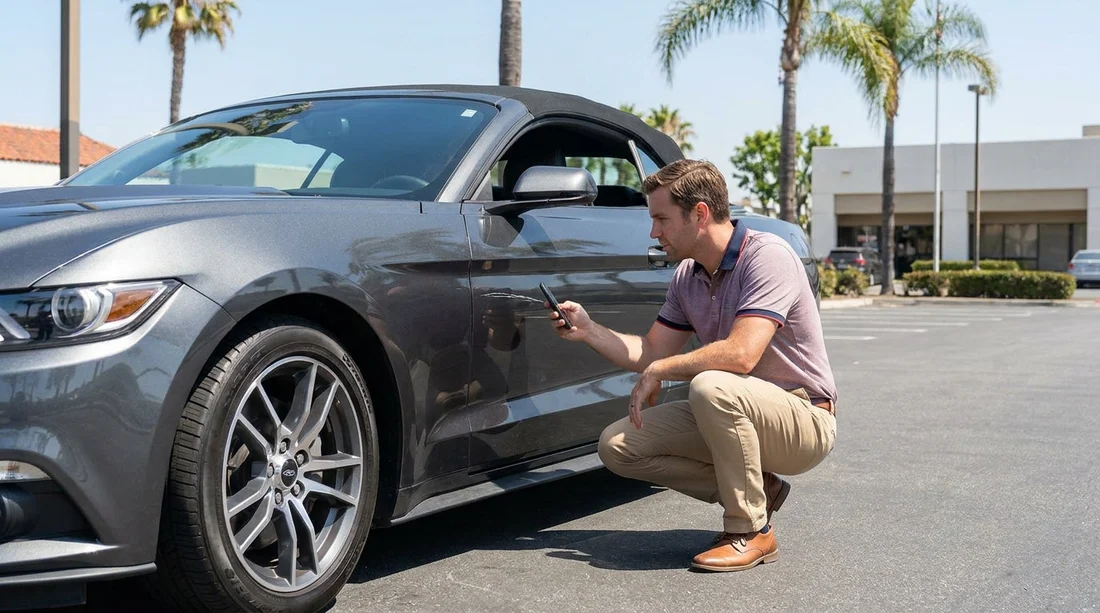
- Photograph and note every mark before you drive away.
- Check exclusions like tyres, glass, underbody, and negligence clauses.
When you arrange car hire in California, the two most confusing words on the rental counter paperwork are often “LDW” and “wear and tear”. Drivers see minor scratches or a small dent and assume it must be either covered automatically, or ignored as normal use. In practice, whether you pay can depend on the rental company’s damage policy, how the mark is classified, and whether it was recorded before you left the lot.
This guide explains how Loss Damage Waiver (LDW) typically works in California, what “wear and tear” usually means at pick-up, and the most common exclusions that can still leave you liable for scratches and dents.
What LDW usually does, and what it does not
LDW is commonly described as a waiver, not an insurance policy. In plain terms, it is an agreement that the rental company will waive some or all of the costs they would otherwise charge you if the vehicle is damaged or stolen, provided you follow the contract rules.
For car hire, the practical effect is often that LDW reduces your financial exposure for body damage, including many scratches and dents. However, “covers scratches and dents” is not a guarantee, because LDW commonly comes with conditions:
1) Damage must be accidental and within contract terms. If the company decides the damage resulted from prohibited use, reckless driving, or a breach of the agreement, the waiver can be voided.
2) Certain parts may be excluded. Even when LDW applies to body panels, it may not apply to windscreens, tyres, wheels, or underbody damage.
If you are collecting near a major hub, it helps to review your rental terms before arrival. For example, travellers comparing options for car hire at Los Angeles LAX can see different inclusions and exclusions depending on supplier and package, so it is worth checking what is actually waived and what is not.
So, do scratches and dents fall under LDW or wear and tear?
In many California rentals, scratches and dents are treated as “damage”, not “wear and tear”, unless they are clearly minor and within the company’s acceptable-use threshold. The important detail is that wear and tear usually refers to pre-existing condition or normal ageing, while a new scratch or dent is typically considered new damage, even if it is small.
Because thresholds vary, two similar marks can be treated differently by two suppliers. One company may ignore a light surface scuff on a bumper, another may charge for repainting. LDW can help, but only if the mark is accepted as a covered damage type and the waiver remains valid.
What “wear and tear” usually means at pick-up
At pick-up, “wear and tear” is most often used as a shorthand for existing imperfections that do not affect safe operation and are already present on the vehicle. Typical examples include light swirl marks, tiny stone chips, or faint interior scuffs. The key is that these marks should be documented on the vehicle condition report, or be clearly visible in timestamped photos you take before departure.
From a practical standpoint, wear and tear is not something you want to debate after a long flight. The goal is to make it unambiguous at pick-up what is already there. This is just as relevant whether you are collecting from a city branch or an airport location like San Jose SJC, where vehicles can turn around quickly between renters.
Common LDW exclusions that can affect scratches and dents
Even if LDW is included in your rate, look out for the exclusions that can make a scratch or dent your responsibility. The wording differs, but these themes are common in California rental agreements:
Tyres, wheels, and rims. Kerb rash is common, especially in tight car parks. Many waivers exclude wheel and tyre damage, which can turn a “small scrape” into a bigger bill.
Glass and windscreen. A stone hit can chip or crack the windscreen. Some LDW products exclude glass, or limit cover unless you bought a specific add-on.
Underbody and roof. Scrapes from steep driveways, road debris, or off-road driving can be excluded. Roof damage can also be excluded if it suggests contact with low clearance structures.
Negligence and prohibited use. Damage while driving under the influence, speeding, or on restricted roads can void the waiver. In practice, this can matter after an incident where fault or circumstances are disputed.
These issues are not specific to one city, but they can show up more often in areas with dense traffic and tight parking. If your trip includes Orange County, you may compare providers for Santa Ana SNA and focus on what is excluded from the waiver, not just the daily rate.
How to reduce the risk of being charged for pre-existing marks
The best defence against a surprise scratch or dent charge is evidence collected before you leave. This matters whether you have LDW or not, because LDW disputes often start with a simple question: was the damage already there?
Do a slow walk-around and take photos. Photograph each side of the car, then close-ups of any mark. Include the wheels, bumpers, and mirrors. Use good lighting, and consider recording a short video as well.
Check the condition report line by line. If the report is digital, make sure you can access it later. If something is missing, ask staff to add it or to acknowledge it in writing.
Look for easy-to-miss hotspots. Lower bumper corners, door edges, and wheel rims are common. For larger vehicles, check the rear quarter panels and tailgate area carefully. If you are picking up a larger vehicle at a hub such as Sacramento SMF, spend extra time on the roofline and rear bumper, which are prone to contact damage.
Why “tiny” damage can still be treated as chargeable
Renters are often surprised that a small scuff can be billed. The reason is not always the mark itself, but the operational impact. A supplier may need to repair and repaint a panel to meet their fleet standard, and that can trigger labour, materials, and time out of service. Whether LDW waives those costs depends on the specific terms.
This is also why it is smart to choose a car hire package by reading the included protection details, not only the headline price. If you are reviewing a named supplier option, such as Hertz in Sacramento SMF, compare the waiver rules and exclusions so you know what types of marks could still lead to charges.
Practical checklist for California pick-up, in two minutes
If you only remember one thing, it is this: wear and tear is usually what is documented before you drive away. Anything new after that risks being treated as damage.
Before leaving the lot: take wide photos, take close-ups of every mark, confirm the condition report, and check wheels and bumpers. If you spot a dent, do not assume it is “too small to matter”. Get it recorded.
During the rental: avoid tight kerbs, use well-lit car parks, and keep the vehicle on permitted roads. Report incidents promptly if something happens.
At return: take another set of photos in the return lane, including the fuel gauge and odometer, so you have a clear end-of-rental record.
FAQ
Does LDW automatically cover all scratches and dents in California? Not automatically. LDW often waives many body damage costs, but it can have exclusions, conditions, and size thresholds for what is treated as acceptable.
What is usually considered wear and tear on a rental car? Wear and tear is typically minor pre-existing cosmetic marks from normal use, already present at pick-up and ideally recorded on the condition report.
Can I still be charged for a small scratch even with LDW? Yes. If the scratch falls under an exclusion, the waiver is voided by a contract breach, or the supplier classifies it as chargeable damage, you could still be billed.
What should I photograph at pick-up to protect myself? Take wide shots of all sides, then close-ups of bumpers, door edges, mirrors, wheels, and any existing scratch or dent, in clear lighting.
Is wheel or rim damage treated differently from body scratches? Often yes. Many LDW products exclude tyres and wheels, so kerb rash or a bent rim can be chargeable even when bodywork damage is waived.





























































































