


Quick Summary:
- LDW may cover bodywork damage, but often excludes wheels and tyres.
- Potholes can cause wheel, tyre, alignment, and underbody damage exclusions.
- Kerb scrapes may be covered on panels, not rims or sidewalls.
- Check the agreement for exclusions, excess, deposit rules, and reporting steps.
Before car hire in Pennsylvania, it is sensible to ask a very specific question: if you hit a pothole or clip a kerb, does LDW actually protect you from the bill? LDW, short for Loss Damage Waiver, is not insurance in the traditional sense. It is a waiver offered by the rental company that typically limits what you owe if the rental car is damaged or stolen, as long as you follow the agreement.
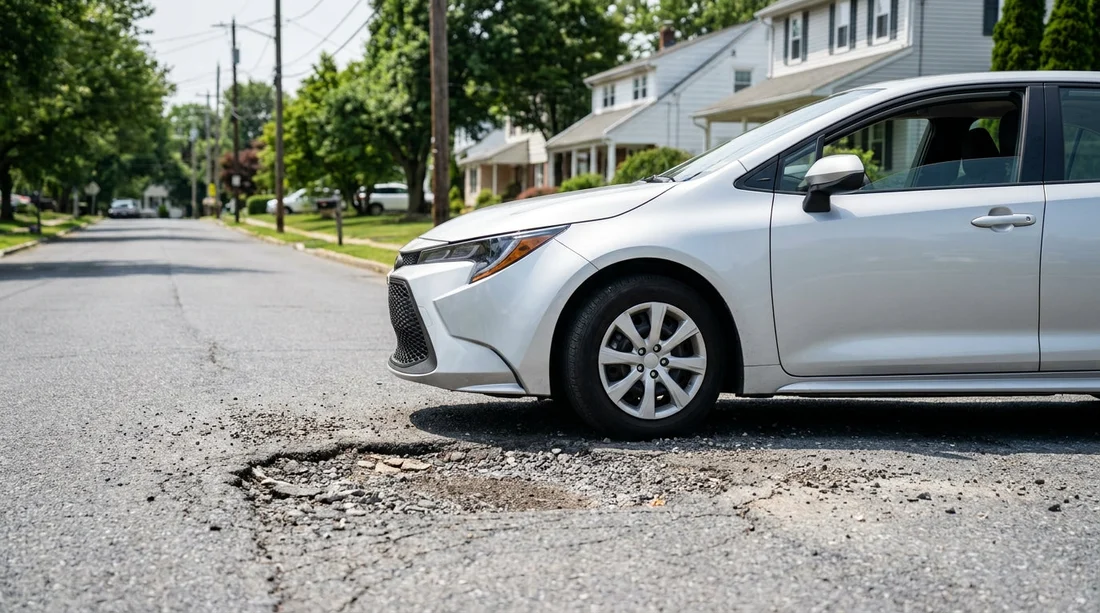
The catch is that pothole and kerb damage often affects parts that many waivers treat differently from general bodywork. A pothole can bend a wheel, split a tyre, knock the alignment out, or scrape the underbody. A kerb can scuff bumpers and doors, but also gouge alloy rims and sidewalls. Those details matter because LDW terms frequently separate collision damage from wear parts such as tyres and wheels, or from underbody and mechanical damage.
If you are arranging car hire around Philadelphia, the practical starting point is to read the coverage wording before you collect the keys. Hola Car Rentals provides ways to compare options for the area, including car hire at Philadelphia Airport (PHL) and car hire in Philadelphia (PHL), where the same core question applies: what does LDW cover, and what is carved out?
What LDW typically covers in simple terms
Most LDW products are designed to waive, reduce, or cap your financial responsibility for damage to the rental vehicle after an incident, subject to an excess. In everyday language, it often helps with repairs to the car’s body, paint, panels, bumpers, and sometimes glass, if the damage occurs during the rental and you comply with the contract.
So, if a kerb scrape marks the lower door panel or bumper cover, and those areas are covered under LDW, the waiver may apply. Likewise, if a pothole impact causes you to lose control and hit a barrier, the collision repair could fall within LDW, again assuming no excluded behaviour.
Why pothole damage is often excluded or disputed
Potholes in Pennsylvania can create a concentrated impact, which is why the most common outcomes are wheel, tyre, suspension, and alignment issues. Many rental agreements treat these as exclusions or separate categories, even when LDW is purchased.
Tyres: Sidewall bubbles, punctures, or blowouts can be listed as the renter’s responsibility unless a specific tyre and wheel protection product is included.
Wheels (rims/alloys): Bends and cracks are frequently excluded from standard LDW because they are classified as wheel damage rather than body damage.
Undercarriage and mechanical: Scrapes, dents, and leaks underneath the car can be excluded under underbody or mechanical damage clauses.
Alignment and suspension: Even when not explicitly excluded, these can become contentious if the agreement limits coverage to collision damage and treats alignment as wear or mechanical failure.
This is why you can have LDW and still be invoiced after a pothole strike, especially if the visible damage is limited to a tyre and wheel. If you are considering a larger vehicle, it is worth comparing options such as SUV rental in Philadelphia (PHL) or van rental in Philadelphia (PHL), then checking whether the protection choices change for wheels, tyres, and underbody.
How kerb damage is usually treated under LDW
Kerb damage tends to split into two types, and LDW may treat them differently.
Bodywork scuffs: Light scrapes on bumpers or lower panels may be considered body damage and could fall under LDW, subject to excess and any damage assessment fees permitted by the agreement.
Wheel and tyre scuffs: Kerbing an alloy wheel is one of the most common chargeable damages after car hire. Even if the bumper scrape is waived, the rim gouge or tyre sidewall mark can be excluded.
In short, LDW may help with kerb damage if the damage is clearly on covered body panels. But kerb contact very often damages the wheel face first, which is precisely the part many waivers exclude.
Excess and what you might still pay
Even when LDW applies, it commonly includes an excess, meaning you pay up to a set amount and the waiver covers the rest. Some products reduce the excess, others remove it, and the amount can vary by vehicle class and supplier.
Understanding the excess is essential because pothole or kerb damage can be expensive even when it is relatively minor, for example a wheel refurbishment, tyre replacement, or alignment check.
Key exclusions that can affect pothole and kerb claims
Whether LDW covers your incident can depend as much on the exclusions as on the headline coverage. Typical exclusions that can void or limit LDW include unpaved or restricted roads, negligence or misuse, an unauthorised driver, failure to report damage, or illegal activity.
What to check before you sign for car hire in Pennsylvania
To choose cover confidently, check these items in the rental terms and the protection summary, ideally before you arrive at the counter.
Wheels and tyres wording: Look for explicit inclusion or exclusion. If it is excluded, ask whether a separate option exists that includes rims and tyres.
Underbody and mechanical damage clauses: Potholes can cause undertray scrapes and suspension issues. If underbody is excluded, you may still be liable even with LDW.
Excess amount: Confirm the excess for damage claims and whether it changes by vehicle type.
Your responsibilities after an impact: If you hit a pothole, stop safely, document the damage, and notify the supplier according to the contract.
If you are comparing suppliers for Philadelphia pick-up, you can also review provider-specific options such as Hertz car hire in Philadelphia (PHL) or National Car Rental in Philadelphia (PHL), then focus on the same crucial point: are wheels, tyres, and underbody included in the waiver you are considering?
So, does LDW cover pothole and kerb damage?
In Pennsylvania, LDW often covers general collision or body damage, but pothole and kerb incidents commonly affect wheels, tyres, alignment, and underbody, which are frequently excluded unless you have additional protection. Kerb scuffs on body panels may be covered, while wheel rim gouges are often not. The only reliable answer for your trip is the wording on your specific rental agreement and the protection option you select before car hire.
FAQ
Does LDW usually include tyres and wheels? Often no. Many rental agreements exclude tyres and wheels from standard LDW, or treat them as a separate protection option. Always confirm in the terms.
If I hit a pothole and the car needs alignment, is that covered? It depends on the contract. Alignment and suspension issues are sometimes classed as mechanical or wear-related and may be excluded even when LDW applies.
Is kerb rash on an alloy wheel covered by LDW? Frequently it is not. LDW may cover bumper or panel scrapes, but wheel damage is commonly excluded unless you have specific wheel and tyre cover.
What should I do immediately after pothole damage during a rental? Stop safely, photograph the road hazard and damage, and notify the rental company as the agreement requires. Ask if the vehicle should be inspected before you continue driving.
Can I be charged even if I bought LDW? Yes. You may still pay an excess, and exclusions such as tyres, wheels, underbody, or breach of terms can leave you responsible for some or all costs.





























































































