


Quick Summary:
- You usually do not need E‑ZPass, rentals can bill tolls later.
- Ask if tolls add daily fees, admin fees, or pay per toll.
- Your own E‑ZPass can work if you register the plate correctly.
- Keep trip dates and receipts so you can dispute double charges.
If you are arranging car hire in New York, it is smart to plan for tolls before you ever reach the first bridge or tunnel. The short answer is that you usually do not need to open an E‑ZPass account before picking up a rental car. Most major rental companies have their own toll payment programmes and will bill you after the trip.
However, the details matter. New York uses extensive cashless tolling, and the choice you make at the counter can affect both cost and the risk of being billed twice. The goal is to understand your options, decide whether using a personal tag is worth it, and avoid double billing or admin fees.
If you are collecting at an airport location, the same toll principles apply whether you are arriving into New York JFK or starting across the river from New Jersey EWR, because many common routes into Manhattan and around the metro area involve tolled crossings.
How tolls work in and around New York
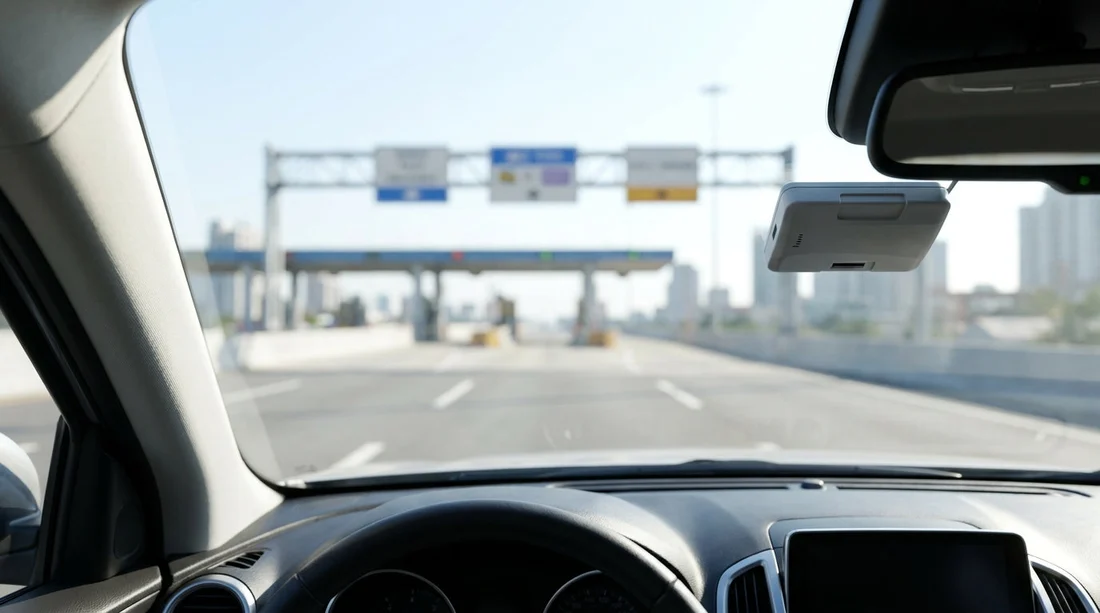
Many New York area toll roads, bridges, and tunnels are cashless, meaning there is no booth where you pay with coins or a card. Tolls are collected electronically through E‑ZPass readers or by cameras that capture number plates and issue a bill by mail. With car hire, you typically cannot receive that mailed bill directly, because the vehicle is registered to the rental company. Instead, the toll operator bills the rental company, then the rental company charges you under the terms you agreed to.
Two things follow from this. First, you can drive without buying anything in advance, because the rental company can facilitate toll payment. Second, you need to understand the rental company’s toll policy, because charges may include extra fees on top of the toll itself.
Do you need an E‑ZPass account before pick-up?
In most cases, no. For typical short stays and straightforward city driving, it is perfectly normal to collect your rental and use the rental company’s toll option. This is particularly true if you are unsure which crossings you will use, or you do not want to manage tag registration and timing.
You might consider a personal E‑ZPass if you expect to make many tolled trips, you already have an account, or you want tighter control over toll rates and account statements. Even then, you should only use your own tag if you can correctly link the rental vehicle number plate to your tag for the exact rental period. If you cannot, you risk being charged by both your account and the rental programme.
When comparing providers for car hire, it can help to check whether the operator has a predictable toll solution at your pick-up point. For instance, arrivals collecting via car rental at JFK airport often head straight onto tolled routes, so clarity up front reduces stress.
Common rental toll programme models
While names differ by brand, rental toll handling generally falls into a few patterns:
1) Pay-per-toll plus an admin fee. You are charged the actual tolls incurred, then a small admin fee per toll event, or per day that tolls occur. This can be good if you only use one or two toll roads.
2) Daily toll pass. You pay a flat daily fee for each day of your rental when the car is used on toll roads, often with the toll amounts still added on top. This can be reasonable for heavy toll use, but expensive if you cross a single bridge once and trigger a daily charge.
3) Plate billing without a pass. If you do not opt into a toll programme, the rental company may still receive toll bills and pass them on, often with a higher admin fee. Some companies present this as “do nothing”, but it may be the priciest route once fees are included.
None of these require you to have your own E‑ZPass account. The key is to ask which model applies and exactly what triggers fees. If you are picking up a specific brand at a nearby airport, such as Hertz at JFK or Thrifty at Newark, confirm the toll option before you drive away, because the rules can vary by location and by the agreement you accept.
Is it worth using your personal E‑ZPass tag?
Using your own tag can be worth it if all of the following are true:
You already have an E‑ZPass account. Opening an account solely for one short car hire trip rarely pays off once you factor in set-up time and deposits.
You can add the rental number plate correctly. Many E‑ZPass agencies let you add a “temporary vehicle” or add plates online. You must add the plate exactly as shown, set start and end dates to cover the rental, and remove it afterwards. Mistiming is one of the most common causes of double billing.
You understand the tag placement rules. A tag needs to be mounted where the reader can detect it. If the rental already has a built-in transponder and it is active, using your own tag may not work as expected.
You can accept the fallback scenario. Even with a tag, a missed read can happen. In that case, the toll may be captured by camera and billed to the number plate, which points back to the rental company. If the rental company then bills you too, you will need documentation to dispute it.
In short, a personal tag can reduce toll rates and simplify your own record keeping, but it increases the need for careful admin. For many visitors, the rental programme is the simplest approach.
How to avoid double billing, step by step
1) Decide on one method only. Either use the rental company’s toll service, or use your personal E‑ZPass, but avoid mixing.
2) At the counter, ask what is enabled by default. Some rentals have a transponder installed and active unless you explicitly decline. Ask whether the transponder will register tolls even if you plan to use your own tag.
3) If using your own E‑ZPass, register the plate for the exact dates. Do it before your first toll, not after. Keep a screenshot showing the vehicle plate and the active period.
4) Keep your rental agreement and timestamps. Save pick-up and drop-off times and the final invoice. Disputes are easier when you can show the rental window.
5) Track where you used tolls. You do not need a full log, but note crossings and dates. If an extra day fee appears, you can check whether you actually triggered it.
6) Review charges after return. Tolls often post days or weeks later. If a toll charge appears alongside a daily toll fee you did not expect, query it promptly, while trip details are easy to verify.
FAQ
Q: Do I need to set up E‑ZPass before car hire in New York?
A: Usually no. Most rental companies can process tolls and charge you later, although fees and billing methods vary.
Q: Can I use my personal E‑ZPass in a rental car?
A: Often yes, but you must add the rental vehicle number plate to your account for the exact rental dates, and ensure the rental’s transponder is not also billing tolls.
Q: Why did I get charged weeks after returning the car?
A: Cashless tolls are processed after the toll operator bills the rental company. The rental company then posts tolls and any admin fees to your card later.
Q: How do I avoid double billing for the same toll?
A: Use only one payment method, confirm whether the rental transponder is active, register the plate if using your own tag, and keep your rental dates and receipts.
Q: What should I ask at the counter about tolls?
A: Ask whether tolls are pay-per-toll or daily, what admin fees apply, when charges post, and how to opt out if you are using your own E‑ZPass.





























































































