


Quick Summary:
- Pick a crossover for city driving, easier parking, and better fuel use.
- Choose an SUV for more cargo height, higher seating, and rougher-road confidence.
- Check luggage volume in litres, not just seats, before choosing.
- Match vehicle size to passengers, child seats, and your Florida route.
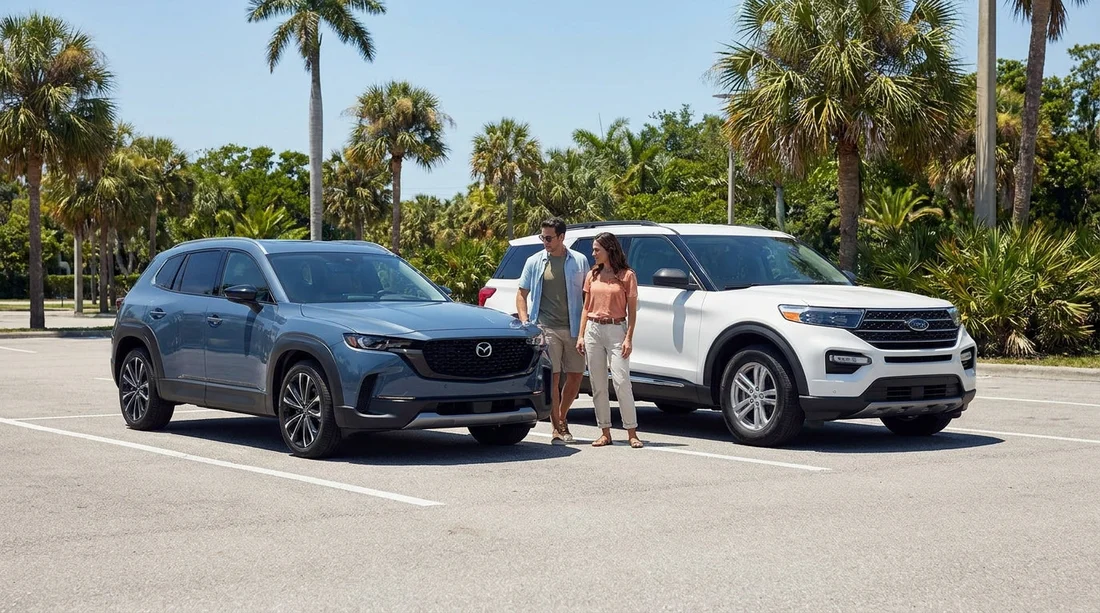
When you’re arranging car hire in Florida, the labels can feel confusing. “Crossover” and “SUV” often sit next to each other on booking screens, sometimes with similar photos, yet they can drive quite differently and fit different types of trips. The simplest way to think about it is construction and purpose: most crossovers are car-based, while many SUVs are built to feel more truck-like, with more ride height and a stronger focus on cargo and capability.
For travellers, the practical questions are straightforward. Will your luggage fit without stacking bags to the roof? Do you want a higher view in busy traffic? Are you planning long motorway miles where fuel use matters? Or are you prioritising cabin space for a family, pram, and beach gear? The right choice depends on your passenger count, your baggage, and where you’ll actually drive in Florida.
What is a crossover, in plain terms?
A crossover (often called a CUV) is typically built on a car platform, with a unibody structure. That usually means it feels more like a large hatchback on stilts than a traditional 4x4. For car hire, this often translates into lighter steering, more predictable handling, and an easier time in car parks or tight hotel driveways.
Crossovers are popular for Florida because they suit the mix of airport pickups, urban streets, and long highway runs. If you’re collecting near Tampa, comparing crossover and SUV categories can be helpful before you select a vehicle through car rental at Tampa Airport (TPA), especially if you expect frequent parking stops along the Gulf Coast.
What is an SUV, and how can it differ?
SUV originally described vehicles that sat higher, carried more weight, and sometimes used more rugged underpinnings. In modern rental fleets, “SUV” can include a broad range, from compact models that are very crossover-like, to larger mid-size and full-size SUVs designed to carry more people and kit comfortably.
The everyday differences that matter to travellers are ride height, cargo opening size, and how relaxed the vehicle feels when loaded. A larger SUV can keep its composure better with five adults and a boot full of suitcases. If your plans revolve around South Florida pick-ups and drop-offs, looking at categories via budget car rental in Florida (MIA) can help you judge whether you’re leaning compact or full-size.
Space and seating: similar seat counts, different comfort
Both crossovers and SUVs may be listed as five-seaters, but comfort can vary more than people expect. In a crossover, rear legroom can be decent, yet shoulder room and the sense of “air” in the cabin can feel tighter when three adults sit across the back. SUVs, particularly mid-size models, often provide a wider rear bench and a more upright seating position that helps passengers feel less cramped.
If you’re travelling with child seats, remember that the width of the rear bench matters. Two child seats plus a third passenger is far easier in a wider SUV than a narrow crossover. Also check whether rear vents and USB ports are present, as Florida heat can make rear-seat comfort a priority during longer drives.
Ride height and visibility: what you gain, and what you trade
Ride height is one of the clearest differences. Crossovers sit higher than saloons, but typically lower than larger SUVs. That higher position can improve visibility in traffic and make entry and exit easier for some travellers. SUVs go further, giving a higher driving position and often a more commanding view, which some people find reassuring on multilane roads.
Luggage capacity: look beyond the boot photo
For holiday travel, luggage space is usually the deciding factor. Crossovers can have impressive boot volume for their size, but the shape matters. Some have a sloping tailgate that reduces usable height, which becomes obvious when you load hard-shell suitcases. SUVs often have a taller cargo area, a squarer opening, and sometimes a lower load lip, making it easier to stack cases and still see out of the rear window.
To make a better choice during car hire, focus on these checks:
1) Count suitcases realistically. Two large suitcases plus two carry-ons and a stroller can overwhelm a compact crossover.
2) Consider “tall items”. Cool boxes, beach chairs, and travel cots need cargo height more than floor length.
3) Plan for day-to-day use. If you’ll leave luggage in the car between check-in and check-out, a cargo cover and an out-of-sight boot can be valuable.
If you already know you need maximum carrying ability, it may even be worth comparing larger people-movers. For example, travellers heading for theme parks with bigger groups often review options like van hire near Disney Orlando (MCO) when an SUV category still feels tight for bags.
Fuel use and running costs: where crossovers often win
Fuel use is where crossovers frequently come out ahead. Because they’re generally lighter and more aerodynamic, crossovers can be more economical on long Florida drives, especially with steady motorway cruising. SUVs, particularly larger ones, often consume more fuel, and that difference becomes noticeable over a full holiday itinerary with multiple day trips.
Handling and comfort on Florida roads
Florida driving can mean smooth highways, heavy rain bursts, and busy city junctions. Crossovers typically feel easier to manoeuvre, with tighter turning circles and less bulk. This is useful if you’ll spend time in areas like downtown Miami, where parking garages and narrow lanes can make a larger vehicle feel like work. If that’s your itinerary, checking pick-up points such as National car rental in downtown Miami (DWN) can help you think about whether a smaller footprint suits your accommodation and parking.
SUVs can feel more relaxed when the vehicle is heavily loaded, and they often deal well with uneven surfaces, speed bumps, and poorly drained roads after storms. Just remember that neither label automatically means “off-road ready”. Many rental SUVs are front-wheel drive or all-wheel drive rather than true 4x4 systems.
Which should you choose for common Florida trip types?
City breaks and multi-stop itineraries: A crossover is often the sweet spot. You get a higher view than a standard car, but with easier parking and typically better fuel use.
Families with lots of gear: A mid-size SUV can be a safer bet for luggage shape and cabin width. If you’re travelling with prams, extra bags, or larger child seats, the extra cargo height is practical.
If you’re landing in Fort Lauderdale and planning day trips up and down the coast, comparing crossover and SUV categories through Dollar car rental at Fort Lauderdale (FLL) can be a useful way to balance comfort with fuel spend.
FAQ
Is a crossover always smaller than an SUV in car hire categories? Not always. Some “compact SUVs” are effectively crossovers, and some crossovers are nearly mid-size. Check the luggage volume and the typical model list, if shown.
Will an SUV automatically have more luggage space than a crossover? Often, but not guaranteed. Crossovers can have generous floor space, while SUVs can vary in boot length. SUVs usually win on cargo height and a squarer opening.
Which is better for fuel use in Florida, a crossover or an SUV? Crossovers are typically more fuel-efficient due to lower weight and less drag. The biggest SUVs usually use more fuel, especially when fully loaded.
Do I need an SUV for Florida rain or storm season driving? You usually don’t. Good tyres, careful speed, and visibility matter most. If you want extra traction, confirm whether the vehicle is all-wheel drive rather than relying on the SUV label.
What if my group and luggage won’t fit either option comfortably? Consider moving up a size category or a people-carrier style vehicle. This can be more comfortable than forcing bags into the cabin and blocking rear visibility.





























































































