


Quick Summary:
- Walk around once to confirm all exterior lights illuminate correctly.
- Test washers and wipers on both speeds, and check blades clear.
- Sound the horn briefly to confirm it is loud and consistent.
- Photograph faults, report them immediately, and request a swap if needed.
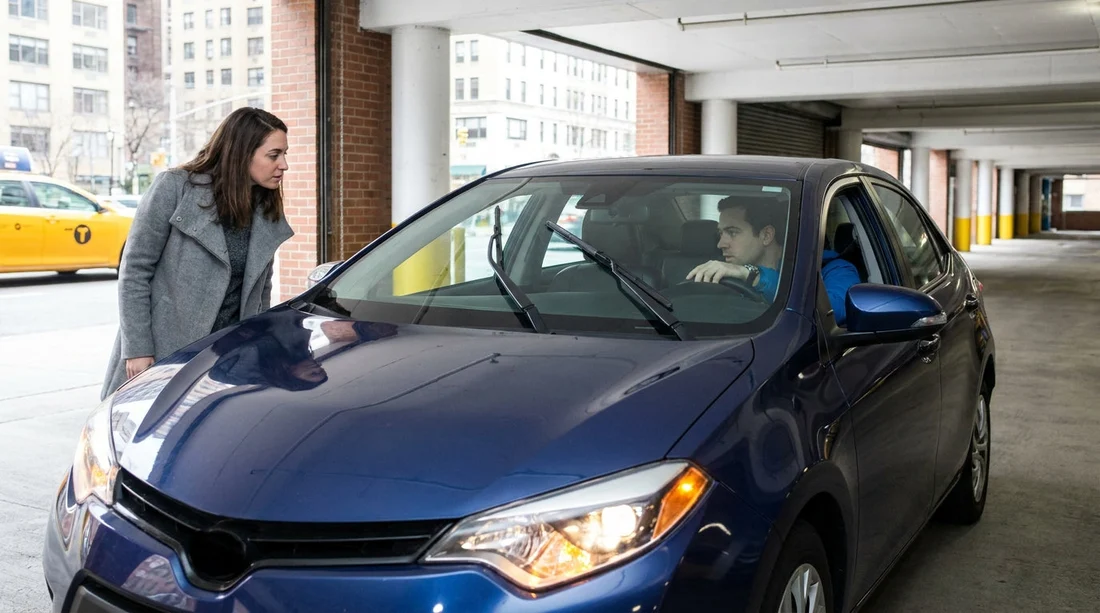
Before you pull out into New York traffic, take two minutes at the bay to confirm three basic safety systems work, lights, wipers and horn. These checks protect you in poor weather, night driving, tunnels, and heavy city flow where other drivers and cyclists rely on clear signals.
This is a practical counter-side checklist. It focuses on what you can test quickly without tools, what good looks like, and what to do if something fails.
If you are picking up near the city’s major airports, you might be comparing options such as car rental New York JFK or an out-of-state pickup with a drive into Manhattan. Wherever you collect, do the checks before you leave the lot, it is far easier to resolve issues on-site than after you have merged onto the Van Wyck or crossed a bridge.
Why these three checks matter in New York
New York driving throws a mix of conditions at you: tight kerbside parking, frequent lane changes, sudden downpours, reflective signage, and long stretches of stop-start traffic. Working lights help others interpret your intentions. Effective wipers and washers keep visibility acceptable when road spray coats the windscreen. A working horn can be a last-resort safety signal when someone drifts into your lane or a pedestrian steps out unexpectedly.
Even if the car looks clean and new, small faults happen, a blown bulb, empty washer reservoir, or a damaged wiper blade from a winter ice scrape. The goal is not to be fussy, it is to verify the essentials so you can drive away confidently.
Lights: a step-by-step walk-around
1) Low-beam headlights. Switch on dipped beams and verify both sides illuminate. Look for equal brightness and a consistent colour. One side noticeably dimmer can indicate a failing bulb or housing issue.
2) High beams. Activate main beams briefly. Check the blue dashboard indicator lights up and that both headlamps brighten. Do not leave high beams on in a shared lot, a quick confirmation is enough.
3) Front and rear indicators. Turn on the left indicator, then the right. Outside, confirm the front and rear lamps flash and the rate is normal. A very fast blink often means a bulb is out. Also check the arrow indicators on the dashboard match the direction you selected.
4) Brake lights. With the engine on or ignition in accessory mode, press the brake pedal. Confirm both rear brake lamps illuminate brightly and the centre high-mounted stop light works.
5) Tail lights and number plate lights. With headlights on, verify rear tail lamps glow and the number plate area is lit. These can be easy to miss but are important for night visibility and compliance.
6) Reverse lights. With foot firmly on the brake, shift to reverse briefly. Confirm white reverse lamps come on. Shift back to park afterwards.
7) Hazard lights. Press hazards and walk around. All indicators should flash together. This is also a good moment to note any cracked lens covers that could let in water.
8) Fog lights (if fitted). If the car has fog lamps, test them and confirm the dashboard symbol appears. Some vehicles only allow rear fog with headlights on, so follow the correct sequence.
When collecting near New Jersey and driving into New York, lighting matters even more because you may encounter darker roads and variable weather before city lighting improves. If you are weighing pickup points such as car rental airport Newark EWR or car rental New Jersey EWR, the same walk-around applies, do it while you are still in the controlled pickup area.
Wipers and washers: test what you will rely on in rain
1) Windscreen washer spray. Pull the washer control and confirm fluid hits the glass and spreads across the screen. If it dribbles weakly, the reservoir may be low, the jets may be clogged, or the pump may be struggling.
2) Wiper sweep and coverage. Run wipers on intermittent and low speed. The blades should clear water in a single pass without leaving heavy streaks in your main viewing area. Listen for skipping or chattering, which can mean hardened rubber or poor contact. Then test high speed briefly, the arms should not lift or judder excessively.
3) Check the blades themselves. Step out and look at the rubber edges. If you see splits, missing chunks, or bent frames, expect poor performance in rain. This is a simple swap request at the desk or bay, and worth doing before you leave.
4) Rear wiper (if fitted). On hatchbacks and some SUVs, test the rear washer and wiper. In stop-start traffic, rear visibility helps when cyclists and scooters appear quickly from behind.
Horn: quick, courteous, and functional
In New York, the horn is used more than many visitors expect, but you still want to be deliberate. Test it once, briefly, in the collection area. You are checking for a clear, strong sound, not a long blast. A weak or intermittent horn can indicate an electrical fault or steering wheel contact issue.
If the horn only works when you press a specific spot, note that. You want it reliable in an emergency, especially when navigating dense lanes or avoiding a near-miss at an intersection.
What to do if something fails
Document immediately. Take clear photos or a short video of the issue, for example one headlamp out, washer not spraying, wipers streaking.
Report before exiting the lot. Go straight back to the attendant or counter. Explain the specific function that failed and what you observed. Avoid vague statements like “the lights look odd”, instead say “right rear indicator not flashing” or “washer pump runs but no fluid reaches the windscreen”.
Ask for a quick remedy or a swap. Many issues are solved quickly, topping up washer fluid, replacing a blade, or changing a bulb. If the fix is not immediate, request another vehicle.
If you are selecting between suppliers, you might see options such as Hertz car rental New York JFK. Regardless of provider, the responsibility to confirm basic roadworthiness before you depart is a shared interest, it helps you avoid hassle later.
FAQ
How long should this lights, wipers, and horn check take? If you are organised, about two to three minutes. A full walk-around for lights takes the longest, but it can prevent a return trip.
What is the most common quick fix to request at pickup? Low washer fluid and worn wiper blades are frequent, and usually easy to resolve on-site. Ask to top up washer fluid and replace blades that streak or chatter.
Should I test lights differently in daylight? You can still confirm function by checking dashboard indicators and doing a walk-around. If brightness is hard to judge, look for reflections from a nearby surface or shaded area.
Is it acceptable to refuse the vehicle if these items do not work? Yes. Working lights, wipers, and a horn are basic safety features. If the fault cannot be fixed promptly, requesting a different car is reasonable.
Do I need photos if staff note the issue? Photos help you keep your own record. A quick video of the failed light or washer can be useful later if there is any dispute about condition at pickup.





























































































