


Quick Summary:
- Do not leave the lot, photograph the dash and odometer immediately.
- Ask staff to scan for fault codes and note them on paperwork.
- Insist on a fix, replacement car, or written authorisation to drive.
- Check tyre pressure, fuel cap, and fluids before accepting explanations.
Picking up a car hire in Miami is often fast-paced, especially at airport and downtown counters. That is exactly why a dashboard warning light needs your full attention before you roll past the exit barrier. Some lights are minor reminders, others signal faults that can become unsafe, expensive, or both. The safest approach is to treat any unexpected warning light as a reason to pause the handover and run a short, repeatable checklist.
This guide is written to be used right at the counter or in the pick-up bay. It focuses on what to document, what to ask for, and what to insist is fixed or swapped before you drive off, so you are not trying to resolve it later from the side of I-95.
Step 1: Stop the handover and keep the car in place
If a warning light is illuminated when you start the engine, do not leave the pick-up area. Even if the agent says it is “normal”, you need it assessed and recorded while you are still on site. A quick “I am not comfortable taking the vehicle until this is documented” is reasonable and professional.
Do not let anyone rush you with queues behind. Once you exit the premises, you may be treated as having accepted the vehicle condition. For Miami traffic, heat, and long causeways, it is better to lose ten minutes now than hours later.
Step 2: Photograph and video evidence, the basics that matter
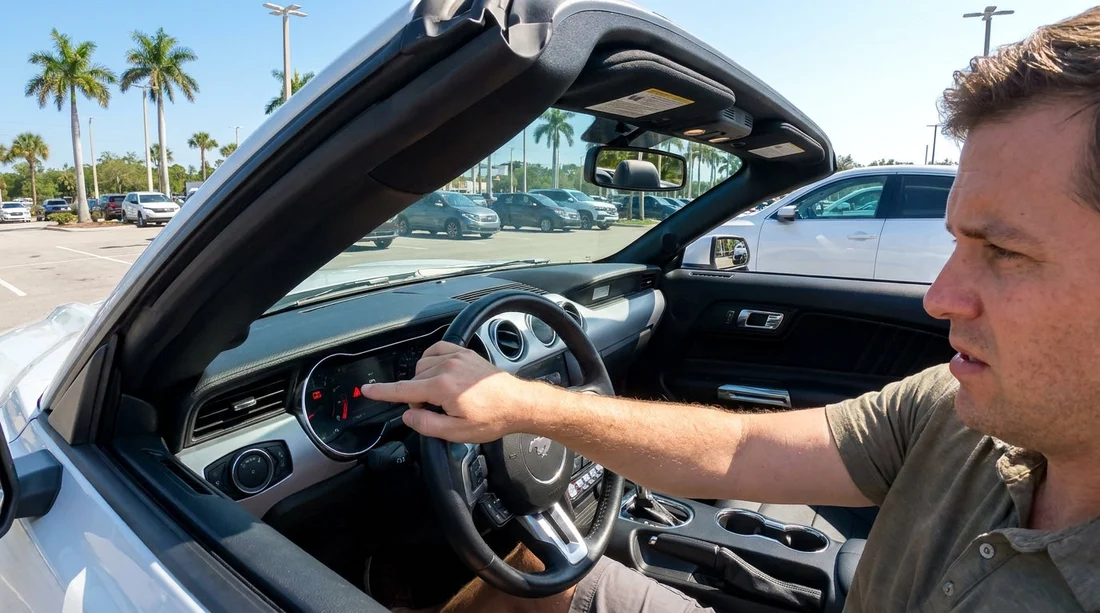
Before you speak to anyone, capture proof. Use your phone and take clear photos of the illuminated warning light(s), the full instrument cluster, and the odometer. If possible, record a short video of the engine running with the light on, and capture the VIN plate and licence plate so your evidence ties to the exact car.
Make sure your phone keeps time and location metadata enabled. If you later need to explain that the light was present before departure, these details help.
Step 3: Identify the light category, urgent versus non-urgent
Not all warning lights mean “stop immediately”, but you are not obliged to diagnose it yourself. Still, knowing the general category helps you insist on the right solution.
Red warning lights usually indicate a condition requiring immediate attention, for example oil pressure, battery/charging system failure, brake system, or overheating. With red lights, you should request a different vehicle, not a promise to “keep an eye on it”.
Amber or yellow warning lights often indicate faults that may allow cautious driving, such as the check engine light, ABS, tyre pressure monitoring, or traction control. These still need documentation and a decision: fix, swap, or written authorisation to drive.
Step 4: Ask staff to read the fault codes, not guess
Here is the key counter-ready question: “Can you please scan the car and tell me the fault code and description?” Many fleets can plug in a scanner or use their own diagnostics, especially at larger locations. The goal is to avoid informal explanations that are hard to prove later.
If you are collecting from a busy location, you may find it helpful to know the most common pick-up environments. For instance, pick-ups around the beach can be hectic during check-in times, so having your checklist ready helps you stay calm. If you are arranging a vehicle in that area, see Miami Beach car rental for location details and expectations.
Step 5: Insist on one of three acceptable outcomes
When a warning light is on before you depart, there are only three outcomes that protect you.
1) The issue is fixed and the light is off. Do not accept “we reset it” without confirming it stays off after a short idle and restart. Ask what was fixed, for example tyre pressures adjusted, fuel cap reseated, or a low fluid topped up.
2) The car is swapped. A like-for-like replacement is standard if a fault cannot be immediately resolved. If you booked a certain class, such as a larger vehicle for family luggage, a swap should meet the same class needs. If you specifically need space in Miami, comparing options like SUV rental in Miami can help you describe what you require at the counter without turning it into a negotiation on the spot.
3) Written authorisation to drive. If they insist the light is benign and no swap is available, ask for written confirmation on your agreement or a printed note that includes the warning light, date, time, and that you reported it before leaving. Without something in writing, you are relying on memory.
Step 6: Do quick checks that commonly trigger warning lights
Some warning lights can be triggered by simple issues that are safe to correct before you leave, as long as staff are involved and it is documented. Ask to check tyre pressure, ensure the fuel cap is seated, and take any low oil or coolant message seriously by requesting a replacement vehicle.
Step 7: Make sure your paperwork matches reality
Before you sign or accept the digital agreement, check that the vehicle condition report reflects what you observed. If the report is blank or generic, ask for the warning light to be added. If they cannot add it, take a photo of the screen or document where you raised it, for example a message thread, and keep it with your rental documents.
Also confirm the correct vehicle registration, mileage, and fuel level. These details make your evidence stronger if questions arise later.
Step 8: If you must leave, set a safe escalation plan
Sometimes, Miami inventory is tight and you may be offered the last available vehicle. If you decide to drive, only do so with written authorisation and clear next steps. Ask which location you should return to if the light persists, what number to call, and whether they will cover a swap at another branch without additional charges.
If your trip route includes Fort Lauderdale, it may be useful to know where support is commonly available. Hola Car Rentals has information on nearby locations such as car hire in Fort Lauderdale (FLL) and Fort Lauderdale Airport car hire, which can help you plan where a swap might be possible if authorised.
How to stay calm and firm at the counter
Use simple, repeatable language: you noticed a warning light, you have photographed it, you are requesting it be scanned and recorded, and you will accept the vehicle only if the issue is resolved, the car is swapped, or you receive written authorisation. This keeps the discussion objective and avoids conflict.
Finally, remember that a car hire agreement is about providing a roadworthy vehicle. In Miami, where you may be driving over bridges, through heavy traffic, or on long expressways, dealing with warning lights before departure is the safest and least stressful choice.
FAQ
Q: Can I be charged later if I drive off with a warning light already on?
A: Yes, it is possible if it is not documented as pre-existing. Photograph the dash and odometer, and get the issue written onto the rental record before leaving.
Q: Is an amber warning light safe to ignore for short Miami trips?
A: Not automatically. Amber can still indicate a fault that worsens. Ask for a diagnostic scan and either a fix, a swap, or written authorisation to drive.
Q: What if staff say the light is “normal for this model”?
A: Ask them to confirm the exact light meaning and provide it in writing. If they cannot, request a different vehicle, because “normal” is not a record.
Q: Should I accept a reset of the warning light at the counter?
A: Only if they also explain the cause and the light stays off after restarting. A reset can mask an unresolved issue, so documentation still matters.
Q: What evidence is most useful if there is a dispute later?
A: Time-stamped photos or video of the illuminated light, odometer, VIN and plate, plus a rental record note or written authorisation confirming you reported it before departure.





























































































