


Quick Summary:
- Inspect the windscreen for chips, cracks, and old repairs before driving.
- Test wipers with washer fluid to confirm clear, even wiping.
- Check washer jets aim correctly and deliver steady spray quickly.
- Photograph and report any defects, so they are logged at pickup.
In Florida, clear forward visibility is not a nice-to-have, it is basic driving safety. Sun glare can be intense, sudden rain can turn roads glossy in seconds, and motorway debris can cause small chips that spread. Before you drive away from a car hire pickup point, take two minutes at the kerbside to check the windscreen, wipers, and washers. This helps you avoid struggling with smeared glass in a storm and reduces the chance of being blamed for damage that was already there.
Make your checks with the car parked safely, ideally facing away from direct sunlight. If the windscreen looks “fine” at first glance, change your viewing angle and you will often spot tiny pits, wiper arcs, or old repairs. Keep your phone ready for photos and a short video, and do the inspection before you load luggage so you can access all glass easily.
1) Windscreen inspection, start with the big picture
Stand a few metres in front of the car and look across the whole windscreen. You are checking for obvious cracks, long scratches, hazy patches, and areas that distort light. Florida sun can make distortion feel worse than it looks, especially if the glass has been poorly repaired. If you are collecting around Miami, you might be starting a city drive with bright reflections off buildings. If you are picking up at car hire airport downtown Miami DWN, take a moment to look for ripples in the glass that could amplify glare.
Walk to each corner and scan again from an angle. Chips can hide near the edges, and edge damage is more likely to spread once you hit higher speeds on the highway. Pay extra attention to the driver’s direct line of sight, because even small defects can catch the sun and become distracting.
2) Look for chips, cracks, pits, and repaired damage
Now move closer. Use your phone torch or the sun at a shallow angle to highlight defects. Common issues to spot include stone chips, “bullseye” circles, star-shaped fractures, and long hairline cracks. Pitting looks like tiny specks across the glass and can make night driving harder by scattering headlights.
Check any repaired chip carefully. A good repair should look like a smooth resin fill with minimal distortion. A poor repair can leave a visible mark that refracts light and causes a halo effect, especially during sunrise or sunset. Florida’s coastal humidity and heat cycles can also stress repaired areas, so if you see a repair close to the edge or directly in front of the driver, document it clearly.
Tip for documentation: take one wide photo showing the chip’s position on the windscreen, plus one close-up with your finger pointing near it for scale. If there are multiple marks, capture a short video panning across the glass. Do this even if the defect seems minor.
3) Check the windscreen’s perimeter seals and visibility bands
Run your eyes along the windscreen edges and the black ceramic band around the glass. You are looking for lifting seals, gaps, or signs of prior replacement. A poorly seated windscreen can whistle at speed and may allow water ingress during heavy rain. Also check any tint band at the top: it should be even, not peeling, and not creating a distracting line in your vision.
If you plan to collect near business districts such as car hire Doral DRL, you may drive into fast-changing light between shaded streets and bright open roads. Anything that adds glare or ghosting is worth flagging before you leave.
4) Inspect wiper blades for wear, splits, and poor contact
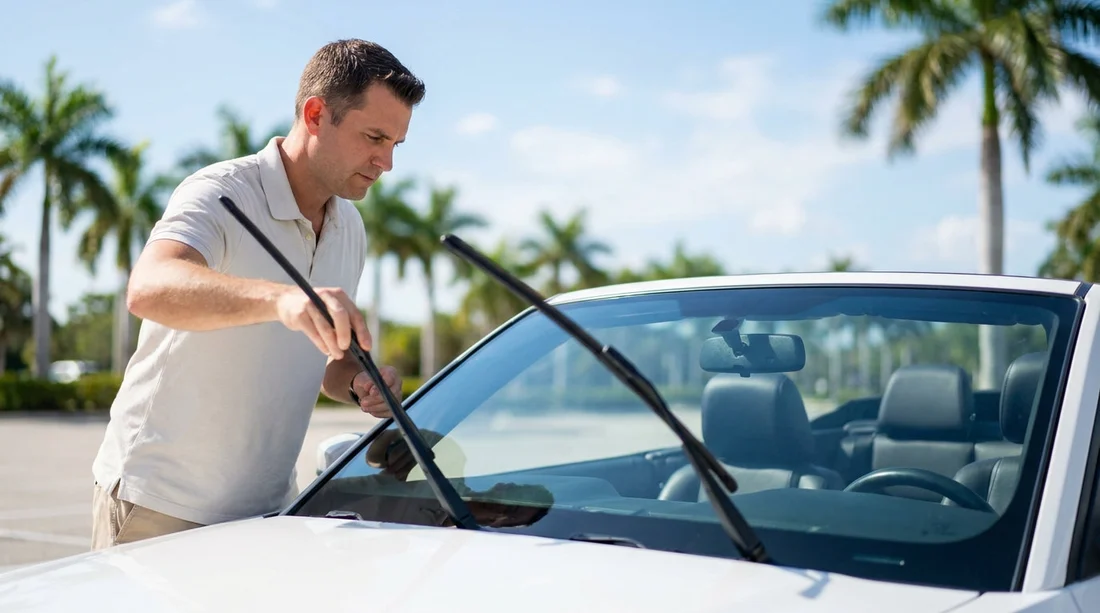
Wipers matter more in Florida than many visitors expect. Short, intense downpours are common, and worn blades can turn the windscreen into a smear of water and road film. Lift each wiper arm gently and inspect the rubber edge. You are looking for cracking, splits, hardened rubber, chunks missing, or a bent blade frame.
Also check that the blade sits evenly on the glass. If one end is not contacting properly, it will leave an uncleared strip right in your line of sight. Look for signs of wiper “judder” on the glass, such as light arc scratches or cloudy sweeps where the rubber has dragged debris.
5) Test the wipers properly, dry glass is not enough
Do not rely on a quick dry wipe. Turn the ignition on, activate the washer spray, and run the wipers through several cycles. You are assessing:
Streaking: long lines of water left behind often mean worn rubber.
Chatter or skipping: the blade jumps across the glass, reducing clearing and increasing noise.
Missed areas: especially at the driver’s side top corner or middle sweep.
Return smudge: a dirty blade can smear a film back across the cleared area.
If the wipers struggle to clear cleanly, note it immediately. Poor wiping is a safety issue, not a cosmetic one. This check is especially relevant if you are starting your journey from a busy airport, for example Hertz car hire Orlando MCO, where you may be joining fast traffic soon after pickup.
6) Washer jets, fluid, and wipe pattern
Washer jets should spray onto the main swept area, not over the roof or onto the bonnet only. Press the washer and confirm both jets work and produce a fan or stream that reaches the driver’s side quickly. If one jet is weak or misaligned, you may get an uneven wipe, which can leave grit on the glass and increase scratching.
Also check the washer fluid level warning, if the vehicle displays it. In Florida, bugs and road film build up quickly, particularly on longer drives. If the washers barely wet the screen, you will end up wiping dry dust, which increases glare at night and can make the wipers wear faster.
7) Don’t forget the rear screen and side windows
The question is about the windscreen and wipers, but a quick scan of all glass is sensible. Check the rear window for scratches and ensure the rear wiper (if fitted) clears properly. This matters in heavy rain and when reversing in car parks. Side windows should be free from deep scratches that distort mirrors or create blind spots when you shoulder-check.
If you are hiring a larger vehicle, such as from van rental Orlando MCO, the extra length means you rely more on good all-round visibility. A rear wiper that smears rather than clears can make lane changes and reversing more stressful in a downpour.
FAQ
Q: How small is “too small” for a windscreen chip on a car hire vehicle in Florida? A: Size alone is not the only factor. Chips in the driver’s direct line of sight or close to the edge are higher risk. If you can see it easily from the driver’s seat, photograph it and ensure it is recorded.
Q: Should I test the wipers even if it is sunny at pickup? A: Yes. Florida weather can change quickly, and a sunny pickup can turn into heavy rain within minutes. Use the washers to wet the glass, then check for streaking, chatter, and missed areas.
Q: What if the washer jets are weak or misaligned? A: Record it and ask for it to be corrected or noted on the condition report. Weak spray can lead to dry wiping, which increases glare and can scratch the windscreen over time.
Q: Is light windscreen pitting worth reporting? A: It is worth documenting if it is noticeable, especially if you expect night driving. Pitting scatters light from headlights and street lamps, making the view look “sparkly” and reducing contrast.
Q: What is the best way to prove the damage was pre-existing? A: Take clear photos and a short video at pickup, showing both the defect and its position on the glass. Then make sure the defect is written on the rental condition report before you drive away.





























































































