


Quick Summary:
- Check the fuel door label for the minimum octane rating required.
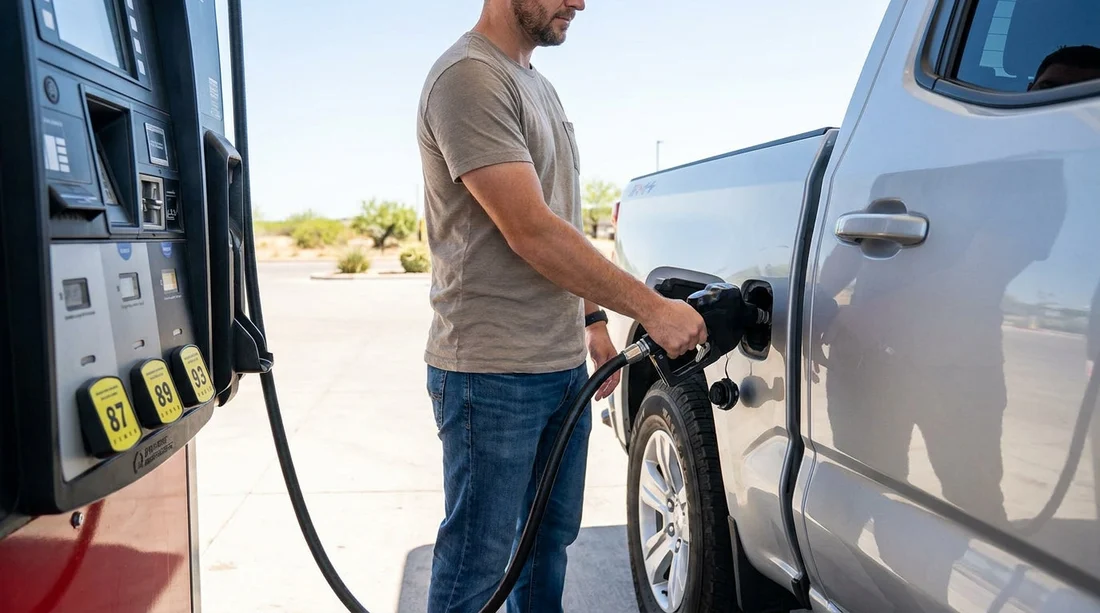
- In Texas, Regular is usually 87 octane, Premium is 91 to 93.
- Use the minimum recommended grade, higher octane rarely improves economy.
- If unsure at pickup, ask staff and photograph the fuel label.
Pulling into your first Texas petrol station with a rental can be confusing, especially if you are used to UK fuel labels. In the US, pumps typically show octane numbers and terms like Regular, Midgrade, and Premium, rather than the UK-style emphasis on E10 or branded names. The good news is that choosing correctly is straightforward once you know where to check your car’s requirement and how US labels map to what your engine needs.
This guide explains what the fuel grades mean in Texas, how to confirm what your rental takes before you drive off, and when paying for Premium is genuinely necessary. It is written for typical car hire scenarios, whether you are leaving Dallas Fort Worth, Houston, or El Paso and need confidence at the pump.
Regular vs Premium in the US, what the labels really mean
US petrol grades are primarily distinguished by octane rating, shown as a number on the pump. Octane is a measure of the fuel’s resistance to knocking, which is premature combustion that can occur in higher-compression engines or turbocharged engines under load.
In Texas you will usually see:
Regular (often 87 octane). This is the most common and cheapest option, and it is the correct choice for many mainstream rental cars.
Midgrade (often 89 octane). Less common as a requirement, sometimes used in certain engines that specify a minimum above Regular.
Premium (often 91 or 93 octane). Required by some performance cars and some turbocharged or luxury models. It is also sometimes “recommended” rather than “required”, which matters for your decision.
On US pumps you may see the text “Minimum Octane Rating (R+M)/2”. That is simply the American method of displaying octane, and it is the number you should match to the car’s label.
How to match the pump to your rental car’s requirement
The safest approach is to follow the car’s stated minimum octane. With car hire, do this before you leave the collection area, while it is easy to ask a question or switch vehicles if something does not add up.
Look for one of these sources, in order of reliability:
1) The fuel filler door label. Open the fuel door and check for wording like “Unleaded fuel only” and “Minimum 87 AKI” or “Premium unleaded fuel only, minimum 91 AKI”. This is the most direct answer.
2) The owner’s manual. Some rentals keep it in the glovebox or provide an electronic version on the infotainment screen. Search for “fuel” and read the minimum required octane.
3) The rental agreement or vehicle key tag. Sometimes the class is noted, but do not rely on this alone, as fleet swaps happen.
If the label states “Premium required”, use Premium. If it states “Premium recommended”, you can usually use Regular without immediate harm, but you may notice reduced performance in certain conditions. For a short trip around Texas, the practical choice is typically to use the minimum grade allowed, unless you are experiencing audible knock or the car specifically requires higher octane.
If you are picking up near Dallas, the local pages can help you confirm your pick-up location details and plan fuel stops, such as car hire at Dallas DFW or Enterprise car rental at Dallas DFW.
What happens if you choose the “wrong” grade?
Using the wrong grade can mean two different things.
1) Using higher octane than required. If your rental is rated for 87 octane and you buy 91 or 93, you are unlikely to get better fuel economy or extra power. Higher octane does not mean “more powerful”, it simply resists knock better. For most standard rentals, paying extra for Premium is usually wasted money.
2) Using lower octane than required. If the car requires Premium and you use Regular, many modern engines will adjust timing to protect themselves, which can reduce performance and efficiency. In hot Texas weather, when climbing hills, or when accelerating onto fast motorways, you are more likely to notice sluggishness or knocking. Persistent heavy knocking is a sign to switch to the correct grade on your next fill.
One misfill is not automatically catastrophic, but it is best avoided because it can lead to a rough drive and, in extreme cases, potential engine stress. If you realise at the pump you have selected the wrong grade but have not started fuelling yet, simply stop and choose the correct button. If you have already filled, drive gently and refuel with the correct grade when convenient.
Texas-specific tips at the pump
Texas petrol stations vary from small urban forecourts to large travel centres on interstates. A few practical points can help you choose the right grade smoothly:
Expect multiple nozzle colours. Colour coding is not standardised nationwide. Always rely on the octane number and the car’s requirement, not the nozzle colour.
Prepay and pump prompts. Some stations require prepayment inside, others allow pay-at-pump with chip-and-PIN or contactless. Read the prompts carefully and select the grade after payment authorisation.
Unleaded is the norm. Rental cars in Texas almost always use unleaded petrol, and diesel is a separate nozzle. Confirm the fuel type on the fuel door label. Choosing diesel for a petrol car is a much bigger problem than choosing the wrong octane grade.
Watch for ethanol notes. You may see labels like “Contains up to 10% ethanol”. This is common and usually fine for modern cars. The key is still the octane requirement shown on the vehicle.
If your trip starts in Houston, it can be helpful to know your pickup area and route planning, for example car hire in Houston IAH or car hire Texas IAH.
How to verify fuel requirements before you drive off
With car hire, you have a short window at collection to remove uncertainty. Build a quick routine:
Check the fuel door label before leaving the car park. Take a clear photo of the label showing the octane requirement and fuel type, so you can reference it later at a busy station.
Confirm the return policy. Many rentals are “return full to full”. Knowing the policy helps you plan one final fill near the airport and prevents paying premium refuelling fees.
Ask if the vehicle is turbocharged. Some smaller engines are turbocharged and may recommend Premium, even in mid-size cars. The label is still the final authority, but a quick question can prompt you to double-check.
For larger groups, you may be in a people carrier. Those typically run on Regular, but always check the label. See minivan rental Texas IAH for typical vehicle categories used on family trips.
Regular or Premium, how to decide in common rental scenarios
Economy or compact car. Most will specify Regular (87). Choose Regular unless the label states otherwise.
Mid-size SUV or standard saloon. Usually Regular, occasionally Midgrade. Follow the minimum listed on the fuel door.
Luxury or performance model. More likely to require Premium (91 or 93). If it says Premium required, do not downgrade.
“Recommended” wording. If the car says Premium recommended, using Regular is generally acceptable for typical driving, but you may feel better throttle response and smoother acceleration on Premium. For a short-term rental, many travellers pick the minimum grade to manage costs.
When you hear knocking. If you hear a metallic pinging sound under acceleration, ease off and consider switching to a higher grade at the next fill, especially if the label indicates Premium required or recommended.
FAQ
Q: What is “Regular” petrol in Texas, and what octane is it?
Regular in Texas is typically 87 octane (AKI). Always confirm on the pump label, as stations can vary slightly.
Q: If my rental car says Premium “recommended”, do I have to buy it?
No. “Recommended” usually means the engine can run on Regular, but may perform best on Premium. If cost matters, use the minimum grade stated as acceptable.
Q: Where can I find the required fuel grade on a rental car?
Check the sticker inside the fuel filler door first. If it is not there, consult the owner’s manual or the vehicle information in the infotainment system.
Q: Will Premium fuel improve fuel economy in a Regular-only rental?
Usually not. Higher octane does not contain extra energy, it only resists knock. Most cars designed for Regular will not gain measurable economy from Premium.
Q: What should I do if I accidentally used a lower octane than required?
Drive gently, avoid hard acceleration, and refill with the correct grade as soon as practical. If the engine runs roughly or the warning light appears, contact the rental provider for guidance.





























































































