


Quick Summary:
- Full-size usually seats five adults, with a larger boot than midsize.
- Expect two large suitcases plus one or two small bags, typically.
- US categories vary by fleet, so compare luggage needs, not model names.
- For California road trips, size up if carrying four adults’ luggage.
When arranging car hire in California, “full-size” can sound like a guarantee of a big sedan. In the US rental market it is a category, not a specific make or model, and it is mainly about cabin space and boot capacity compared with compact or midsize. The exact vehicle you receive can vary by rental company and by location, especially at busy airports where availability changes by the hour.
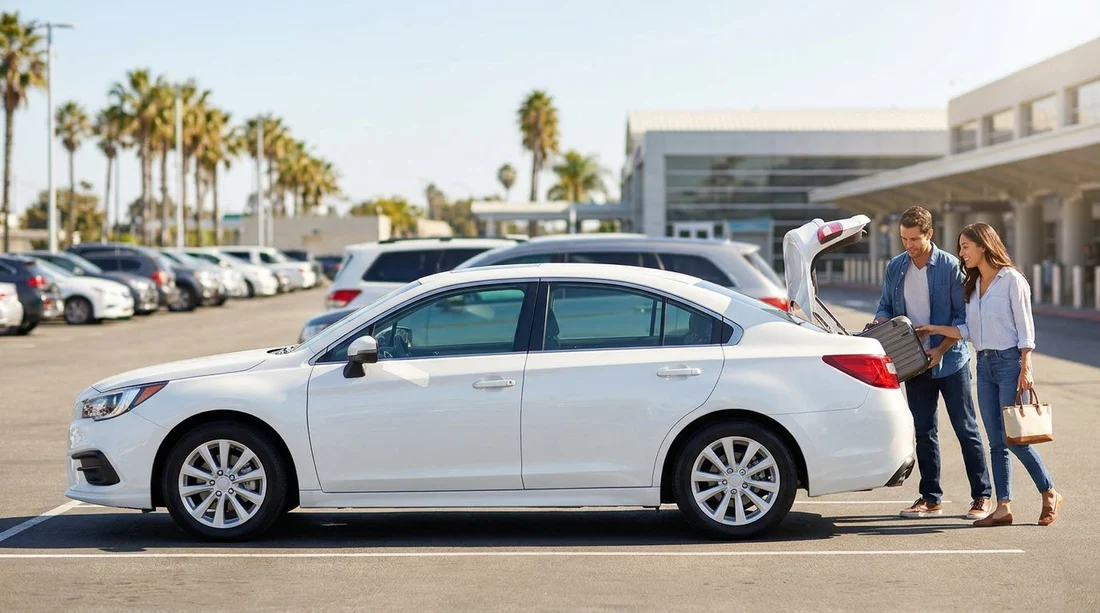
In plain English, a US “full-size” rental is typically a comfortable five-seat saloon (sedan) with noticeably more shoulder room and rear legroom than a midsize, plus a boot that can cope better with airport luggage. Common examples in many fleets include models similar in size to a Toyota Camry, Chevrolet Malibu, Nissan Altima, or Volkswagen Passat, but you should treat those as size references, not promises.
If you are collecting at a major hub such as Los Angeles, it helps to understand categories before you arrive. Hola Car Rentals pages for car hire Los Angeles LAX and van hire Los Angeles LAX show how different trip styles often push people into different size brackets.
What “full-size” usually includes, and what it does not
Seats: Most full-size cars are listed as 5-passenger. Real-world comfort is usually best for four adults plus bags, or two adults and three children. Three adults across the back seat is possible for shorter drives, but for long California days on the freeway it can feel tight, especially if everyone is carrying day bags.
Luggage: A typical full-size saloon often fits around 2 large suitcases (think 23 kg checked bags) plus 1–2 smaller bags in the boot. That estimate assumes fairly standard suitcases, not extra-deep hard cases. If you have four large suitcases, you will likely need to move up a size or switch body style.
Body style: “Full-size” in the US most often means a saloon. In some fleets you may see a full-size offered as a larger hatchback, but do not rely on it. Hatchbacks can carry bulky items better because the opening is larger and the parcel shelf can be removed.
Performance and features: Full-size does not automatically mean a more powerful engine, luxury trim, or extra technology. Features vary by provider and by specific vehicle, even within the same category.
Why US rental categories can feel confusing
US rental categories are designed to group vehicles by approximate space and price. They are not standardised in the way many travellers expect, and there is overlap between “midsize” and “full-size” depending on brand and fleet mix. This is why two people can both book “full-size” and receive cars that look different, yet still fit the category’s general space expectations.
Another point of confusion is that travellers from the UK and Europe often think in terms of “family hatchback”, “estate”, or specific segments like C-Class and D-Class. In the US, a “standard” or “full-size” saloon may feel familiar in length, but the boot opening and rear-seat proportions may differ from a European hatchback you are used to.
Plain-English size guide for California travellers
Below is a practical way to think about common US categories when planning car hire in California. Capacities are typical, not guaranteed, because luggage shapes differ and boot designs vary.
Economy and Compact: Best for 1–2 adults travelling light. Usually 4–5 seats, but rear-seat space is limited and the boot is small. Typical luggage is 1 large suitcase plus 1 small bag, or 2 carry-ons. These are easy to park in cities, but can feel cramped for long drives.
Midsize (Intermediate): A common value choice for couples. Usually 5 seats with improved rear legroom over compact. Typical luggage is about 1–2 large suitcases plus 1 small bag. If you have two adults and two children, midsize can work, but check your stroller size and consider the boot opening.
Standard: Often the “in-between” category. Cabin width and boot space are usually a step up from midsize. Typical luggage is around 2 large suitcases plus 2 smaller bags. Some companies price standard close to full-size, so the better fit depends on what is available.
Full-size: Usually a comfortable 5-seat saloon for longer freeway drives, with a boot that better handles airport luggage. Typical luggage is about 2 large suitcases plus 1–2 small bags. For three adults with three large suitcases, it may still be tight, especially if you also have shopping or hiking gear.
Minivan (people carrier): The most practical “space per pound” option for families. It is usually the easiest way to carry 6–7 people with real luggage. If you are comparing categories at the airport, a minivan often beats a large SUV for usable luggage space.
If you are flying into Northern California, planning ahead for pick-up points helps match category to itinerary. Hola’s Budget car hire San Francisco SFO page is a helpful reference for travellers arriving with city driving and coastal routes in mind.
How to choose between midsize, standard, and full-size
The most common decision point is whether to step up from midsize to full-size. Use these simple checks.
1) Count adults, not just passengers. “Seats 5” is not the same as “comfortable for 5 adults”. If you have four adults, full-size is usually the minimum pleasant option for California’s longer freeway stretches. For five adults, consider a larger SUV or minivan for shoulder room and luggage.
2) Think in suitcases, not bags. Full-size typically suits two large suitcases without creative packing. If each traveller has a large suitcase, you will almost certainly need a bigger category. Soft duffels compress more easily and can change the equation.
3) Consider your route and parking. In dense areas, a full-size saloon is still manageable, but you may prefer midsize if you will be parallel parking frequently. On the other hand, for long drives, full-size comfort can reduce fatigue.
4) Add space for trip “extras”. California trips collect items quickly, shopping, coolers, beach chairs, hiking daypacks. If you start with a boot that is already full at the airport, your daily practicality drops fast.
Airport pick-up in California, what to watch for
Availability can influence what “full-size” looks like on the day. Busy locations may substitute within the same category, and sometimes the “full-size” row includes several different models. If you care about boot space, check it in person before you drive away, and be realistic about whether your suitcases will fit without blocking the rear window or leaving items visible.
If your trip starts in Southern California and ends in Silicon Valley, you may compare airport options such as car rental airport San Diego SAN and car hire San Jose SJC. Different airports can have different fleet mixes, which affects how consistent categories feel.
FAQ
Is “full-size” the biggest car category in the US? No. Full-size is bigger than midsize and standard in many fleets, but larger options include full-size SUVs, premium SUVs, minivans, and speciality people carriers.
How many suitcases fit in a full-size rental car? Typically around two large suitcases plus one or two small bags. If each person has a large suitcase, consider an SUV or minivan for reliable space.
Will a full-size car always be a Toyota Camry or similar? Not guaranteed. “Full-size” is a category, so the model can vary by provider and availability, while staying within similar cabin and boot expectations.
Is full-size good for a California road trip? It can be ideal for two adults or a small family, offering comfort at freeway speeds. For four adults with luggage, a larger category is usually more practical.
What is the difference between standard and full-size on a booking page? Standard is often a step below full-size in cabin and boot space, but the gap varies. When in doubt, base your choice on luggage volume and adult comfort.





























































































