


Quick Summary:
- Ask staff to confirm cold tyre pressures match the door-jamb placard.
- Photograph the TPMS light and mileage before leaving the car park.
- Request a gauge check, top-up, or vehicle swap if warning persists.
- Reset or relearn TPMS only after tyres are inflated correctly.
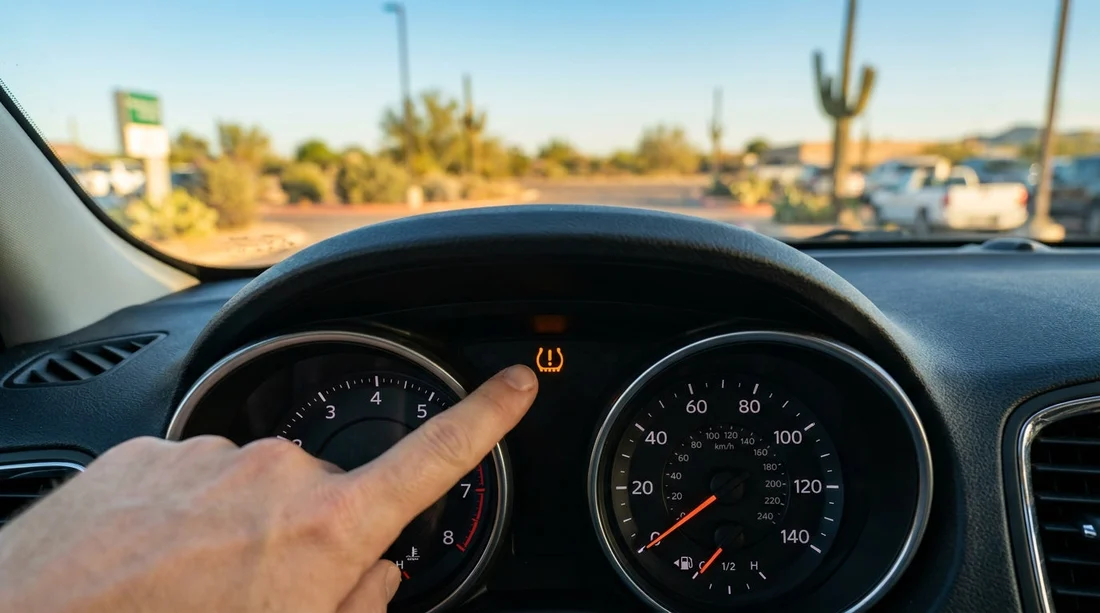
A TPMS warning at pick-up can feel like a minor niggle, but in Texas it is worth treating as a proper pre-departure check. TPMS stands for Tyre Pressure Monitoring System. In most rental cars it is a dashboard symbol that looks like a flat tyre with an exclamation mark. When it illuminates, the system is telling you one of three things, the tyre pressure is low, the TPMS system has a fault, or pressures were changed and the system has not been reset.
If you are collecting a car hire vehicle and that light is on before you have even left the airport or depot, it becomes a counter-to-car checklist issue. You want the right air pressure for safety, tyre wear, fuel economy, and to avoid being blamed for an issue that existed at collection. The good news is that you can usually resolve it in minutes, provided you ask for the right checks and document what you see.
What the TPMS light is actually telling you
Most modern cars use either direct TPMS sensors inside each wheel, or indirect systems that infer pressure differences via wheel-speed sensors. Direct systems can show individual tyre pressures on a screen, indirect systems usually show only a warning light.
At pick-up, treat the warning as a prompt to verify the basics rather than guessing. Low pressure is the most common cause, but it is not the only one. A faulty sensor, a replaced wheel, or a recent puncture repair can also trigger alerts. A flashing TPMS light often indicates a system fault rather than low pressure, though behaviour varies by make and model.
Texas adds a practical twist. Long highway stretches, hot road surfaces, and big swings between early-morning and mid-afternoon temperatures can change readings. Tyre pressures should be checked “cold”, meaning before sustained driving, not after a 30-minute freeway run from the rental facility.
Counter-to-car checklist, what to do before you drive off
1) Note the warning type and take a clear photo. Before you leave the bay, take a photo of the illuminated TPMS symbol and another of the odometer. If the vehicle has a screen showing individual pressures, photograph that too. This protects you if the car is later inspected and someone questions when the light appeared.
2) Find the correct pressure, not the number on the tyre. Open the driver’s door and look for the tyre and loading placard, typically on the door jamb. It lists the recommended PSI for front and rear tyres. Do not use the maximum PSI moulded into the tyre sidewall, that is a limit, not a target.
3) Ask for a cold-pressure check with a gauge. Even if the car displays pressures, you want a staff member to verify with a gauge, because sensor readings can lag or be slightly off. At busy locations, it is reasonable to ask the agent to send a runner, or to direct you to a staffed air line where someone can record the pressures.
4) Inspect each tyre in under one minute. Walk around the car and look for obvious issues, a tyre that looks visibly lower, a nail or screw, sidewall bubbles, or cracking. Also check the valve stems and caps. A missing cap is minor, but it can indicate hurried servicing, and it can allow dirt into the valve.
When you are collecting in major hubs, processes differ by facility. If you are arriving through Austin, details like where air lines are located and who can authorise swaps can vary by brand and time of day. It can help to know which desk you are using, for example car rental at Austin AUS, because on-site support can be quicker than returning later from town.
What to request at the counter, in plain language
If the TPMS light is on at handover, avoid vague requests like “Can you check the tyres?” Be specific so there is a record and a clear outcome.
Request a documented pressure top-up. Ask the agent to have pressures set to the door-jamb placard values and to note that it was done at pick-up. This matters if you later notice a slow leak and need to show you did not ignore a warning.
Request a TPMS reset only after inflation. Many cars have a menu option or button to recalibrate TPMS. Resetting without correcting pressure can temporarily extinguish the light while the tyre remains underinflated. That is the opposite of what you want when you are about to join a Texas freeway.
Request a vehicle swap if there is any doubt. If a tyre will not hold pressure, if you see a puncture, or if the TPMS light flashes and then stays on, ask for another vehicle. For safety, a swap is usually the cleanest solution, particularly when you have luggage and passengers and do not want an unscheduled stop. If you are travelling with a group, changing to a larger category may also be relevant, such as an SUV rental at San Antonio SAT where tyre size and load rating can be more critical.
Request written confirmation of any existing warning. If the staff cannot resolve it immediately but insists the car is safe, ask them to note the warning on your checkout paperwork, including time and location. If they cannot, take additional photos and do not leave until you are satisfied.
Why this matters more than it seems, safety, cost, and responsibility
Low tyre pressure increases stopping distances, affects handling in emergency manoeuvres, and can overheat the tyre at highway speed. Texas speed limits and distances can tempt drivers to cruise for hours, so starting with the correct cold pressures is a simple way to reduce risk.
This also ties into vehicle choice. A fully loaded people carrier with luggage places more demand on tyres. If you are arriving in North Texas with a family group, it is useful to know your options, such as minivan hire at Dallas DFW, and to be extra strict about matching pressures to the placard values for the expected load.
Practical tips for the first 24 hours of your rental
Recheck the next morning. If the warning was resolved with a top-up, check again the following morning before driving. If the same tyre is low again, that suggests a slow leak. Contact the rental company while you are near a service point, rather than pushing on until the problem worsens.
Know where you collected the car. If you picked up near Houston and you are transiting between terminals or hotels, it helps to reference the exact desk, for example car hire in Texas via IAH, so support staff can advise the nearest approved service lane for your rental agreement.
FAQ
What does a TPMS warning mean when I pick up a rental car in Texas? It usually means at least one tyre is not at the recommended pressure, or the monitoring system has a fault. Before driving off, ask for a cold-pressure gauge check against the door-jamb placard.
Can I just reset the TPMS light and leave? You should only reset or recalibrate TPMS after tyres are inflated correctly. Resetting first can hide a genuine low-pressure issue and increase the risk of tyre damage on Texas highways.
Is it safe to drive if the TPMS light is on but the tyres look fine? Not always. A tyre can be significantly low without looking obviously flat, and a flashing light may indicate a sensor fault. Have pressures verified with a gauge, and request a swap if the warning persists.
Will I be charged if the TPMS light was on at pick-up? Charges depend on the rental company and cause of the issue, but documenting the warning at pick-up helps. Take photos of the dashboard and odometer, and ask staff to note the issue and actions taken.
How quickly should the TPMS light turn off after inflating tyres? Some cars clear the warning after a few minutes of driving, others need a manual reset in the vehicle menu. If it does not clear after correct inflation and a short drive, return to the desk for further checks.





























































































