


Quick Summary:
- Check for registration proof, insurance guidance, and roadside contact details.
- Confirm the rental agreement matches the vehicle, dates, and authorised drivers.
- Look for accident instructions with claim steps, forms, and phone numbers.
- Query missing paperwork at the counter before leaving the car park.
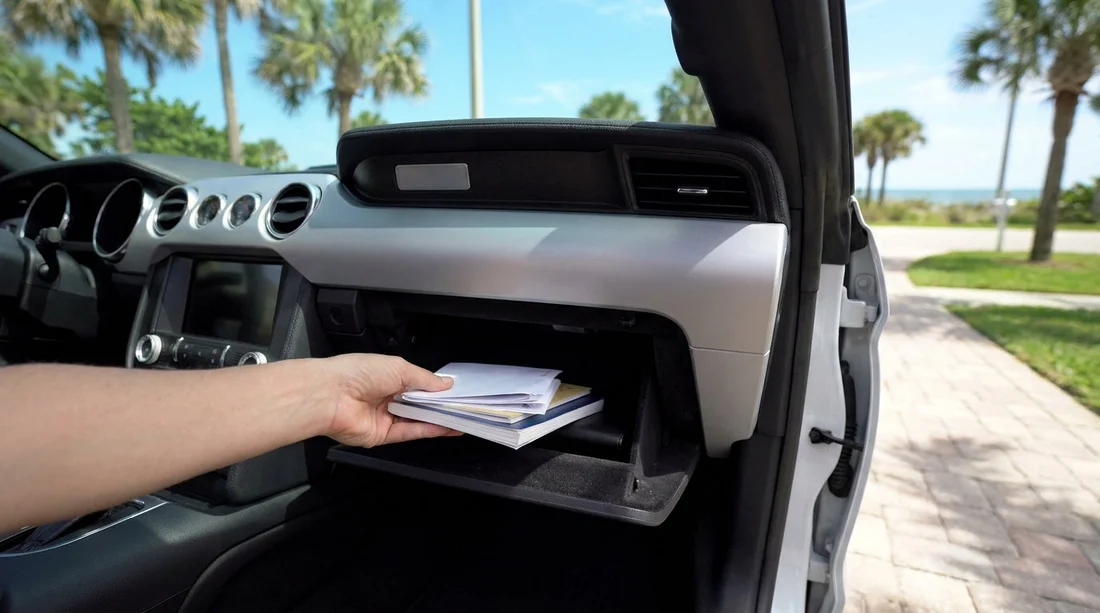
When you collect a car hire in Florida, most of your focus goes on the walkaround, fuel policy, and toll options. Equally important is the paperwork that should already be in the car, usually in the glovebox or a pouch in the centre console. If you are stopped by law enforcement, involved in a collision, or need roadside help, having the right documents to hand saves time and stress.
This guide explains what you should expect to find inside a typical US rental car in Florida, what you should carry on your person, and what to query at the counter before you drive off. Collection processes vary slightly by airport and brand, whether you are picking up near Miami Airport or heading straight out from Downtown Miami, but the essentials are broadly consistent.
1) Vehicle registration proof (in Florida, usually not a paper “title”)
The single most important document that should be in the glovebox is proof the vehicle is registered. In the US, you are not expected to carry a vehicle “title”, but there should be a registration card or equivalent document showing the car is legally registered. It is commonly a small card and may be in the rental company’s name because they own the vehicle.
Match the vehicle details: Confirm the registration lists the same licence plate number and vehicle identification details that correspond to the car you have been given. If the plate differs from your paperwork, ask immediately, as mismatches can cause hassle during a traffic stop.
Check it is present and legible: A missing registration card is not something to ignore. If it is absent, return to the counter or booth and request it, or ask for written confirmation of where it is stored if they use an alternative holder.
2) Evidence of insurance, and how rentals handle it
Drivers often expect an “insurance certificate” like in the UK, but US rentals do not always include a traditional proof-of-insurance card in the glovebox. Some fleets include an insurance information card, others rely on self-insurance, captive insurance arrangements, or policy details linked to the rental agreement.
Insurance information card (if provided), showing insurer details, policy number, and contact phone numbers. Sometimes this is combined with a claims instructions sheet.
Damage and claims guidance, telling you what to do after an incident and which number to call first.
Where is proof of insurance kept? Ask how to evidence coverage if stopped. If you have purchased or been provided with liability coverage, collision damage waiver, or similar protections, make sure your rental agreement clearly reflects that. The agreement is often the practical “proof” you will show if needed.
Who is the insurer for liability? This is useful information if there is an accident. Even if you never need it, knowing whether the rental company self-insures or uses an external insurer helps you follow the right process later.
If you are picking up through a major brand, the paperwork layout is usually predictable. For example, collections tied to Enterprise car hire in Florida may place key contact numbers and claims steps on the rental jacket or agreement printout, rather than as a separate glovebox card.
3) A copy of the rental agreement, and why it matters
You may receive the rental agreement at the counter, by email, via an app, or printed in a sleeve. Even if you have a digital copy, it is helpful to have a paper copy in the car. Some rental companies include a copy in the glovebox pack, others do not.
Before driving off, make sure you have access to the agreement and that it is correct. Key items to verify include vehicle identification, rental period, authorised drivers, fuel policy, and any protection products shown on the contract.
Tip: Keep your agreement somewhere reachable while parked, but not visible from outside. A glovebox or closed centre console is ideal.
4) Accident report kit or incident instructions
Many rentals include an accident report form, sometimes called an incident report kit. It may be a simple leaflet telling you what to do, who to call, and what information to collect. In stressful moments, having clear steps matters more than you think.
Emergency guidance: A reminder to call 911 for injuries, hazards, or major incidents, and to move to a safe location if possible.
Claims phone number: A dedicated line for accidents or vehicle damage reporting.
Information checklist: Other driver details, insurance details, witnesses, location, and police report information.
If you cannot find any accident instructions, ask at the counter which number to call for an accident and where those details appear in your documents. This is particularly useful if you are travelling with family and using a larger vehicle, such as one arranged through van rental in Florida, where incident handling can be a little more complex due to passenger and luggage considerations.
5) Roadside assistance and breakdown information
Florida’s heat, sudden storms, and long highway runs mean you should know the breakdown process. Your glovebox pack may include a roadside assistance card, or the phone number may be printed on the key tag and rental agreement.
24-hour roadside number, ideally with instructions on what information you will be asked for.
Procedure for flat tyres, jump starts, lockouts, and towing. Policies vary on whether tyre replacement is covered, particularly if the tyre is damaged rather than punctured.
If your trip includes a long drive from South Florida across the state, or you are collecting from an airport further north such as via Avis car hire in Tampa, confirm roadside coverage details before you leave the lot, especially if you plan to drive late at night.
6) What you should carry yourself, not leave in the glovebox
Some documents should not be left in the car, even if it feels convenient. In Florida you should carry your driving licence, keep valid ID accessible, and make sure you can access your booking details and support contacts without relying on mobile data.
7) A simple glovebox checklist before you exit the car park
Use this quick check while the car is still parked and you can easily return to the counter. Confirm registration is present, the rental agreement is accessible and correct, insurance or claims instructions are clear, accident steps and numbers are easy to find, and you know the roadside process.
If anything is missing, it is normal to query it. It is far easier to fix paperwork issues before you leave than after you are on I-95 in heavy traffic.
FAQ
Q: Is it normal if there is no insurance card in the glovebox?
A: Yes, it can be normal. Many US rentals rely on the rental agreement and internal insurance arrangements. Confirm at the counter what proves coverage if you are stopped or involved in an accident.
Q: What is the one document that must be in the car?
A: Proof of registration should be in the vehicle. If you cannot find it, ask for it before you drive away, as it is commonly requested during a traffic stop.
Q: Do I need to keep a printed rental agreement in the glovebox?
A: It is strongly recommended, even if you also have a digital copy. If you only have a digital agreement, ensure you can access it quickly without relying on mobile data.
Q: What should I do if the licence plate does not match my rental paperwork?
A: Do not drive off. Return to the counter or exit booth so they can correct the contract or confirm you have been allocated the correct vehicle.
Q: Where do I find the roadside assistance number?
A: Check the glovebox pack, the key tag, and your rental agreement. If you cannot find a dedicated roadside number, ask the counter staff to point it out in writing.





























































































