


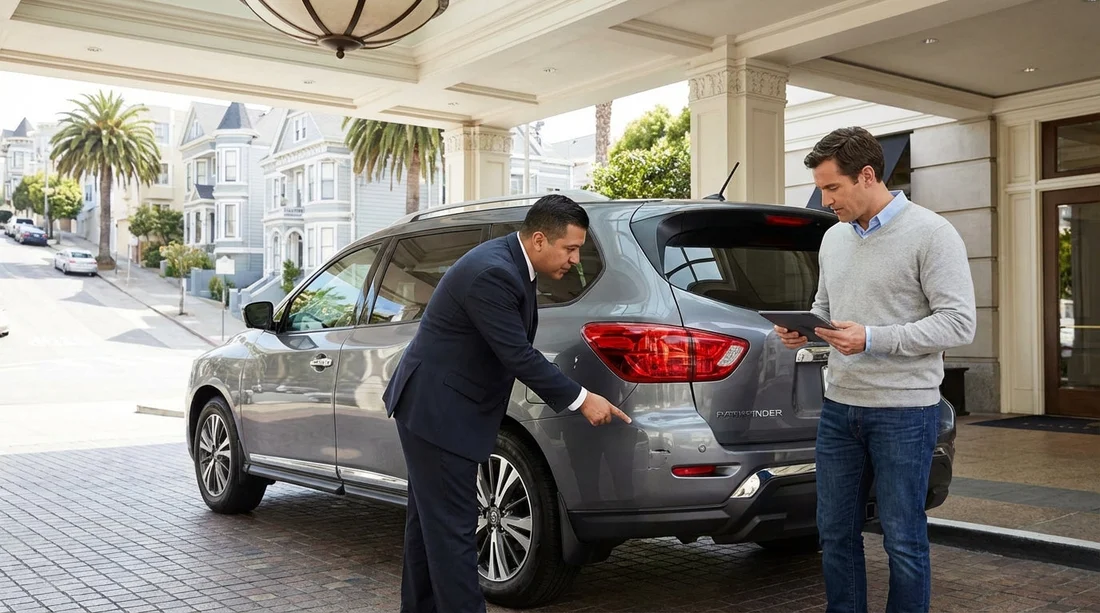
Quick Summary:
- Photograph every panel, wheels, roof, and interior before handing keys over.
- Remove valuables, chargers, toll tags, and loose items from cabin and boot.
- Get written confirmation of valet rates, taxes, and overnight charges upfront.
- Confirm in and out privileges, key storage method, and damage reporting process.
Hotel valet parking can be convenient in San Francisco, especially if you are staying downtown, near Union Square, or close to the waterfront where kerbside parking is limited. It can also be a common source of friction for travellers using car hire, because responsibility for the vehicle temporarily changes hands and charges can be added in ways that are not obvious at check-in. The good news is that most disputes are avoidable with a short, repeatable handover routine and a few clear questions.
This guide focuses on three things: how to document the car before handover, what to remove from the cabin and boot, and how to confirm pricing and in and out privileges so you do not get surprised at checkout.
Why valet disputes and add-on fees happen
Valet operations are busy. Cars are moved frequently, parked tightly, and sometimes stored off-site. In that environment, minor scuffs can occur, and if you did not document the vehicle’s condition at the moment you handed over the keys, it can become difficult to prove what happened and when. Add-on fees often come from misunderstandings about daily versus overnight rates, taxes and local surcharges, “premium” vehicle upcharges, and whether you can take the car in and out without paying a new entry fee each time.
San Francisco adds a few local twists. Many hotels have limited on-site spaces and use contracted garages. Some garages have strict height limits, so SUVs may be parked elsewhere. That can increase key handoffs and vehicle movements, which increases the importance of documentation and clear instructions.
If you are collecting your car near the airport and then heading straight to a hotel, it helps to set expectations early at collection. For example, if you are comparing options around San Francisco SFO car hire, make sure you understand any rental company guidance on valet parking, key handling, and what to do if damage is alleged.
Step-by-step: document the car before you hand it to valet
The aim is to create a time-stamped snapshot of the car’s condition and mileage, plus proof that you handed it over in that condition. Do this every time you hand the car to valet, not only on the first night.
1) Choose the right place and time
Do the walkaround in the hotel drop-off lane before you exit the vehicle fully. If there is traffic pressure, you can pull into a safe spot nearby and finish quickly. Avoid doing it after the valet has already driven away, because you lose the reference point of handover.
2) Take a complete exterior video first
Start recording a slow 360-degree video. Keep the entire car in frame, then move closer to each corner. Make sure the video captures the licence plate. Do not rush the wheels, because kerb rash and scratches are frequent dispute points.
3) Photograph high-risk areas
After the video, take still photos of:
Front bumper and grille, especially lower edges. Rear bumper corners, often scraped in tight garages. Both side mirrors, common in narrow ramps. All four wheels and tyres, including rims. Roof and windscreen if you can safely angle the camera, because low-clearance garages can cause contact marks. Any existing dents, chips, or paint transfer you notice.
4) Capture the interior condition
Take quick photos of the dashboard and centre console, seats, footwells, and boot. This is not only about damage. It shows you removed personal items and helps avoid arguments about missing property.
5) Record mileage and fuel level
Photograph the odometer and fuel gauge. This matters because valet staff may move the car to off-site storage, and you want a record if there is unexpected mileage. If your rental agreement has a fuel return policy, this also keeps your own notes consistent.
6) Note the time and the valet ticket number
Photograph the valet ticket, or at minimum, record the ticket number in your phone notes together with the time. If the hotel uses a digital system, screenshot the confirmation screen. If there is a named attendant, note the name. You are not trying to catch anyone out, you are creating a clear chain of custody.
7) Ask for an intake check if available
Some valets will do a quick intake walkaround. If they point out existing scratches, ask them to mark it on the ticket or confirm in writing. A simple note like “existing scratch rear left bumper” can be enough to prevent later disputes.
What to remove from the cabin and boot before valet
Even reputable valets operate in a high-traffic environment. Reducing temptation and eliminating misunderstandings is part of protecting yourself. Treat it as you would an airport security check: do a quick sweep every time.
Valuables and identity items
Remove passports, driving licence documents not required to be in the car, credit cards, cash, and any jewellery. Do not leave laptops, tablets, cameras, or high-end headphones in the boot, because staff may access it to retrieve luggage space or move items.
Charging cables and accessories
It sounds minor, but missing cables and car chargers are a frequent annoyance. Put them in your bag so you do not later wonder if you left them in the vehicle or lost them elsewhere.
Garage door openers and home details
If you are travelling with anything that reveals your home address or gives access to your home, do not leave it in the car.
Toll tags and rental equipment
Do not remove rental-provided items that are meant to stay with the car, such as a transponder if it is fixed. But do secure anything loose, like a portable toll tag you brought yourself, because it can be misplaced and could generate unintended toll charges if used elsewhere.
Loose items that can cause damage
Water bottles, hard suitcases, sports equipment, and anything that can roll can scuff interior panels when the car is driven or parked on ramps. Place these in the boot securely or remove them.
Set the car up to reduce mistakes
Turn off headlights if not automatic. Fold mirrors if you can and if it is safe to do so. Leave the key and only the key, avoid handing over your keyring with house keys attached. If the car has a keyless fob, keep a spare fob with you if you have one, and make sure you know which fob you are handing over.
Confirm pricing clearly, including in and out privileges
Many add-on fees come from assumptions. Hotels sometimes quote a headline rate that excludes taxes, “facility fees”, or overnight surcharges. Others have different rates for SUVs or larger vehicles. Always confirm the full price structure in writing or on the printed valet ticket terms.
Questions to ask at the moment you hand over the car
Ask these calmly, and note the answers:
What is the nightly rate including taxes and any hotel or garage fees? Is there a separate in and out rate during the day? Is there a grace period for pick-up after checkout? Do I have in and out privileges, and how many exits per day are included? If I leave and return, do I pay a new entry fee? Are there any size or SUV surcharges? Is tipping included or expected separately? Where will the car be stored, on-site or off-site?
Match the rules to your itinerary
If you plan to drive out to Marin, Napa, or down the peninsula and return later, in and out privileges can matter more than the headline overnight rate. A cheaper nightly rate can become expensive if each exit triggers a new charge.
Know the likely pinch points for bigger vehicles
If you are driving a larger model, confirm height limits and off-site storage. If you are selecting a bigger vehicle for hills or luggage, compare options like SUV rental near San Francisco SFO, then ask the hotel whether their valet can accommodate it without off-site transfers or extra fees.
Get proof of the agreed terms
Ask for a receipt or ticket that shows the daily rate and states whether in and out is included. If the valet uses signage, photograph the sign that lists the pricing and rules. It is not confrontational, it is simply documentation.
Handover etiquette that reduces risk
Small habits can prevent big problems.
Hand over the car while you are present
Do not leave the keys at the front desk unless the hotel has a formal secured key process. If you must leave keys, ask where they will be stored, who has access, and whether the handover is logged.
Ask where the car will be parked
Off-site storage is not automatically bad, but it increases movements and the chance of incidental damage. If it is off-site, ask how long retrieval takes and whether it is moved by insured staff.
Set expectations about the boot
If you have luggage in the boot and you expect to access it later, tell the valet. This reduces rummaging and makes it clearer if you need a supervised boot opening later.
Keep the valet ticket safe
The ticket is your claim check and often contains the terms and conditions. Photograph it and keep the physical copy in your wallet.
When you retrieve the car: inspect before you drive away
Disputes are easiest to resolve immediately, while the car is still within the valet’s control and cameras may be reviewed quickly.
Do a quick exterior check in the pick-up lane
Focus on bumpers, wheels, mirrors, and doors. Use your phone torch if lighting is poor. Compare with your earlier photos if you suspect a change.
Check the interior for missing property
Confirm nothing you left by mistake has disappeared. If you removed valuables as recommended, this becomes a fast check rather than a stressful one.
If you notice damage, do not move the car
Report it immediately to the valet supervisor and the hotel manager on duty. Take fresh time-stamped photos and video, including wide shots that show the pick-up area. Ask for an incident report in writing and the contact details for the valet company. If there are nearby cameras, request that footage be preserved.
Keep rental reporting aligned
If you are driving a vehicle from a major brand, the rental company will have guidance on incident reporting. For example, if you arranged your car through Avis car rental at San Francisco SFO or Enterprise car hire at San Francisco SFO, keep any valet incident report and your photos together so you can provide consistent documentation if asked later.
Reduce the chance of surprise fees at checkout
Even when nothing goes wrong, charges can drift from what you expected. These steps keep costs predictable.
Ask how charges are posted
Some hotels post valet charges to your room nightly, others only at the end. If it posts nightly, review your folio daily so you can correct errors while records are easy to pull.
Understand partial-day rules
Hotels can treat a late afternoon pickup as another day. Ask about cut-off times. If you need the car for luggage storage after checkout, compare the cost of valet versus nearby public garages, but keep external options out of your decision if you want a single accountable provider.
Confirm what happens if you lose the ticket
Lost ticket fees can be high and may require ID checks. Knowing the process reduces stress if it happens.
Keep your own timeline
Note when you dropped off and picked up the car. If you are challenged on the number of days charged, your notes and the photo of the ticket help resolve it quickly.
Special considerations for San Francisco driving and parking
San Francisco’s steep streets and tight spaces can create marks that are later blamed on valet. When you arrive at the hotel, be mindful of kerbs and driveway angles. If you hear a scrape on entry, stop and inspect immediately, and photograph it before handing over the keys. This simple moment can prevent confusion about whether the scrape happened under your control or valet control.
Also, if you are planning day trips south, you might pick up or swap vehicles outside the city. Options around car hire at San Jose SJC can be convenient for itineraries that begin or end in Silicon Valley, and it can reduce time spent dealing with downtown parking logistics.
FAQ
How many photos should I take before handing my car hire to a hotel valet?
Aim for one full walkaround video plus 10 to 15 photos covering bumpers, wheels, mirrors, roofline, interior, odometer, fuel level, and the valet ticket.
Should I leave luggage in the boot when using valet parking in San Francisco?
It is better to remove valuables and essentials. If you must leave luggage, secure it, tell the valet it is in the boot, and photograph the boot contents area to reduce misunderstandings.
What does “in and out privileges” usually mean for hotel valet parking?
It typically means you can retrieve the car and return it the same day without paying a new entry fee. Always confirm limits, cut-off times, and whether it applies overnight.
What should I do if the valet claims I caused damage?
Ask to see their intake notes, compare with your photos, and request a written incident report. Keep communication factual and do not sign anything stating fault unless you are certain.
Can valet staff drive my car hire off-site, and is that normal?
Yes, some hotels use off-site garages due to limited space. Ask where it will be stored, how many movements are typical, and keep odometer photos for reference.





























































































