


Quick Summary:
- Use the designated key drop box, and keep your drop-off receipt.
- Photograph fuel gauge, mileage, and all sides with clear timestamps.
- Park only in signed return bays, and lock the car fully.
- Liability usually ends at documented drop-off time, not later inspection.
After-hours returns are common in Orlando, especially for early flights out of MCO or late arrivals back from theme parks. The key question is not only “Can I return the car out of hours?” but also “When does liability end if the vehicle is checked in later?” The practical answer is that you can usually drop the car outside desk hours using the return lanes and a key drop box, but you must leave a clear trail of evidence that shows the car was returned correctly, on time, and in the agreed condition.
This guide explains how after-hours drop-off typically works at Orlando Airport and nearby locations, what evidence helps if there is a later dispute, and how fuel level and timestamps can affect charges when the car is inspected after you have left.
Can I return a car hire vehicle out of hours in Orlando?
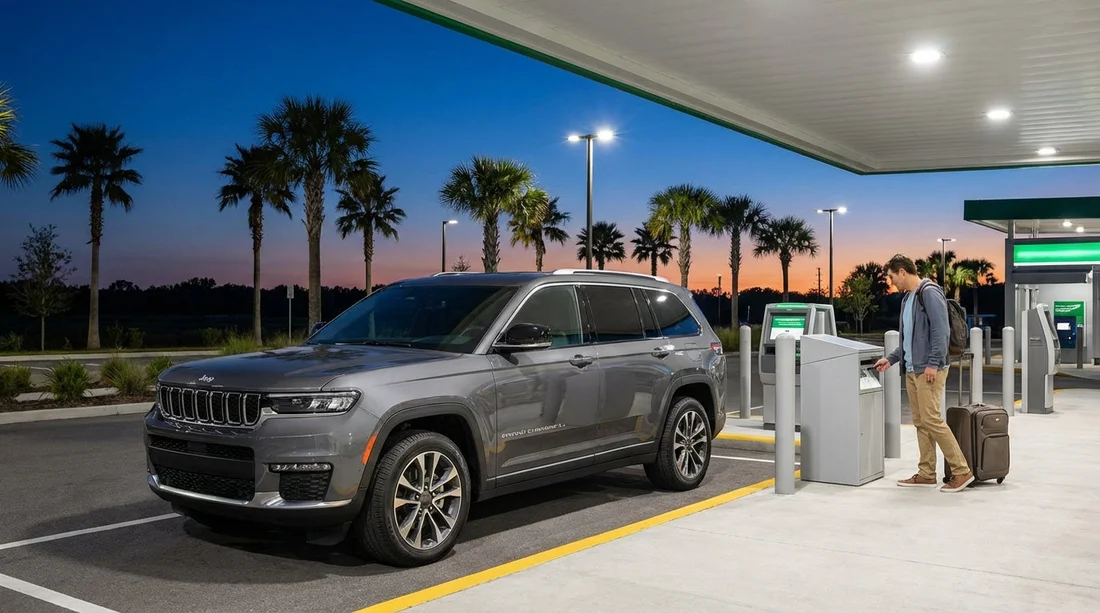
In most Orlando car hire setups, yes. After-hours drop-off exists because flights and hotel check-outs do not always line up with counter hours. At airport locations, the return process is often designed to be 24 hours even if the staffed desk is not. You drive to the signed returns area, park in a marked bay, secure the vehicle, and deposit the keys in a secure box.
If you are collecting or returning at Orlando International Airport, it helps to review the location details before your trip. Hola Car Rentals publishes airport-specific pages such as Orlando MCO airport car hire and car hire Orlando MCO, which are useful for checking which suppliers operate there and planning your return timing.
Not every off-airport branch offers true after-hours returns, and some allow key drop only if you have requested it in advance. Your rental agreement and the supplier’s return instructions are the authority, so keep them accessible on your phone.
How an after-hours drop-off usually works
Although the details vary by supplier, most after-hours returns in Orlando follow the same pattern:
1) Enter the return area and follow signage. Airport returns are typically well signposted. Go to the correct supplier lane and keep speed low.
2) Park in an authorised bay. Choose a standard bay unless you have been told to use an overflow area. Avoid leaving the car in a non-return space, even if it feels close to the office.
3) Gather your evidence before you leave the vehicle. This is the most important step for avoiding disputes if the vehicle is checked in later.
4) Lock the car and drop the keys securely. Use only the official key drop box for that supplier. Do not leave keys on the seat, in the glovebox, or with third parties.
5) Keep any confirmation. Some locations provide a printed drop slip, a barcode scan, or an automated email later. If a receipt is available, take it.
Key drop boxes: what to look for and common mistakes
A key drop box is typically a metal chute or locked box near the return office or exit route from the returns area. It may be marked “Key Drop”, “After Hours Return”, or show the supplier’s branding. Use it only after you have finished photographing the car and its condition.
Common mistakes that lead to problems later include:
Using the wrong key box. At MCO, several brands can be close together. Dropping keys into the wrong box can delay check-in and create a gap between your actual return time and the recorded return time.
Leaving belongings inside. After-hours returns mean no staff member is there to help recover items. Check under seats and in door pockets, and photograph the empty boot if you want extra reassurance.
Not fully securing the car. Shut all doors, close the boot, raise the windows, and lock the vehicle. If the car is left unlocked, disputes can become harder, especially if the vehicle is later found with damage or missing items.
When does liability end if the car is checked in later?
Liability is the responsibility for the vehicle and potential costs such as damage, theft, or extra charges. With Orlando car hire, the point when liability ends is usually tied to the rental agreement’s definition of “return”, not the time a staff member inspects the vehicle. Many agreements treat the car as returned when it is left in the designated return area, in the right condition, with keys surrendered, within the agreed time.
However, because inspections can happen hours later, you should assume that anything unclear will be interpreted using the supplier’s records. That is why your own time-stamped evidence matters. If there is ever a query, the strongest position is being able to show:
You returned the car to the correct place.
You returned it on time.
The fuel level and mileage were within the agreed terms.
The car had no new damage when you left it.
Some suppliers include clauses stating you remain responsible until the car is inspected during business hours. Others state responsibility ends once keys are deposited and the car is left in the agreed location. If the wording is unclear, act as though you need to prove your drop-off time and the vehicle’s condition, because that evidence can resolve most disputes quickly.
What photos to take at drop-off (a dispute-proof checklist)
Your phone can be your best protection for after-hours returns. Take photos in good light where possible, and do it methodically. The goal is to capture condition, location, fuel, mileage, and time context.
Exterior walkaround photos. Take each side of the car, plus front and rear. Include bumpers and lower panels, where scrapes are common. If the return area has signs or lane markers, include them in at least one wide shot to show you were in the correct place.
Close-ups of existing marks. If you noticed any chips or scratches at pick-up, photograph them again at drop-off. This reduces the risk of those marks being treated as new.
Wheels and tyres. Take a photo of each wheel. Kerb rash and tyre damage are common sources of disagreement.
Fuel gauge. Photograph the fuel level with the ignition on. If it is a hybrid or has unusual displays, capture the relevant indicator clearly.
Odometer reading. A mileage photo helps if there are claims about excessive use, unauthorised travel, or a mismatch in recorded mileage.
Dashboard warning lights. If no warnings are present, a quick photo can help. If a light is on, note it and report it through the supplier’s process.
Key drop proof. If signage permits, photograph the key drop box and, ideally, the moment just before you drop the keys. Do not obstruct other customers. If photography is restricted, take a photo of the box signage from a respectful distance and then rely on time-stamped images of the car in the return bay.
Time stamps are often stored in photo metadata rather than displayed on the image. Keep your original files and avoid sending only compressed versions if a dispute arises, because metadata can be lost.
Fuel level, time stamps, and why they matter
Fuel and timing are the two most common sources of after-hours disagreements.
Fuel level issues. If your agreement is full-to-full, the supplier will expect a full tank at return. When the car is checked in later, the fuel gauge may read slightly lower due to temperature, how the car was parked, or the time elapsed. Your fuel gauge photo at the point of return helps show what the level was when you left it.
To reduce the risk further, refuel close to the return location and keep the fuel receipt. The receipt shows time and place, which supports your narrative if the supplier claims the tank was not filled. A station near the airport can cost more, but it can also reduce uncertainty.
Time stamps and late return claims. If the car is scanned into the system hours later, a late fee can be triggered if the supplier records the inspection time as the return time. Your photos, plus any automated gate receipt or parking ticket timestamp, can help establish that the car was returned before the deadline.
For Orlando airport scenarios, planning your route to MCO matters, because traffic around the airport and I-4 can be unpredictable. Aim to arrive with a buffer so your drop-off is clearly within the contracted time.
How to reduce disputes when check-in happens later
After-hours drop-off is not inherently risky, but it shifts the burden onto you to document the handover. These steps reduce the odds of surprise charges:
Read the return instructions before your last day. Check whether the supplier wants keys in a drop box, left with security, or taken to a particular desk. If you arranged car hire through a specific supplier page, it can help to re-check the location context. For instance, if you are comparing providers, pages like Payless car rental Orlando MCO and Avis car hire Disney Orlando MCO can be useful reference points for understanding which brands are involved at MCO.
Arrive during staffed hours if you can. If your schedule allows, returning when staff are present is the simplest way to close out the rental cleanly. You can request an on-the-spot inspection and confirmation.
Keep all documents. Save your rental agreement, check-out inspection notes, fuel receipts, and any emails or SMS confirmations. If the supplier uses an app, keep screenshots of return instructions.
Use a calm, consistent photo routine. Repeating the same shots at pick-up and drop-off makes comparisons straightforward. If you picked up at MCO, do the same angles at return.
Do not rely on “it looked fine”. In a dark garage, minor damage can be hard to see. Use your torch mode if needed and take extra photos rather than fewer.
Report issues promptly. If you notice a new scratch or a tyre issue at the end of the trip, document it and notify the supplier through their approved channel as soon as possible. Prompt, factual reporting tends to reduce escalation.
Special considerations: families, larger vehicles, and Disney-area returns
Orlando trips often involve child seats, buggies, and a lot of luggage. Extra passengers and larger vehicles can increase the chance of minor scrapes during loading or tight parking. If you have chosen a larger vehicle for space, be especially thorough with wheel and bumper photos.
Some travellers choose people carriers or vans for theme park trips. If that is your situation, it can help to check vehicle options and return logistics early. Pages such as van rental Disney Orlando MCO can help you understand what kinds of vehicles are commonly used for Orlando family travel, which in turn informs what to photograph and double-check at drop-off.
If you are returning from the Disney area to MCO very early, plan for refuelling and allow time to unload and photograph without rushing. Rushing is when keys are dropped in the wrong box or photos are forgotten.
What to do if you get a charge after an after-hours return
If a charge appears for fuel, late return, cleaning, or damage after you have returned the vehicle, gather your evidence before you respond. Check the invoice details and compare them with your photos and receipts. If the issue is fuel, your gauge photo and fuel receipt are key. If it is timing, look for any independent timestamp such as your photo metadata or a garage ticket.
Keep communication factual and organised. Provide a timeline with the drop-off time, where the car was parked, and attach a small set of the clearest photos that show condition and fuel. If needed, you can offer to share original images to preserve metadata.
FAQ
Can I do an after-hours car hire return at Orlando MCO? In many cases, yes. Airport returns are often designed for 24-hour vehicle drop-off even when the desk is closed. Follow the supplier’s signs, park in the correct return bay, and use the official key drop box.
When does my liability end if the car is inspected the next morning? It usually ends at the documented return time set out in your agreement, once the car is left in the authorised return area and the keys are surrendered. Because inspections can happen later, time-stamped photos and receipts help support your return time and condition.
What photos should I take when returning out of hours? Take wide shots of all four sides, close-ups of bumpers and wheels, the fuel gauge, the odometer, and a photo showing the car parked in the return area. Keep the original files so timestamps and metadata remain available.
How can I avoid fuel disputes on an after-hours return? Refuel close to the drop-off point, keep the fuel receipt, and photograph the fuel gauge with the ignition on at the return bay. These three items usually resolve most fuel-level disagreements.
What if I accidentally drop the keys in the wrong key box? Contact the supplier as soon as possible with the details, including time, location, and any photos. This can reduce delays in check-in and help prevent late-return issues caused by the keys being routed incorrectly.





























































































