


Quick Summary:
- Expect many Florida tolls to be roughly $0.50 to $5 per segment.
- SunPass usually costs less than TOLL-BY-PLATE for the same gantry.
- Airport and beach routes often include multiple small toll points.
- Estimate your total by counting gantries on your route, not miles.
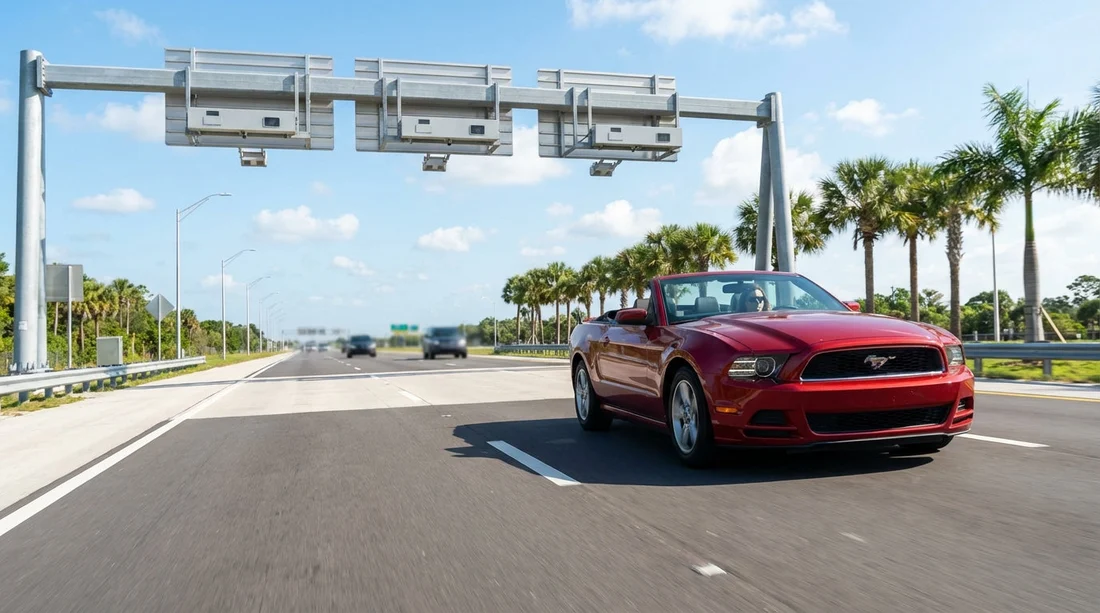
Florida has one of the busiest toll networks in the United States, and the answer to “how much are tolls?” depends on three main things, the road you use, how far you travel through tolled sections, and how you pay. Unlike a single flat fee, Florida tolls are often charged at multiple points along a route, sometimes every few exits or at “gantries” that read your pass as you drive underneath. That means two drivers can take the same motorway for a similar distance and pay different totals if one exits earlier, uses express lanes, or pays by plate.
If you are planning a trip with car hire, it is worth understanding the basics before you set off. Some toll roads are unavoidable for certain airport to hotel drives, and a few popular tourist corridors include repeated small tolls that add up. The good news is that Florida’s signage is clear, and you can control costs with a little route planning and by choosing the right payment method for your rental.
Typical toll prices in Florida, what you will actually pay
It helps to think in ranges rather than one number. In many parts of Florida, a single toll point on a major road can be around $0.50 to $2 for a standard two axle car, while longer turnpike journeys can reach several dollars. A drive that crosses multiple gantries, for example going through a metro area on a tolled beltway, may rack up $4 to $12 over the course of an hour without feeling like you have paid much at any single moment.
Here are realistic scenarios travellers often encounter:
Short hops on tolled connectors: Expect a couple of small tolls, often around $0.50 to $1.50 each, especially on airport access roads or bypasses that save time in traffic.
Metro area toll roads and expressways: These can involve several toll points in sequence. It is common to pay $2 to $8 depending on how many gantries you pass.
Longer Florida’s Turnpike trips: Costs vary with entry and exit points. A longer intercity run can easily be $10 to $25 across many segments, particularly if you stay on the turnpike for a substantial distance.
Express lanes: In some areas, express lanes use dynamic pricing. The cost can rise during busy periods, so the same stretch may be inexpensive at one time and noticeably higher at rush hour.
Because pricing is tied to where you enter and exit and whether you use express lanes, the best mindset is: count the tolled points you will pass, and assume each one is a small charge that may vary by time and lane.
Which roads are tolled, and where visitors notice it most
Florida tolling is concentrated around major population centres and on key north to south corridors. Visitors often meet tolls quickly after landing because some airport access routes connect to tolled expressways. Likewise, trips to theme parks, beaches, and cruise ports can pass through tolled sections that save time versus local roads.
Some of the most commonly tolled routes include parts of Florida’s Turnpike system and various expressways around major cities. You will also find tolled bridges and causeways in certain coastal areas. Even if your accommodation is only 20 to 30 miles away, you might still cross multiple toll points if the fastest route uses tolled expressways.
If you are coming from other parts of the US and comparing planning, Hola Car Rentals has destination pages that help you think through driving logistics and vehicle choice, for example Avis car hire United States, National car hire New York JFK, car hire Colorado DEN, and van hire Phoenix PHX. While those pages are not Florida specific, they are useful for understanding how rentals, fees, and driving patterns can differ by state and airport.
How payment works, SunPass, E-PASS, and TOLL-BY-PLATE
Florida primarily uses electronic tolling, so you may not see many staffed toll booths. Instead, you will encounter toll gantries and lanes marked for transponders. The two main pass systems you will hear about are SunPass and E-PASS. Both are electronic passes that link tolls to an account, and both are widely accepted in Florida. For visitors, the key takeaway is simple: paying with a pass is usually cheaper than paying by plate.
SunPass or E-PASS: A transponder is read as you pass through, and the toll is charged at the discounted rate where applicable. This tends to be the lowest cost way to pay, and it avoids the extra processing that can come with invoicing by plate.
TOLL-BY-PLATE: Cameras read your number plate and the tolling authority mails an invoice to the registered vehicle owner. For a rental, that typically means the invoice goes to the rental company, which then charges you according to the rental agreement. The toll rate itself is often higher than the transponder rate, and there may also be additional administrative charges from the rental provider.
For car hire travellers, this is where total cost can change the most. Two drivers can use the same road, and the one using TOLL-BY-PLATE through a rental can end up paying noticeably more once toll rate differences and processing fees are included.
Rental car toll options, what to check before driving off
With a hire car, tolls are less about how you physically pay in the lane and more about how the rental company will bill you afterwards. Many rental fleets have toll programmes that let you use toll roads without stopping, then charge tolls to your rental plus a daily or per use fee. Others allow you to bring your own compatible transponder, provided it is set up correctly and not linked to another vehicle at the same time.
Before you leave the car park, check these points in your paperwork or rental terms:
Is a toll programme enabled by default? Some providers activate it automatically, others require you to opt in.
What are the fees? Look for a daily charge (sometimes capped), a per toll service fee, or both.
How are tolls calculated? Confirm whether you will pay the toll authority rate plus admin, or a bundled rate.
How long do charges take to appear? Plate billed tolls can take days or weeks to process.
This is not about avoiding tolls at all costs. It is about avoiding surprises, especially if you will take multiple tolled routes in a single day.
Estimating your toll spend for a Florida itinerary
If you want a quick estimate without getting lost in spreadsheets, use this method:
1) Identify whether your main routes are tolled. Many sat nav apps show toll roads and offer a “avoid tolls” option. Toggle it on and off to see if tolls materially change journey time.
2) Count toll points rather than distance. In Florida, a 25 mile trip can have more tolled points than a 60 mile trip, depending on the roads.
3) Assume a conservative per gantry cost. For planning, use $1 to $2 per toll point for common urban gantries, then add extra if you know you will use the turnpike for a long stretch.
4) Add a buffer for payment method and rental fees. If you expect TOLL-BY-PLATE billing through a rental programme, add a sensible buffer to cover potential admin charges.
Example thinking, without tying it to a single city: if your daily sightseeing route likely crosses four gantries, plan for roughly $4 to $10 in tolls that day, plus any rental toll programme fees. If you have a longer intercity day on the turnpike, assume the toll component alone could be closer to $10 to $25 depending on entry and exit points.
Ways to reduce toll costs without making drives miserable
Florida is built for driving, and paying a few dollars in tolls can be worth it for time and simpler routes. Still, if you are trying to keep travel costs predictable, these strategies help:
Use a transponder option where it makes sense. A pass based payment method can reduce the toll rate, and it may reduce processing overhead compared with plate invoicing.
Avoid express lanes at peak times. If dynamic pricing is in play, waiting 20 minutes or using the general lanes might save money.
Bundle your tolled trips. If your rental’s toll programme charges a daily fee on days you incur tolls, it can be cheaper to do all tolled driving on fewer days and use local roads on others.
Review the “avoid tolls” route before you commit. Sometimes the toll free route is only a few minutes slower and can be calmer if you prefer scenic roads.
Check for tolled bridges and causeways. Coastal drives can include small bridge tolls that are easy to miss when estimating costs.
The best approach for most visitors is balance. Use toll roads for airport transfers and longer cross town connections, then mix in local routes when you are not in a hurry.
Common misunderstandings about Florida tolls
“If I never stop at a toll booth, I must not have paid.” Many Florida roads are cashless, so a smooth drive under gantries can still generate charges.
“All tolls cost about the same.” Prices vary by road, by segment, and sometimes by time of day in express lanes.
“TOLL-BY-PLATE is just the same as a transponder.” It is often more expensive, and for rentals it may bring additional billing fees.
“Avoid tolls always saves money.” It can, but it may also add mileage, fuel, and time, so compare the total travel cost.
FAQ
Q: What is a typical toll in Florida for a normal car?
A: Many individual toll points are roughly $0.50 to $2, but a full trip can include several gantries. Longer turnpike journeys can total $10 to $25 or more depending on entry and exit.
Q: Are tolls in Florida cheaper with SunPass?
A: Often yes. SunPass or similar transponder payments commonly receive lower rates than TOLL-BY-PLATE, which can be higher and may trigger extra processing steps for rentals.
Q: How do tolls work with car hire in Florida?
A: If the hire car is billed by plate or through a toll programme, tolls are usually charged to the rental company first and then passed to you. Check for any daily or per use administrative fees in the rental terms.
Q: Can I avoid tolls completely when driving in Florida?
A: In many areas you can choose toll free routes, but they may take longer, especially around major metro areas. Some destinations are much simpler to reach using short tolled connectors.
Q: Why do my Florida toll charges appear days after my trip?
A: Plate billed tolls can take time to process and be forwarded through a rental company’s billing system. Transponder based tolls usually post faster, but timing still varies.





























































































