


Quick Summary:
- LDW or SCDW may exclude tyres, glass and underbody unless clearly stated.
- Ask for the written coverage schedule, not just a verbal summary.
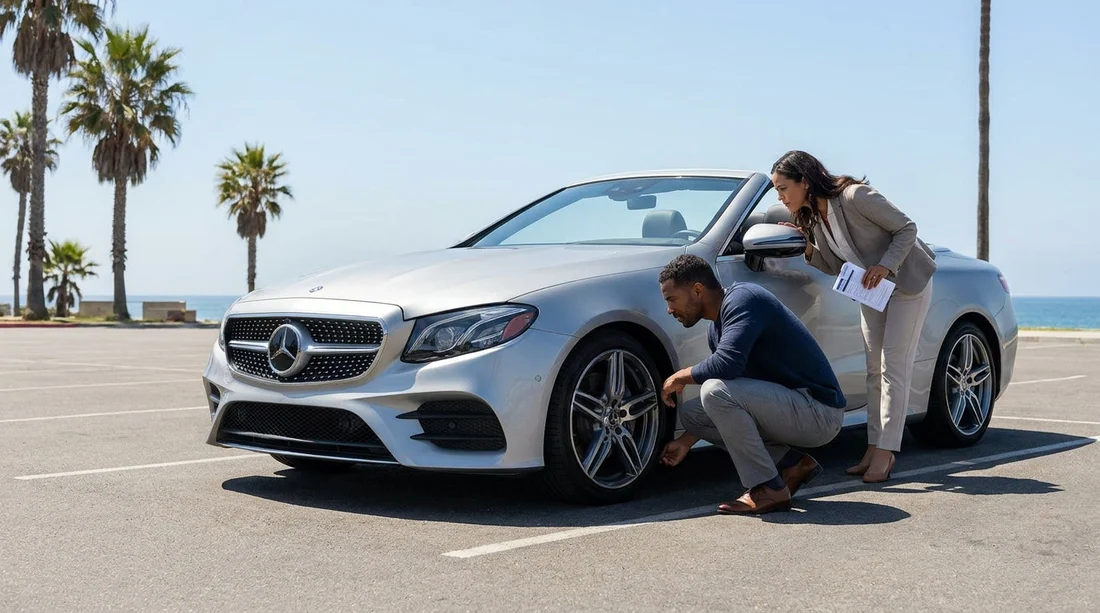
- Photograph wheels, windscreen and lower edges before leaving the lot.
- Confirm deductibles, exclusions and roadside assistance before buying any add-ons.
When you pick up a car hire in California, you may be offered LDW (Loss Damage Waiver) or SCDW (Super Collision Damage Waiver). The names sound reassuring, but many renters are surprised to learn that tyres, glass and underbody damage can be excluded, limited, or covered only in specific circumstances. The detail is in the rental agreement, the coverage schedule, and the state-specific terms used by the rental company.
This guide explains what LDW and SCDW typically do, why tyres, glass and underbody are commonly carved out, and the practical checks to make before you accept the agreement at the counter.
What LDW and SCDW usually mean in California car hire
In California, LDW is commonly a contractual waiver where the rental company agrees not to pursue you for certain damage or theft of the vehicle, provided you comply with the agreement. It is not always described as “insurance”, and it often comes with exclusions, a deductible (sometimes called an excess), and responsibilities such as reporting damage promptly.
SCDW usually means a more comprehensive waiver that reduces your financial exposure, often by lowering the deductible or expanding the types of damage covered. However, “super” does not automatically mean “everything”, and some of the most frequent exclusions across the industry are tyres, glass, roof, underbody and interior.
If you are collecting near major hubs such as Los Angeles Airport or San Diego, expect the counter conversation to move quickly. The safest approach is to base decisions on the written inclusions and exclusions rather than shorthand descriptions.
Does LDW cover tyre damage?
Often, no, not fully. Tyre damage is frequently excluded from standard LDW because tyres are treated as wear-and-tear items or because punctures and sidewall damage are common and hard to attribute to a single incident. Even where LDW applies to “damage”, the agreement may specify that tyres, rims or hubcaps are not included unless damage occurs as part of a covered collision event.
Common scenarios that may be excluded include punctures from nails, slow leaks, sidewall blowouts from kerbs, and rim scuffs. Some products treat vandalism differently, but you still need it written down. If you are driving long distances between cities, or plan to explore coastal routes with debris on the shoulder, tyre cover can be worth checking carefully.
What to confirm at pick-up: whether “tyres and wheels” are listed as included, whether rim damage is included, and whether there is any cap on replacement costs. Also ask whether roadside assistance is included, because a covered tyre replacement is less helpful if towing or callout fees are excluded.
Does LDW cover glass and windscreen damage?
Glass is another frequent grey area. Standard LDW sometimes excludes windscreen and windows, or covers glass only when it is damaged during a covered collision. In California, stone chips on freeways are common, and a small chip can quickly spread into a crack. Many agreements treat chips as damage for which you are responsible, even if you did nothing wrong.
Ask whether the waiver includes windscreen, side windows, rear window, mirrors, and headlight lenses. Some products only cover the windscreen, not mirrors or lights. Also confirm whether “glass cover” is separate and whether it removes the deductible or simply reduces it.
If you are picking up for city driving, glass risk may be lower than for heavy freeway mileage, but it is not zero. Construction zones and high-speed roads can generate chips even on short journeys.
Does LDW cover underbody damage?
Underbody damage is commonly excluded, even where LDW otherwise applies. Rental companies often exclude it because the undercarriage is difficult to inspect at departure, and damage can occur from poor road surfaces, parking stops, steep driveways, floodwater, or off-road use.
In California, underbody claims often arise from scraping on angled entrances, hitting unseen debris, or driving on unpaved roads that are not permitted by the agreement. Even some scenic routes and trailhead access roads can be considered “unsealed”, so check your permitted use terms.
At pick-up, confirm whether “underbody, oil pan, sump, exhaust, suspension components” are excluded, and whether any underbody cover exists as a separate add-on. If you are hiring an SUV for extra clearance, you can compare options such as SUV rental in San Diego, but remember that higher clearance does not automatically change the coverage terms.
Why these items are often excluded
Tyres, glass and underbody are excluded for a mix of reasons: higher claim frequency, inspection difficulty, and behaviour control. A rental company can usually inspect body panels quickly, but it is harder to prove when a tyre was punctured or when an undertray was scraped. Exclusions help them manage cost and discourage prohibited driving, such as off-roading or travelling on restricted roads.
Because the exclusions are common, you should treat them as “not covered unless clearly included” rather than assuming LDW or SCDW includes them by default.
What to check before you accept the rental agreement
Use a simple checklist before you sign, especially if the counter is busy. First, ask for the written coverage summary and find the exclusions section. Look for specific words: tyres, wheels, rims, glass, windscreen, mirrors, lights, roof, underbody, interior, keys, and towing.
Second, confirm the deductible for each category. Some agreements apply one deductible for body damage but a different rule for glass, and separate fees can apply for “loss of use”, “diminution of value”, or “administration”. Even where these fees are restricted by the waiver, you should know what remains your responsibility.
Finally, inspect and document. Photograph each wheel, the windscreen (including existing chips), the front bumper and lower edges, and the underbody edges you can reasonably capture without crawling under the car. Take a short walkaround video at pick-up and drop-off, and keep time-stamped copies.
Choosing the right cover for California car hire
The best choice depends on your route, risk tolerance and what is already included. For example, if you are collecting through San Francisco Airport and plan mostly urban driving, your priorities might be a low deductible and clear glass protection. If you are covering longer distances, tyre and roadside assistance terms may matter more.
If you are offered SCDW, do not accept it purely on the label. Ask: does it add tyres, glass and underbody, or does it mainly reduce the deductible for collision? If it does not add those categories, you may need a separate wheel and glass product, or you might decide the risk is manageable with careful driving and thorough documentation.
Common pick-up situations where people get caught out
One common issue is assuming “full cover” includes everything. A counter agent may summarise quickly, but only the agreement and coverage schedule control what is covered. Another is missing small existing windscreen chips at pick-up, then being charged for a crack at return. Tyres can be similar, as sidewall scuffs and rim marks can be missed unless you look closely.
A final issue is roadside assistance. Even if your waiver covers the tyre itself, you may still pay for a callout, towing, or replacement service if roadside is not included or if the tyre issue is categorised as “negligence”. Ask how flat tyres are handled and whether you are expected to replace the tyre yourself.
FAQ
Is LDW the same as insurance for my California car hire? Not necessarily. LDW is usually a damage waiver in the rental contract, with exclusions and conditions. Treat it as contractual protection, and read what it does and does not waive.
Will SCDW automatically cover tyres, glass and underbody damage? Not automatically. SCDW often reduces the deductible for collision damage, but tyres, glass and underbody may still be excluded unless explicitly included in writing.
What wording should I look for in the agreement? Look for specific inclusion or exclusion of “tyres”, “wheels/rims”, “glass/windscreen”, and “underbody”. Also check terms for towing, roadside assistance, and prohibited roads that can void cover.
What should I photograph before leaving the lot? Take clear photos of each wheel and rim, the windscreen from inside and outside, mirrors and lights, and the lower front and side edges where underbody scrapes often start.
If I get a stone chip on the freeway, is it usually covered? Often it is not covered under basic LDW, and coverage varies by provider. If glass damage is a concern, confirm whether windscreen and other glass are included and whether any deductible applies.





























































































