


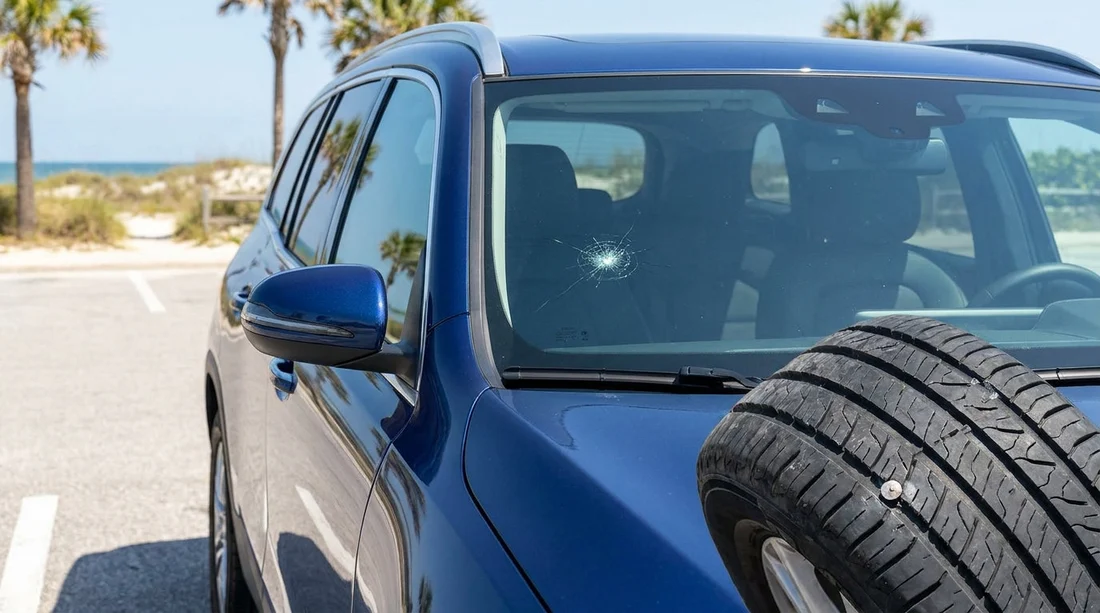
Quick Summary:
- LDW often covers bodywork, but may exclude glass and tyres.
- Read your rental agreement for glass, tyre, wheel, and underbody exclusions.
- Ask at pick-up if a separate glass-and-tyre option exists.
- Photograph wheels and windscreen before leaving, then report damage immediately.
When you collect a rental car in Florida, the counter conversation can move quickly, and it is easy to assume that “LDW” means everything is covered. In reality, Loss Damage Waiver (LDW) is a waiver of financial responsibility for certain types of damage, and the exact protection depends on the supplier’s terms. The tricky areas are windscreens and tyres, because these items are commonly carved out, limited, or handled under separate add-ons.
This guide explains what LDW typically does and does not cover for windscreen chips and tyre punctures on a Florida car hire, what exclusions to look for, and what you should confirm before you sign at pick-up.
What LDW usually covers on a Florida rental
In Florida, LDW usually relates to damage to the rental vehicle itself, for example dents, scrapes, or collision damage to body panels. It can also cover theft of the vehicle, depending on wording. However, it is not a single standard product across all suppliers, so there is no universal promise that “LDW covers everything”.
LDW is also different from liability insurance. Liability addresses damage or injury you cause to other people or property. LDW focuses on the hire car’s own damage costs. That is why you need to read the rental agreement carefully for the parts that list “excluded items”, “non-waivable charges”, and “damage not covered”.
If you are arranging pick-up around Fort Lauderdale Airport, you may see different terms depending on supplier and location, so it helps to review local details such as car hire at Fort Lauderdale Airport (FLL) and compare the rules you will actually be signing for.
Does LDW cover windscreen chips in Florida?
Often, LDW does not fully cover windscreen damage, even if it covers bodywork. Windscreen chips are frequently treated as “glass damage”, and glass is a common exclusion. Some suppliers may cover glass under LDW, but apply conditions such as limiting cover to certain causes, or excluding “wear and tear” type incidents.
Windscreen chips in Florida are common from highway debris, especially on major routes and in construction zones. A chip can look minor at pick-up and become a crack later due to heat, vibration, or air conditioning temperature changes. If the agreement excludes glass, you may be charged for repair or replacement, plus administration fees, and potentially loss-of-use charges while the car is repaired.
1) Find the glass wording. Look for lines that mention “glass”, “windscreen”, “windows”, “mirrors”, or “headlights”. Sometimes mirrors and lights are grouped with glass. If it says “glass excluded”, assume a windscreen chip is not covered.
2) Check for a separate option. Many desks offer an additional product that covers glass and tyres (often bundled). You are not judging the value of it until you know whether LDW already includes those parts.
3) Ask how chips are treated. Some suppliers treat small chips differently from cracks, and some have a threshold size. Get clarity in plain language before signing.
If you are collecting in Orlando for a theme-park trip, supplier terms can vary, so confirm the agreement details relevant to your collection point, for instance Budget car hire at Orlando MCO if that is the supplier and location you are using.
Does LDW cover tyre punctures in Florida?
Tyres are another frequent exclusion from LDW. Even when LDW is described broadly, tyres, wheels, and sometimes the underbody are commonly excluded as “non-covered components”. A puncture from a nail, screw, or road debris can happen anywhere, including car parks and suburban roads, and it is not necessarily associated with a collision. If tyres are excluded, you could be responsible for repair, replacement, call-out or towing, and any admin fees.
Also check whether the exclusion mentions wheels or rims. A tyre puncture is one thing, but kerb rash or a bent rim can lead to higher costs, and some agreements treat wheel damage separately from tyre damage.
Roadside assistance vs tyre cover. Roadside assistance may cover a tow or call-out, but not the tyre itself. A plan that sounds helpful may still leave you paying for the new tyre or repair.
Spare tyre policy. Many modern vehicles have no spare, only a sealant kit. If there is no spare, ask what happens if the tyre cannot be sealed safely.
Run-flat restrictions. Some cars have run-flat tyres. Driving any distance on a deflated tyre can ruin it, and you may be charged if you continue driving after a warning.
Florida road trips often involve longer distances, so if you are starting on the Gulf Coast, ensure you understand local support and coverage terms for your collection point, such as car rental at Tampa TPA.
Common exclusions and “gotchas” to look for
Even when LDW is included, charges can still apply if the damage falls within excluded categories or breaches conditions. Typical points to check include glass, tyres, wheels, roof, and underbody. Underbody damage can occur from kerbs, parking blocks, or uneven road shoulders, while roof damage can happen in car parks with low clearance.
Another common issue is negligence or misuse. If the supplier considers the incident avoidable, they may refuse the waiver. Examples include driving on a flat tyre, ignoring warning lights, or using the wrong fuel.
What to confirm at pick-up before you sign
To avoid surprises, ask the desk agent direct questions and match the answers to the agreement in front of you.
“Does LDW on this contract include windscreen and other glass?” If they say “no”, ask what option covers it, and whether mirrors and lights are included too.
“Are tyres and wheels covered for punctures and kerb damage?” If not, ask what happens if you get a puncture, including call-out and replacement costs.
“If damage occurs, what is the exact reporting process?” Get the phone number, whether photos are required, and whether you should return to a specific location.
If you are collecting from a city location rather than an airport, terms can still vary by supplier and branch, so take the same care, for example when using Hertz car rental in Downtown Miami.
Practical steps to reduce windscreen and tyre disputes
Do a slow walkaround and look at the glass properly. Check the windscreen from inside and outside. Chips can hide near the edges. If you spot anything, ensure it is recorded on the condition report, not just noted verbally.
Photograph the windscreen and each wheel close-up. Take clear photos with time and date metadata if possible. Include shots of any existing scuffs on rims and any existing chips.
Know what to do if you get a puncture. Pull over safely, avoid driving on a flat, and contact the supplier using the number on the contract. Ask whether they want you to use a specific service provider.
How to think about add-ons and third-party cover
You may see a separate product that covers glass and tyres, sometimes bundled with roadside assistance. Whether it is worthwhile depends on your risk tolerance, the supplier’s exclusions, and how much you would otherwise pay if something happens.
Also consider that some travellers rely on separate travel insurance or credit card benefits. The important point is that these do not automatically match the supplier’s process. Even if you have independent cover, the supplier may still charge you first and you claim back later, and glass and tyres may be excluded by your own policy too. Read your documents carefully and do not assume “comprehensive” includes tyres and windscreen chips.
FAQ
Does LDW always include windscreen and tyre damage in Florida? No. In Florida car hire, LDW commonly excludes glass and tyres, or limits them, so you must check the rental agreement wording for your supplier and location.
What wording should I look for in the contract? Look for sections titled “Exclusions”, “Not covered”, or “Damage not waived”, and scan for “glass”, “windscreen”, “tyres”, “wheels”, “rims”, “underbody”, and “roof”.
If I get a small windscreen chip, do I need to report it immediately? Yes. Report it as soon as you notice it, follow the supplier’s instructions, and take photos. Delays can make it harder to show what happened and when.
Is roadside assistance the same as tyre cover? Usually not. Roadside assistance may cover help getting moving again, but you might still pay for tyre repair or replacement if tyres are excluded from LDW.
What is the best way to avoid being blamed for existing glass or wheel damage? Inspect carefully at pick-up, ensure any marks are written on the condition report, and take clear photos of the windscreen and each wheel before leaving.





























































































