


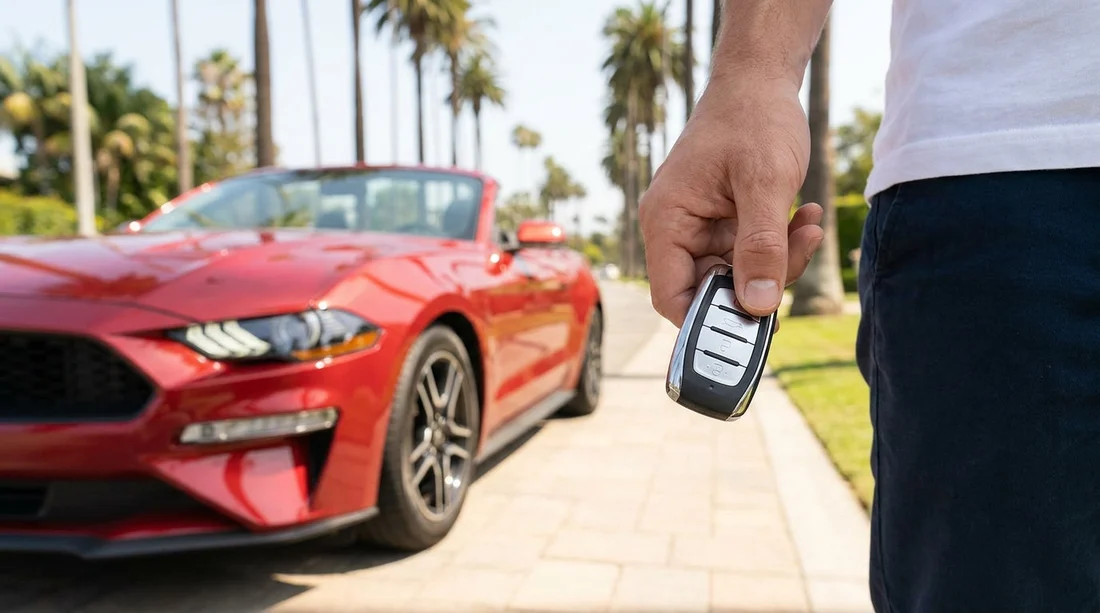
Quick Summary:
- LDW usually covers vehicle damage, not lost keys or smart fobs.
- Lockout help, towing for keys, and programming often cost extra.
- Check the agreement for keys, theft, and negligence exclusions.
- Ask the replacement fob fee before you sign in California.
When you arrange car hire in California, Loss Damage Waiver (LDW) can sound like a catch-all protection. In practice, LDW is mainly about the rental car itself, specifically damage to, or theft of, the vehicle. Lost keys, lockouts, and replacement smart fobs sit in a greyer, often excluded, area where the costs can be surprisingly high.
This guide explains how LDW typically treats keys in California, why key incidents are often billed separately, and what you should confirm in writing before you sign at the counter.
What LDW is meant to cover, and what it usually is not
LDW is generally a contractual waiver offered by the rental company. If the car is damaged or stolen, LDW may waive some or all of what you would otherwise owe, subject to the agreement’s terms. That is different from liability insurance, and different again from roadside assistance products.
Key problems usually do not fit neatly into “damage to the vehicle” unless there is related damage, such as a broken lock after an attempted theft. Even then, many agreements treat “keys and accessories” as separate items. As a result, the most common outcome is that LDW does not cover lost keys or replacement fobs, and you are charged a separate fee for replacement, programming, and any related service call.
If you are picking up near a major airport, it is wise to clarify the local policy in advance. Hola Car Rentals pages for California locations can help you compare options and suppliers, for example car rental California LAX and budget car hire California LAX.
Lost keys vs stolen keys: why the wording matters
Rental agreements often distinguish between keys that are simply lost and keys that are stolen. If keys are stolen during a documented theft (for example, a break-in where you file a police report), some suppliers may treat the incident differently, particularly if it is tied to vehicle theft. However, even in “stolen keys” scenarios, you may still be billed for replacement and rekeying unless the contract explicitly includes keys under LDW.
What to check: look for terms such as “keys”, “key fob”, “remote”, “immobiliser”, “rekeying”, “accessories”, and “personal property”. If keys are listed under exclusions, LDW will not help. If keys are not mentioned, do not assume coverage, ask for the written clause that confirms it.
Lockouts and roadside help: often a separate product
Lockouts are common, especially with push-button start cars where the fob can be left in the boot, or with automatic locking settings. In California, suppliers frequently treat a lockout as a roadside assistance matter, not an LDW matter. That means you could pay:
1) A service call fee, if a provider is dispatched to unlock the car.
2) After-hours surcharges, if it happens late at night or far from the branch.
3) Towing costs, if the vehicle needs to be moved to a place where it can be opened or reprogrammed.
Some rental companies sell a roadside assistance plan that includes lockout service, tyre changes, jump-starts, and sometimes fuel delivery. Those plans vary by supplier and by location. They may reduce your out-of-pocket costs for the locksmith or call-out, but still exclude the cost of a replacement fob itself.
If your trip involves multiple pick-up points in Northern or Southern California, compare terms across branches and brands. For example, you can review supplier pages like car hire airport San Jose SJC and Alamo car hire San Jose SJC.
Replacement fobs can be expensive, especially on newer cars
Traditional metal keys are one thing, but many rental cars now use smart keys and proximity fobs. Replacing a fob is often not just “cut a key”. It can involve ordering a specific unit, pairing it to the car, and sometimes reprogramming the immobiliser.
Because of this, suppliers may charge a package of fees, such as a replacement fob fee, programming fee, locksmith fee, and an administrative fee. In some cases, you could also see “loss of use” charges if the contract allows it and the car is unavailable for rental while waiting for a new key. Whether “loss of use” is billed varies, but it is worth checking the contract language carefully.
Common LDW exclusions that can trigger key-related charges
Even if your agreement suggests broad protection, several common exclusions may still leave you paying for key incidents:
Negligence or failure to safeguard the vehicle: leaving keys unattended in a public place, or leaving the vehicle unlocked with keys accessible, may be considered negligent.
Unauthorised driver issues: if an unauthorised driver loses the keys, coverage can be voided for related costs.
Misuse: off-road driving or prohibited use that results in a key-related recovery may be excluded.
Accessories and personal property: keys are sometimes treated like an accessory, similar to GPS units or child seats.
These exclusions are not unique to California, but the practical impact in California can be higher because service call-outs and locksmith rates can be expensive in major metro areas.
What to check before you sign: a practical checklist
Before you accept LDW (or decline it), get clarity on keys and lockouts specifically. Here are the most useful questions to ask at the desk, and what to look for in the paperwork:
Does LDW include lost keys and replacement fobs? Ask for the written clause. If the agent says “it should”, treat that as uncertain until you see it in the agreement.
Is lockout service included, and what is the after-hours process? Some suppliers want you to call their roadside line, not a local locksmith, and using an unauthorised provider could affect reimbursements.
What are the exact fees for replacement and programming? Request the schedule of charges, or at least the typical range for that vehicle category.
Will you charge towing or recovery if the key is lost far away? If you are driving between cities, this can matter.
How many keys are provided? Some rentals provide one fob only. If there is a spare key, ask where it is kept and how it can be accessed.
This is especially relevant when comparing car hire options across California airports, where supplier policies can differ even within the same brand family.
How to reduce the risk of a key incident during your rental
You cannot eliminate risk completely, but you can avoid the most common key mishaps:
Keep the fob on your person, not in a bag that can be left behind at a café, beach, or viewpoint.
Check for auto-lock behaviour when you first collect the vehicle. Some cars lock automatically when you walk away with the fob, others do not.
Avoid storing the fob in the boot while loading luggage, unless you are sure the boot will not lock.
Save the roadside number from the contract into your phone immediately, so you do not rely on memory in a stressful moment.
Report issues promptly. If you think the key has been stolen, ask the supplier what documentation they require, such as a police report number.
So, does LDW cover lost keys in California?
Most of the time, no. LDW is usually aimed at collision and theft of the vehicle, and key replacement is frequently excluded or treated as a separate fee category. Some packages, promotions, or premium products may include limited key cover, but you should verify it in the specific rental agreement for the supplier and location you are using in California.
The safest approach is to assume you could be charged for a replacement key or fob unless your paperwork clearly states otherwise, and to check lockout and roadside rules before you leave the car park.
FAQ
Is LDW the same as roadside assistance for lockouts? No. LDW typically relates to damage or theft of the car, while lockouts are usually handled under roadside assistance terms and fees.
If my keys are stolen, will I still pay for a replacement? Often yes. Even with a police report, many agreements still charge for replacement keys, fobs, programming, and any rekeying, unless explicitly covered.
Can I call my own locksmith if I am locked out? Sometimes, but it can cause problems if the contract requires you to use the supplier’s roadside provider. Always check the agreement and call the listed number first.
Do key replacement fees vary by vehicle type? Yes. Newer vehicles with smart keys and immobilisers generally cost more to replace and programme than older models with basic keys.
What should I read on the contract to confirm key cover? Look for sections on exclusions and fees, including “keys”, “key fob”, “accessories”, “roadside assistance”, “negligence”, “administrative fees”, and “loss of use”.





























































































