


Quick Summary:
- Measure boot depth and diagonal length before leaving the pick-up bay.
- Use a padded board bag, towels, and a clean floor mat.
- Secure the board using tie-down points, not fragile trim pieces.
- Confirm folded-seat permission and any accessories in writing at desk.
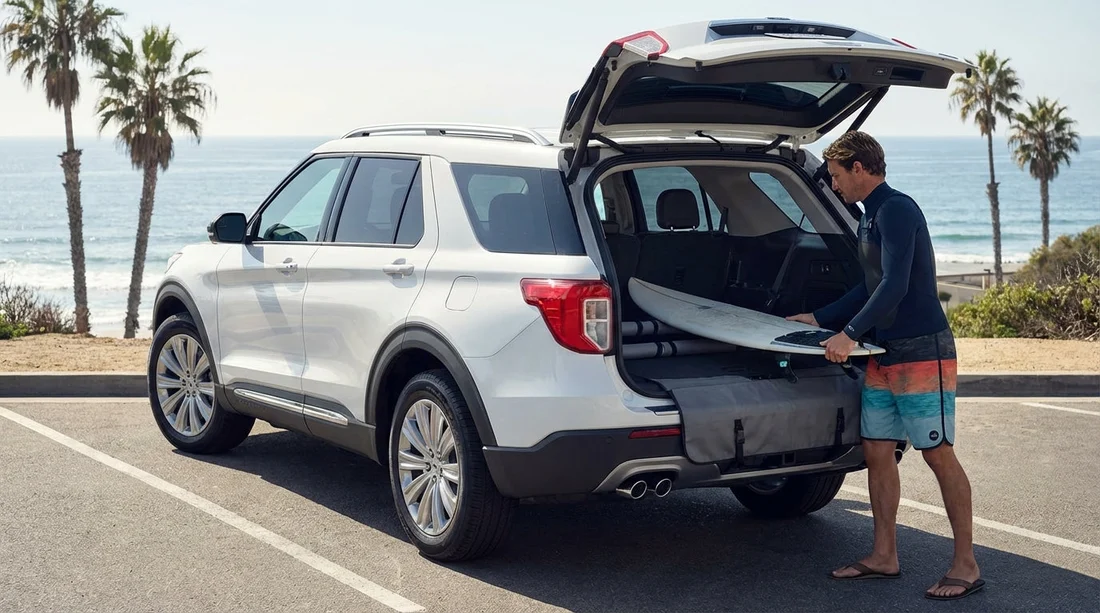
Yes, you can usually carry a surfboard in a California car hire without damaging the interior, but only if you treat it like moving a fragile item. The two biggest causes of rental interior damage are avoidable: forcing a board into a space that is too short, and letting the board slide, twist, or rub against trim during braking and cornering. A few minutes spent measuring at pick-up, plus the right protection and tie-down strategy, is typically all it takes to keep the car clean, unmarked, and compliant with the rental agreement.
This guide focuses on what to check while you still have staff and time on your side at the pick-up area. It also covers what to ask for in writing if you need the rear seats folded, access to a pass-through, or any accessories that help transport boards safely.
Start with the right expectation for “will it fit?”
Surfboards are awkward because the limiting factor is rarely the boot opening alone. It is the usable length once the board is inside, plus the shape of the route from boot to cabin. A 6'0" shortboard can often fit in a compact or midsize car if it can run diagonally, but a 9'0" longboard may require a larger SUV, estate-style vehicle, or a van. Even then, the fin box and rails are what tend to catch and scrape, not the nose.
Vehicle models vary within the same class, so do not assume “midsize” equals “enough length”. If you are arriving via a busy hub, you may see more options on the lot. For example, if you are collecting near Los Angeles, reviewing typical vehicle categories for National car hire at Los Angeles LAX can help you picture the interior layouts you might be offered. The key, however, is to confirm measurements on the actual car you are handed.
How to measure boot and pass-through space at pick-up
Bring a small tape measure, or use the measuring app on your phone with a bit of caution. You are checking three things: boot opening clearance, interior length, and whether the board can be loaded without bending or twisting.
1) Measure boot opening height and width
Open the boot and measure the narrowest part of the opening, not the widest. You want to know if the board bag can pass through without dragging the rails across painted metal or plastic trim. If your board has fixed fins, check the fin depth too, because it is often the fins that snag the lower lip of the boot opening.
Practical check: hold the board next to the opening before you place it in. If you have to angle it sharply and it touches the bumper, stop and rethink. That first scrape is usually what starts a chain of interior scuffs.
2) Measure maximum usable length, not just “seat to boot”
With the rear seats up, measure from the inside of the boot lid to the rear seatback. Then, if you expect to fold seats, measure again with the seats folded fully flat. Some vehicles have a slope or a step where the seatbacks meet the boot floor, which shortens usable length and creates a pressure point that can dent a board or mark upholstery.
Then measure the diagonal. A diagonal fit is common for shorter boards: corner of boot on one side to the top of the front passenger footwell on the other. You can do this without guessing by placing the tape from the boot’s rear corner to the farthest point you can realistically reach near the front.
3) Check the rear-seat pass-through and its real constraints
If the car has a 60/40 rear seat split or a ski hatch, confirm the pass-through height and width at the narrowest point. Many pass-throughs are designed for skis, not wide surfboard rails. Also check for hard plastic edges around the opening. These edges can abrade a board bag and leave plastic scuffs on the interior if the board moves.
Important: do not push down on parcel shelves, seat latch covers, or plastic side panels to “make it work”. Those parts are easy to crack, and rental inspections often catch broken clips and trim gaps.
4) Confirm front-seat travel and visibility impact
If you need to run a board through to the front passenger area, sit in the driver seat and confirm you can adjust the seat normally, see mirrors clearly, and operate the gear selector and handbrake without obstruction. A board that interferes with safe driving is not just inconvenient, it is risky and may breach rental conditions.
If you are picking up around San Diego for a surf trip, vehicles available through car rental in San Diego can range widely by season, so do this check before you accept the keys and drive off.
Protecting the interior: bags, towels, and smart padding
The aim is to eliminate friction points, contain sand and wax, and prevent hard contact between the board and any interior surface. Even a clean board can leave wax marks on fabric. A wet wetsuit can transfer dye. And sand is effectively sandpaper when it gets under a board bag and moves with vibration.
Use a padded board bag as your baseline
A proper padded bag reduces the risk of both board damage and interior scuffs. If you only have a light sock-style cover, add towels around the nose and tail, and consider a spare fleece or soft blanket to protect side panels. Keep zips facing up where possible so the zipper pull does not scrape trim.
Layer towels where the board touches the car
Place towels at the likely contact points: boot lip, the seatback edge, and the pass-through frame. If the board rests on folded seats, put a towel under the rails to prevent pressure lines on upholstery. A clean floor mat can also act as a non-slip base on the boot floor.
Manage sand and moisture before loading
Shake out the bag, brush sand off the board, and keep wet gear separate. Even if you are careful, sand inevitably migrates into seams and vents. A simple habit that helps is to keep a dedicated “car towel” that never touches the beach, and use it only for wiping hands and rails right before loading.
Securing the board so it cannot slide or rotate
Most interior damage happens while driving, not during loading. Sudden braking can send the board into the dashboard area, twist it into a door card, or lever it against a seat frame. Secure the board so it cannot move in any direction.
Find real tie-down points
Look for solid anchor points such as metal cargo loops in the boot, seatbelt buckles, or child-seat ISOFIX points (used carefully, without forcing). Avoid hooking onto plastic trim, headrest posts at odd angles, or the parcel shelf mounts.
Use soft straps, not bungee cords
Soft cam-buckle straps are ideal because they tighten securely and do not snap back. If you only have bungees, be cautious: they can release suddenly and chip interior plastics. When tightening straps, protect contact areas with a towel so the strap does not abrade fabric or leather.
Stop the board at the source with wedges
Prevent rolling by wedging soft items like folded towels on either side of the board bag. If the board runs into the front passenger area, use the passenger seatbelt to hold it, threading the belt around the bag and clicking it in. That adds a second restraint without adding hard hardware.
If you are collecting from Orange County, the fleet at Alamo car rental at Santa Ana SNA is a useful example of why this matters, similar-size SUVs can have different boot tie-down layouts. Always locate anchors before you load.
What to confirm in writing before you leave the desk
If you need any configuration or accessories to carry your surfboard safely, get it confirmed in writing on your rental agreement or as an attached note. This matters because some issues show up later, for example if the staff member at return questions why seats were left folded, or if you request a swap due to insufficient space.
Ask about folding seats and removable headrests
Most modern cars allow rear seats to fold, but some rentals prefer seats remain upright if possible, or have restrictions around removing headrests. If your plan requires a specific fold (for instance, only the 40 section down to keep a passenger seat), ask the agent to note that this is permitted.
Confirm accessories availability and fees
If you need any of the following, ask what is available and what is permitted: cargo net, additional floor mats, protective boot liner, or roof bars. Do not assume you can fit your own roof rack hardware, many vehicles prohibit it, and incorrect fitting can damage door seals.
If you are travelling through San Jose for a Northern California surf run, check the likely vehicle classes for car rental at San Jose SJC, then confirm at pick-up whether the specific car has folding seats, a pass-through, and usable anchors.
Document the interior condition before loading
Take timestamped photos of the boot floor, side panels, rear seatbacks, and the pass-through edges. You are not trying to create a dispute, you are creating clarity. If there is existing scuffing or a torn seatback, you do not want it attributed to board transport.
Also note anything that could be mistaken for your marks later, such as existing waxy residue, white scuffs on black plastic, or scratches on the boot lip. If you spot damage, ask for it to be recorded before you drive away.
Choose the right vehicle type when a surfboard is non-negotiable
If you know you are carrying a longboard, prioritise interior length and a flat load floor over styling. SUVs with a long, square boot and fold-flat rear seats tend to be easier than saloons. People carriers and vans are often the simplest option because they provide straight-line loading and multiple tie-down points.
For groups travelling with multiple boards, a van can reduce the temptation to stack boards against doors and seatbacks. If you are flying into the state capital area, you can compare options like van rental at Sacramento SMF to see whether a larger interior suits your kit and passengers better.
Common mistakes that cause interior damage
These are the patterns most likely to lead to marks or charges, and they are all preventable.
Forcing the tail through the pass-through, the fin box and rail corners scrape hard plastic edges. Measure first, pad edges, and stop if it binds.
Letting the board rest on a seatbelt latch, the latch creates a pressure point that can dent a board and leave a metal imprint on upholstery. Cover latches with a towel or route the board away from them.
Loading with sand on the bag, sand trapped under the bag creates repeated abrasion. Wipe down before loading and use a clean mat as a base.
Unrestrained nose in the front, sudden braking can send the board into the dashboard or windshield area. Use the passenger seatbelt plus a strap at the rear to stop forward motion.
Final checks before you drive off
Once loaded, do a quick “shake test”. With the boot closed (or nearly closed), gently pull the bag side to side and forward. It should not slide more than a couple of centimetres. Then check that no hard parts contact trim, that the board does not block the driver’s view, and that airbags have clear deployment space. If the board sits near the front passenger airbag area, reconsider the layout, because an airbag deploying into a board is dangerous.
With careful measuring, proper protection, and secure anchoring, carrying a surfboard in a California car hire is usually straightforward. The goal is simple: nothing rubs, nothing slides, and any special seat configuration or accessories are confirmed in writing before you leave the lot.
FAQ
Can I fold the rear seats in a California hire car to fit my surfboard? Usually yes, but policies vary by provider and vehicle. Confirm seat-folding is permitted at pick-up and ask for a note on the agreement if you rely on it.
Is a roof rack a better option than carrying the board inside? Not always. Roof carrying reduces interior risk but introduces other issues like wind load, strap marks, theft risk, and restrictions on fitting racks. Only use roof equipment that is approved for that vehicle.
What is the safest way to stop the surfboard sliding forward? Use two restraints: a strap to a rear anchor point, plus the front passenger seatbelt around the board bag. Add towel wedges to prevent rolling.
Will towels and a board bag really protect the interior from wax and sand? They help significantly if kept clean and dry. Use a padded bag, wipe sand off before loading, and place towels at contact points and under the rails.
What should I photograph at pick-up to avoid disputes? Photograph boot floor, side panels, seatbacks, pass-through edges, and any existing scuffs. Take wide shots plus close-ups, with timestamps if possible.





























































































