


Quick Summary:
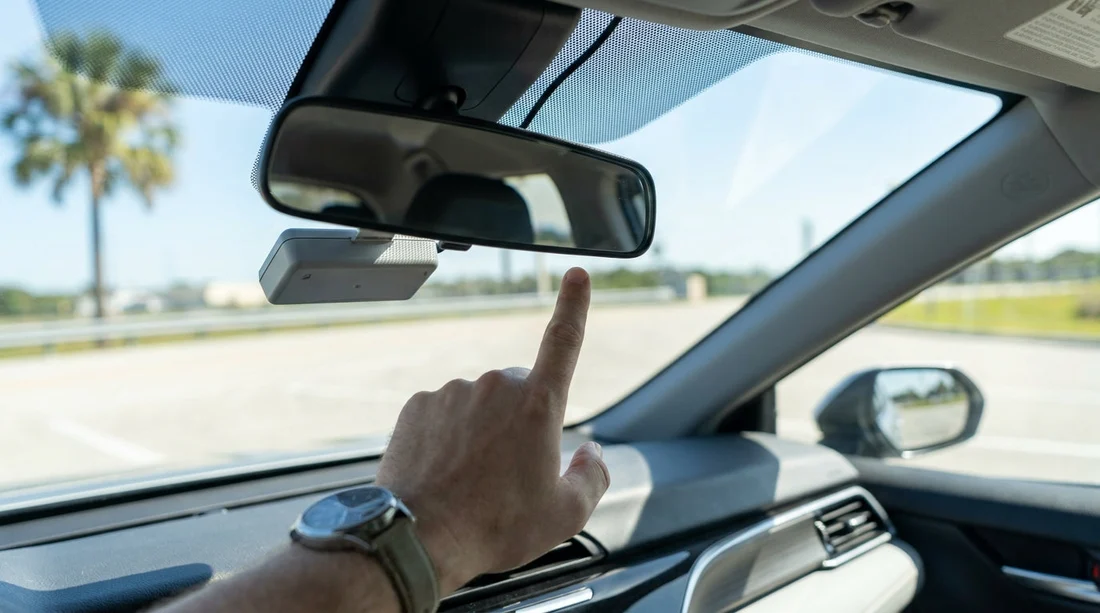
- Check the windscreen near the rear-view mirror for a small toll tag.
- Look for an embedded module behind the tinted band at top.
- Confirm the toll programme, daily fees, and admin charges at pick-up.
- Photograph the device, ID number, and agreement before you depart.
Florida’s toll roads can save time, but they also create one of the most common car hire surprises: charges that appear after you have returned the vehicle. Before you drive off, it helps to know where toll transponders are typically fitted, what you should verify at pick-up, and how billing usually works across common Florida toll systems.
Where toll transponders are usually located in Florida rental cars
In Florida car hire fleets, the toll device is most often placed where it can reliably be read by overhead gantries and roadside readers. The exact setup varies by rental brand and vehicle model, but you will usually see one of these locations.
1) Windscreen, behind or beside the rear-view mirror. This is the most common placement for a stick-on transponder or a small plastic tag. Stand outside the car and look through the glass at the black dotted shading area near the mirror. You might see a rectangular device, a barcode label, or a small box with an ID number. Some vehicles mount it slightly to the passenger side so it is less visible to the driver.
2) Windscreen “frit” area or embedded module. Some cars have an integrated toll module mounted behind the tinted band at the top of the windscreen. It can look like a small bump, a dark plastic patch, or a sealed unit you cannot remove. You may only notice a label stating that a toll device is present.
3) Dashboard or centre console area. Less common, but you might find a small box sitting on the dashboard or attached near the base of the windscreen. If it appears loose, do not reposition it yourself, because transponders can be directional and some programmes require the device to remain in a specific spot.
4) Sun visor pouch or glove box for “portable” units. Occasionally, a portable unit is stored inside the cabin and should be placed on the windscreen when used. If your agreement references a portable transponder, confirm the instructions before you leave the bay, because incorrect placement can trigger pay-by-plate billing instead.
Wherever it is fitted, treat the device as part of the car. Removing adhesive tags or unplugging a module can lead to damage fees and can also prevent the toll operator from matching your trip correctly.
How to identify the device quickly at the car
Do a simple scan before you set off. First, look at the windscreen near the mirror from both inside and outside. Second, check for any toll programme stickers on the windscreen, such as a label stating that tolls will be billed to the rental agreement. Third, look for an ID number printed on a label or casing, and take a photo in case you need it later.
If you are picking up in busy locations such as Fort Lauderdale Airport (FLL) or near Miami, the car park staff may be processing many vehicles quickly, so your own visual check is worthwhile even when the agent has explained the toll option.
What to confirm at the counter before you drive off
The most important part of avoiding surprises is confirming how the specific vehicle and rental brand will bill tolls. Ask these questions in plain terms and make sure the answers match what appears on your agreement.
Is a toll transponder already installed in this car? If the agent says yes, ask where it is mounted and whether it is always active or only active if you enrol in a toll programme. Some brands treat the device as always on, then bill usage later, while others require you to accept an optional plan.
Which toll programme applies, and is it optional? You may see different names depending on the supplier, but the concept is the same: either you pay tolls as you go plus a service fee, or you rely on plate billing that is processed after the rental. If you are collecting around Doral or Miami Beach, toll usage can be frequent due to causeways and expressways, so clarity matters.
What are the fees, and how are they calculated? Confirm whether there is a daily toll plan fee, a maximum cap, a per-toll convenience fee, or an admin fee per day of use. Also confirm whether fees apply on days you do not use toll roads. The difference between per day of rental and per day of toll usage is significant.
Will I be billed through the transponder or by licence plate? Florida tolling can work through transponder reads or toll-by-plate. If your rental uses plate billing, charges often post after the rental ends. If it uses a transponder, charges may still post later depending on processing time.
How long after the rental can toll charges appear? It is normal for tolls and admin fees to arrive days or weeks later, because toll operators batch transactions. Ask for a typical timeframe so you recognise legitimate post-rental charges.
How toll billing typically works in Florida car hire
Most Florida toll roads use electronic collection, so you often do not stop at booths. The reader detects either the transponder or the licence plate, and the toll is then billed according to the programme tied to the vehicle.
1) Enrolled toll programme. If you accept a toll programme at the counter, tolls are usually billed to your payment card along with a related fee structure. The benefit is convenience and fewer issues with missed tolls. The trade-off is that the added fees can make light toll usage more expensive than expected.
2) Toll-by-plate processing. If you do not enrol, the rental company may still receive toll invoices based on the plate and then pass them on to you with an admin fee. This can be cost-effective if you use very few toll roads, but it can create delayed, itemised charges after you return the car.
3) Mixed outcomes. If the device is present but not correctly associated with your agreement, the same trip might be captured partly by transponder and partly by plate. This is one reason it is smart to confirm the device status and keep photos of the windscreen unit and your paperwork.
If you are travelling with a larger vehicle, such as a people carrier, you may be planning longer expressway routes. For context on vehicle types and pick-up areas, see minivan rental in Doral.
Before you leave the car park: a five-minute checklist
Once you have the keys, do these quick checks before you join traffic.
Match the car to the agreement. Confirm the licence plate (or at least the last few characters if listed) and vehicle class match your paperwork. Plate-based tolls rely on correct vehicle identification.
Find and photograph the toll device. Take a clear photo showing its position on the windscreen and any ID number. If there is a sticker describing toll billing, photograph that too.
Ask immediately if something looks odd. If you cannot locate a transponder but the agreement mentions one, return to the booth. Similarly, if you see two toll devices or evidence of an old device, ask staff to confirm which one is active. Duplicate devices can cause billing confusion.
FAQ
Q: Where should I look first for the toll transponder in a Florida rental car?
A: Check the windscreen near the rear-view mirror, especially the shaded dotted area. That is the most common mounting spot in Florida car hire vehicles.
Q: What if I cannot see any toll device, but the agreement mentions toll billing?
A: Ask the counter or car park staff to confirm whether the car uses an embedded module or licence plate billing. Do not assume you are toll-free just because you cannot see a tag.
Q: Can I remove or reposition the transponder for better visibility?
A: No. Removing or moving it can damage the windscreen or cause failed reads. If it blocks your view or looks loose, request assistance before leaving.
Q: How are tolls typically charged after I return the car?
A: Tolls are often processed later and charged to your card with any applicable service or admin fees. The delay can be days or weeks, depending on the toll operator and rental system.
Q: How can I reduce unexpected toll costs on a Florida trip?
A: Confirm the fee structure at pick-up, set navigation to avoid tolls if appropriate, and keep photos of the device and agreement so you can verify any later charges.































































































