


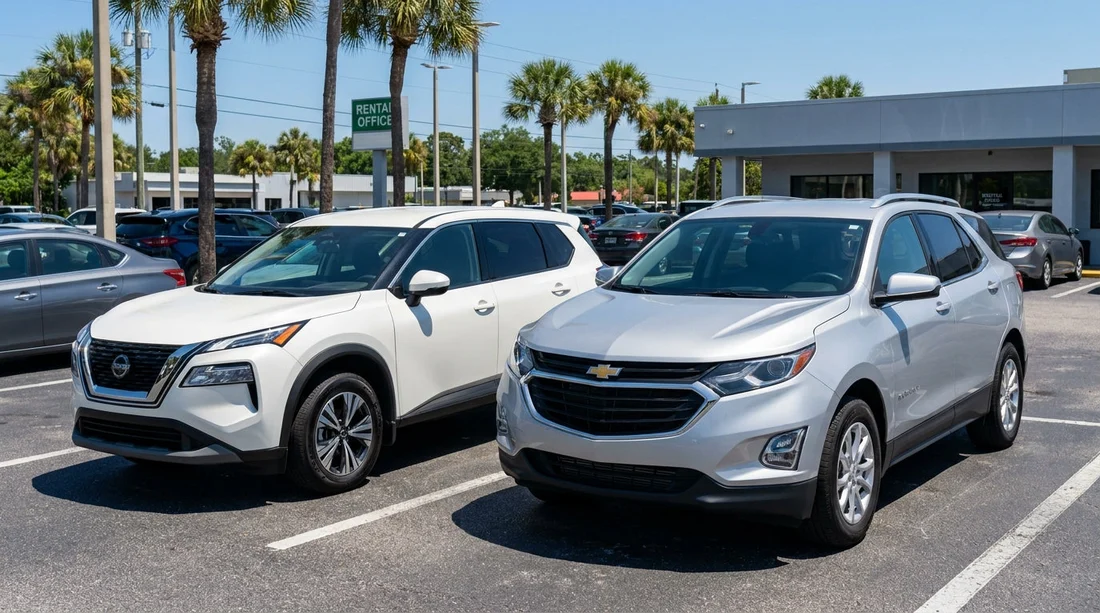
Quick Summary:
- Intermediate SUVs suit four adults, two cases, and easier city parking.
- Standard SUVs add wider rear seating and extra boot depth.
- Both usually seat five, but comfort differs on longer drives.
- Choose standard for bigger pushchairs, coolers, or bulky shopping days.
Choosing the right SUV class for car hire in Orlando can feel oddly tricky. “Intermediate” and “standard” sound close, yet the day-to-day experience can be different, especially when you add Florida heat, theme-park bags, and a boot full of shopping. The names are not strict vehicle models, they are size bands used by rental fleets, and exact makes vary. Still, there are consistent patterns in seating comfort, luggage space, and features that can help you pick the best fit first time.
If you are collecting near Orlando International Airport, start by checking SUV-specific options on suv rental Orlando MCO. For broader airport collection information, car rental Orlando MCO is also useful to understand typical pickup and fleet availability.
How rental classes work in Orlando
Intermediate and standard SUVs are usually two steps in the same ladder. Intermediate is the smaller compact-crossover size, while standard is a mid-size crossover with a bit more cabin and boot volume. Both commonly advertise five seats, but “five seats” does not mean “five adults are equally comfortable for an hour on I-4”. The biggest practical differences are rear-seat width, shoulder room, and boot length when the rear seats are up.
Also note that rental companies supply “or similar”. You are reserving a class, not a specific model. An intermediate SUV might be one of several similarly sized crossovers, and a standard SUV might sometimes include a slightly larger or more premium mid-size crossover, depending on fleet mix and dates.
Typical seating: what five seats really means
Intermediate SUV seating usually works best for two adults in front and two adults or three children in the rear. The middle rear seat is typically narrower and firmer, and the rear bench may feel tight for three adults on longer drives to the Kennedy Space Center or Tampa.
Standard SUV seating usually adds a little width across the rear bench and more legroom. That small increase can be the difference between “fine for 15 minutes” and “comfortable for an hour”. If you expect three adults in the back regularly, standard tends to be the safer pick, even though it is still a two-row SUV class.
For families, both classes commonly accommodate child seats and boosters, but standard SUVs can make daily fitting easier. Wider door openings and slightly more space between seat belt buckles can reduce the hassle when you are clicking in a child seat repeatedly during a busy Orlando itinerary.
Luggage space: suitcases, pushchairs, and theme-park gear
Boot capacity is where the difference shows up most. Think in terms of luggage shapes, not litres on a spec sheet.
Intermediate SUVs generally handle two medium checked suitcases plus a couple of soft bags, with some careful stacking. If you are travelling as a couple or a family of three or four packing efficiently, this can be enough. However, a bulky pushchair, large cooler, or multiple park backpacks can force you to use part of the rear seat, which then cuts seating flexibility.
Standard SUVs typically add extra boot length and depth. That helps with rigid items like hard-shell suitcases and folded pushchairs, and it gives you more room to keep luggage below the window line for better rear visibility. If you plan a big outlet-shopping day, standard also provides a more forgiving boot when bags multiply.
A practical test is the “airport-to-villa” load. If you will arrive with four people and four large suitcases, intermediate can be tight. Standard is more likely to cope without stacking up to the roofline. If you are carrying sports gear, prams, or grocery runs for a week, standard makes the loading routine easier and quicker.
Driving and parking: I-4, resorts, and tight spaces
Intermediate SUVs feel more nimble in busy areas like International Drive and around hotel car parks. They usually have a slightly tighter turning circle and are easier to place in narrow bays. If you are doing lots of short hops, pulling in and out of parking garages, and you do not need maximum boot space, intermediate can be the more relaxed drive.
Standard SUVs are still very manageable in Orlando, but they can feel a touch wider in multi-storey car parks and older shopping centres. The trade-off is a steadier, more planted feel at motorway speeds, which matters if you are commuting between parks, dining areas, and day trips beyond Orlando.
Many vehicles in both classes include rear cameras and parking sensors, but availability depends on the exact vehicle supplied. If you are less comfortable with larger vehicles, intermediate reduces the learning curve.
Features and comfort: what to expect in each class
Features vary widely by model year and supplier, but a few trends are common for Orlando fleets.
Intermediate SUV features often cover the essentials: air conditioning suited to Florida heat, Bluetooth connectivity, USB ports, and basic driver-assistance features in newer models. Cabin materials and seat support can be simpler, which is fine for short journeys and park runs.
Standard SUV features can feel a step up in everyday comfort. You may see more supportive seating, more rear-seat air vents, and sometimes extra USB ports for passengers. None of these are guaranteed, but standard is more likely to deliver a more comfortable cabin for longer drives and bigger groups.
Fuel economy differences are usually modest. Intermediate may be slightly more efficient, but traffic, air conditioning use, and driving style will make a larger difference than class alone.
Which SUV class fits your Orlando trip?
Choose an intermediate SUV if you want easier parking, you are travelling with two to four people, and you have moderate luggage. It is a good match for couples, small families with light packing, and travellers who want SUV ride height without the bulk.
Choose a standard SUV if you are travelling with five people, you will regularly fill the boot, or you want more comfort on longer drives. It suits families with a pushchair, travellers planning shopping-heavy days, and groups sharing a vehicle for multiple locations.
If you are unsure, think about your most demanding day, not your average day. The tightest moment is usually arrival day with full luggage, or a day when you combine shopping, groceries, and park bags. Picking a class that handles the peak load can prevent daily compromises.
Airport pickup and planning considerations
Most visitors arrange car hire around Orlando International Airport for convenience and flight timing. If you want to compare airport options and practicalities, see car hire Orlando MCO. If your accommodation is near the parks and you are focused on that corridor, car hire airport Disney Orlando MCO provides another relevant overview.
Finally, remember that “standard SUV” is not the same as a seven-seater. If you need three rows for six or seven passengers, you may need a larger category altogether. For groups who need more seats and luggage capacity, van hire Disney Orlando MCO can be a better fit than trying to squeeze into a two-row SUV.
FAQ
Is a standard SUV always bigger than an intermediate SUV in Orlando? Generally yes, standard SUVs usually have more rear-seat space and a larger boot. Exact models vary, but the class is intended as a size step up.
Do intermediate and standard SUVs both seat five people? Most do, but the comfort level differs. Intermediate often suits four adults better, while standard usually makes five passengers more realistic for longer drives.
How many suitcases fit in an intermediate vs standard SUV? Intermediate typically fits around two medium cases plus soft bags. Standard usually fits more comfortably, often handling extra cases or bulkier items like a folded pushchair.
Will I get the exact SUV model shown online? No, you are usually selecting a class, not a specific model. You will receive a vehicle that matches the size and general features of the class, or similar.
Should I upgrade to standard for theme parks in Orlando? If you expect lots of bags, a cooler, a pushchair, or frequent shopping, standard can reduce daily packing stress. If you pack light and prioritise easy parking, intermediate can be sufficient.































































































