


Quick Summary:
- Confirm your excess amount and when it applies to each damage type.
- Check exclusions for tyres, glass, roof, underbody, and interior damage.
- Read the fee table for admin, loss-of-use, towing, and repairs.
- Match the inspection report to the car, photos, and fuel level.
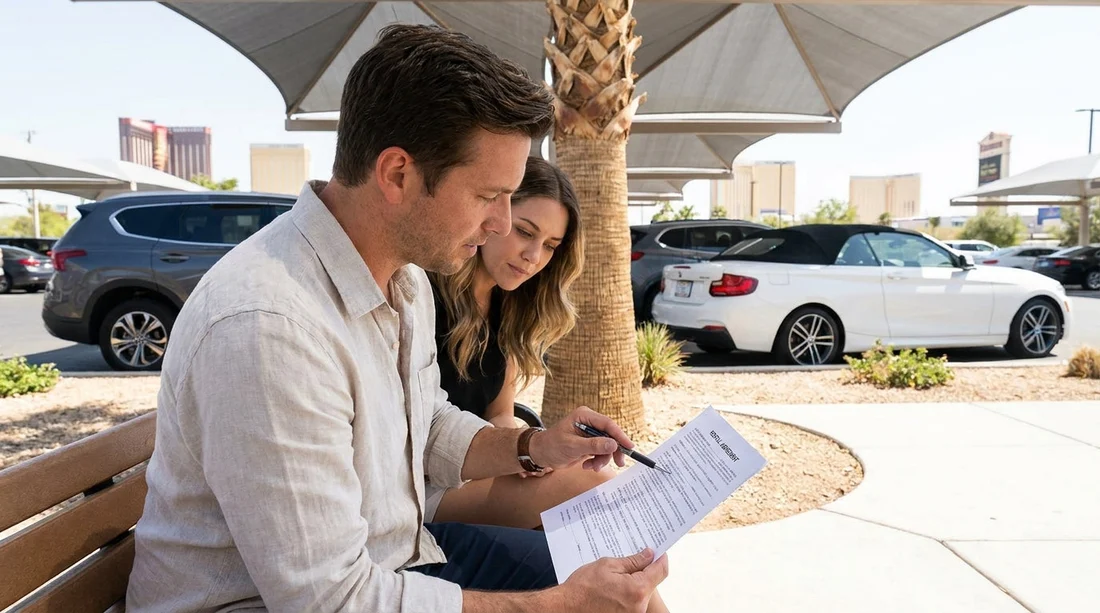
Damage charges are one of the easiest ways a straightforward Las Vegas car hire can become stressful. The key is to treat the rental agreement like a checklist before you drive off: find the excess, understand what is excluded, and locate the fee table that explains how costs are calculated. A few minutes at the counter or car park can prevent surprises later.
If you are collecting near the terminals, it helps to know where you will have time and space to review paperwork and inspect the vehicle. Hola Car Rentals has location pages such as car hire at Las Vegas airport and car rental in Las Vegas that are useful for orientation, but the agreement you sign is what controls damage liability.
1) Identify the “excess” and the damage coverage wording
The excess (sometimes called deductible) is the amount you can be charged towards damage, even when the agreement includes Collision Damage Waiver style protection. Do not assume it is one number for everything.
The excess value and currency. It should show a specific figure, often in USD. If it says the excess is “up to” an amount, find where the actual amount is defined.
When the excess applies. Some agreements apply one excess per incident, others per claim, and in some cases per damaged area. If you return with two separate incidents, you may face two excesses.
Any requirement to report incidents. Many contracts require prompt notification and a police report for collisions, vandalism, or theft. If reporting is late or incomplete, protection may not apply and you may be billed the full amount, not just the excess.
2) Read exclusions carefully, they drive most disputes
Exclusions are the parts of the car or situations where the standard damage protection does not help. In Las Vegas, exclusions often matter because long highway stretches, construction zones, and desert dust can increase the chance of chips and tyre issues.
Tyres and wheels. Tyre punctures, sidewall damage, and alloy wheel scuffs are commonly excluded. If wheels are excluded, check whether hubcaps and wheel trims are treated differently.
Glass and mirrors. Windscreens and chips can be excluded or subject to a separate fee schedule. Confirm whether cracked glass is treated as “replacement” or “repair” and whether a chip counts as damage.
Roof and underbody. Underbody damage can happen with steep driveways, kerbs, or road debris. Roof damage can arise from low clearances in car parks. These are frequently excluded.
Negligence and prohibited use. Off-road driving, driving on unpaved roads, or leaving keys in the vehicle can void protection. Even if you do not plan to go off the Strip, the wording can be broad, so confirm what the supplier considers “off-road”.
Unauthorised drivers. If someone not listed drives and damage occurs, protection may not apply. Verify every driver is correctly added and signed.
If you want to compare how different suppliers present terms, Hola Car Rentals pages like Alamo car hire in Las Vegas and Budget car hire in Las Vegas can help you understand provider options, but always rely on the exact agreement you are signing at pick-up.
3) Find the fee table, admin fees, and what “damage” includes
Many renters focus only on the repair cost, but damage charges can include add-ons that are listed in a fee table or “schedule of charges”. Before leaving, locate and read the parts covering:
Administration fee. This is a processing fee added to damage claims. It may apply even when the repair cost is small, and it may apply per claim.
Loss of use. Some agreements allow charges for the time the car is unavailable while being repaired. Check whether it is calculated by daily rate, a fixed amount, or a maximum cap. If the contract says it can be charged, confirm what evidence is required, because wording varies widely.
Towing and storage. If a car is not drivable, towing and storage can be significant. Confirm whether these costs can be added on top of the excess.
The practical takeaway is simple: ask yourself, “If there is a scratch or a chip, what line items could appear on my invoice besides the repair?” If the agreement does not show the fee table, ask for it before you leave the lot.
4) Confirm the inspection process, evidence, and paperwork accuracy
Even with clear terms, documentation drives outcomes. Before leaving in Las Vegas, check the agreement and inspection report for:
Pre-existing damage notes. Ensure every scratch, dent, and wheel mark is recorded. Do not accept vague marks like “minor scratches” without location. If the report uses a diagram, confirm the positions match what you see.
Time-stamped photos or video. Take your own photos all around the car, plus close-ups of any existing damage, wheels, windscreen, roof line (as best as you can), and the dashboard showing mileage and fuel. Your evidence should match the check-out time.
Fuel policy and fuel level. Fuel discrepancies can lead to extra charges that get mixed up with “damage” billing. Ensure the paperwork matches the gauge reading at pick-up.
Vehicle details. Confirm licence plate, VIN (or partial VIN), and vehicle class match the agreement. If the wrong vehicle is recorded, it complicates any later dispute.
Return instructions. Some locations do after-hours returns. If you may return outside staffed hours, check how they assess damage and when you will be notified. If the agreement allows the supplier to inspect later without you present, your photos at pick-up and drop-off matter more.
7) Ask two clarifying questions before you sign
If you only have time for two questions, make them about the biggest cost drivers:
“Can you confirm the excess and list the main exclusions in plain terms?” This prompts the agent to summarise tyres, glass, roof, underbody, and interior.
“If damage is found, what exact fees can be added besides repair cost?” This draws out admin fees, loss of use, towing, storage, and cleaning charges, and it encourages them to point to the relevant table.
For travellers who need more space and are comparing vehicle types, Hola Car Rentals also covers options like van hire in Nevada, where the same contract-checking approach applies but with extra attention to height, roof, and loading-area terms.
FAQ
Q: What is the “excess” on a Las Vegas car hire agreement?
A: It is the amount you may have to pay towards damage for each claim or incident. It applies even when damage protection is included, unless the contract says otherwise.
Q: Are tyres and windscreens usually covered under damage protection?
A: Often they are excluded or have separate rules. Check the exclusions section and any fee table, as tyres, wheels, glass, and mirrors are common chargeable items.
Q: What does “loss of use” mean in damage charges?
A: It is a charge for the time the vehicle is unavailable while being repaired. The agreement may specify how it is calculated and whether there are caps or evidence requirements.
Q: What should I do if I find existing damage before leaving the car park?
A: Get it recorded on the inspection report, take time-stamped photos, and ensure the paperwork matches the car’s condition before you drive off.
Q: Can damage charges be billed after I return the car?
A: Yes, many agreements allow post-rental billing if damage is identified later. Check the contract for notification time frames, documentation provided, and how disputes are handled.































































































