


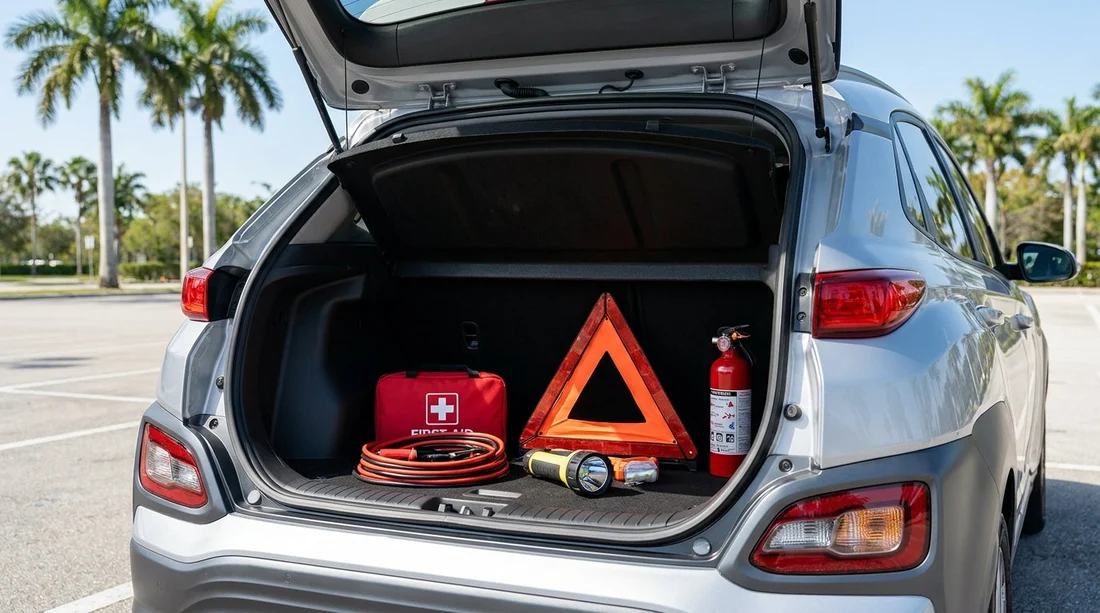
Quick Summary:
- Check spare tyre or inflator kit, plus jack and wheel key.
- Test lights, horn, wipers, washers and demist before leaving the car park.
- Confirm roadside assistance number, accident steps, and documents are inside the car.
- Inspect for safety items, then photograph existing damage before you drive.
Florida driving is usually straightforward, but heat, heavy rain, long distances and fast-moving highways make a pre-departure safety check worth the few minutes. Before any car hire in Florida, focus on two things: the physical emergency and safety items in the vehicle, and the key information you must confirm at the counter so you can respond calmly if something goes wrong.
This guide is written as a pick-up checklist you can follow in the car park. It is especially useful when collecting at major hubs such as Miami (MIA) or Tampa (TPA), where queues and time pressure can make it easy to miss details.
1) Must-have emergency and safety items to confirm in the car
Rental fleets vary, and Florida does not guarantee that every item you might expect in the UK will be included. Use this list to confirm what is present and working, and to decide what you may want to carry yourself.
Spare tyre or tyre-inflation kit
Open the boot and check for either a usable spare wheel or a tyre repair and inflator kit. If there is a spare, confirm the jack and wheel brace are present, and that any wheel lock key is included.
Tyre condition and pressures
Walk around and look for sidewall damage, nails, or visibly low pressure. If the dashboard shows a tyre warning at start-up, raise it immediately at the desk and do not drive off hoping it clears.
Seat belts and child seats
Test each seat belt for smooth pull and a positive latch click. If you have hired a child seat, verify it is appropriate for the child’s weight and height and that it can be fitted tightly.
Headlights, brake lights, and indicators
Switch on headlights, high beams and hazard lights. Check indicators front and rear. If you are collecting an SUV for longer distances, such as from Orlando (MCO), this quick check is still worth doing even in daylight.
Wipers, washer fluid, and demist
Florida rain can be intense. Test the wipers on all speeds and confirm washer jets spray properly. Put the air conditioning on briefly and check the screen demist clears quickly.
2) What to confirm at the counter before you drive off
The counter conversation is where you prevent most headaches later. You are not only collecting keys, you are collecting clarity on what to do if something happens.
Roadside assistance details
Ask for the roadside assistance number, what it covers, and whether you should call the rental company first or a third-party provider. Save the number in your phone before you leave the building.
Accident and breakdown procedure
Confirm the steps in order: move to safety if possible, call emergency services if required, contact the rental company, and gather information. Ask whether the company requires an incident report form and where it is located in the vehicle.
Insurance and excess basics in plain language
Confirm what protections you have selected, what the excess is (if any), and what common exclusions apply, such as wheels and tyres, glass, or underbody. If anything is unclear, ask the agent to explain it simply.
Tolls and electronic tolling options
Ask how tolls are handled for your agreement, whether there is a transponder in the car, and how charges are billed. If you plan to drive around central Miami, consider checking local collection options like Brickell for a smoother start.
Permitted drivers and key restrictions
Confirm who is authorised to drive and whether additional drivers are included or need to be added. If you are collecting through a partner page such as Avis car hire in Florida, the same principles apply regardless of brand.
3) Five-minute walkaround before leaving the car park
Do this before you merge into traffic. It protects you from being blamed for existing damage and helps spot safety issues early.
Photograph the car thoroughly
Take clear photos of all four sides, wheels, bumpers, windscreen, and interior. Capture any scratches, dents or scuffs. Also photograph the fuel gauge and odometer at pick-up.
Check glass and mirrors
Look for chips or cracks in the windscreen and ensure mirrors adjust properly.
Test brakes and steering at low speed
In the car park, move slowly and test the brakes. Ensure steering feels centred and not pulling strongly to one side.
FAQ
Does a rental car in Florida come with a spare tyre?
Sometimes it does, but many modern vehicles provide a tyre inflator and sealant instead. Check the boot before leaving and ask for guidance if you are unsure how to use what is supplied.
What documents should be inside the rental car?
You should have your rental agreement, and the car should have registration and insurance documents stored in the glovebox or a document wallet. Confirm at the counter where these are kept.
Who do I call if I have a breakdown during car hire in Florida?
Use the roadside assistance number provided with your rental paperwork, then follow their instructions. If you are in danger, call 911 first, then contact the rental provider once safe.
Should I buy or bring a first-aid kit for a Florida road trip?
It is not always included with rentals, so bringing a compact kit is sensible, particularly for families or longer drives. Keep it accessible and include any personal medication.
How do I handle toll roads in Florida in a rental car?
Ask how tolls are billed, whether the car has a transponder, and what fees may apply on top of tolls. Knowing the policy helps you choose routes confidently and avoid unexpected charges.































































































