


Quick Summary:
- Most Texas car hire allows dash cams if you avoid any damage.
- Check the agreement for device, wiring, and modification restrictions first.
- Record responsibly, avoid audio without consent, and respect passenger privacy.
- Use non-permanent mounts, route cables safely, and restore the car.
Dash cams are generally allowed in Texas rentals, but the key is whether your car hire agreement treats the camera, its mount, or its wiring as an unauthorised modification. In practice, most rental companies do not object to a small windscreen camera that leaves no marks, does not block the driver’s view, and is removed cleanly at drop-off. Problems usually arise from adhesive pads that damage tint film, cable routing that interferes with airbags, or any hard-wiring into the vehicle.
Because you are asking “before pick-up”, the best approach is to confirm the rules early, then arrive with a setup that is clearly reversible. Doing this reduces disputes at the counter and helps you stay compliant with both Texas law and contract terms.
What Texas law means for dash cams: privacy, audio, and visibility
Texas law does not ban dash cams in private vehicles, including rentals, but it does impose practical limits around visibility and privacy. First, your camera must not obstruct the driver’s view. If you mount it high, behind the rear-view mirror, it is typically less intrusive, but you should still ensure it does not block your line of sight or sit within the swept area where you need clear visibility.
Privacy is the bigger consideration, especially if your dash cam records audio or captures passengers. Texas is a one-party consent state for audio recording in many situations, meaning at least one party to the conversation can consent. However, rental trips often involve passengers who have not consented, and you may also capture people outside the vehicle. A cautious, renter-friendly approach is to disable cabin audio unless everyone explicitly agrees, and to avoid aiming the camera into the cabin unless you have a clear reason and consent.
Also consider that footage can include sensitive information, such as faces, conversations, or locations. If you plan to share clips publicly, treat them as personal data. Keep recordings secure, avoid posting identifiable details, and delete files you do not need. These steps are not just polite, they reduce the risk of complaints to the rental firm if a passenger objects.
What to check in the rental agreement before pick-up
Even if dash cams are legal, your car hire agreement is what governs what you can do to the vehicle. Before you collect the keys, look for wording in the sections about “prohibited uses”, “vehicle modifications”, “accessories”, “damage”, and “equipment installation”. If the contract prohibits attaching items to glass, dashboard, or interior trim, treat that as a red flag for suction cups and adhesive mounts.
If you are collecting at a major hub, it can help to review location-specific guidance when arranging car hire. For instance, travellers picking up near Dallas can compare options and policies through car hire in Dallas DFW or those arriving via Fort Worth can reference car hire at Fort Worth DFW and then verify the final contract terms at the counter.
Mounting a dash cam in a rental without damaging anything
Your goal is simple: install securely, avoid marks, and remove cleanly. The safest options are non-permanent mounts and minimal cable routing.
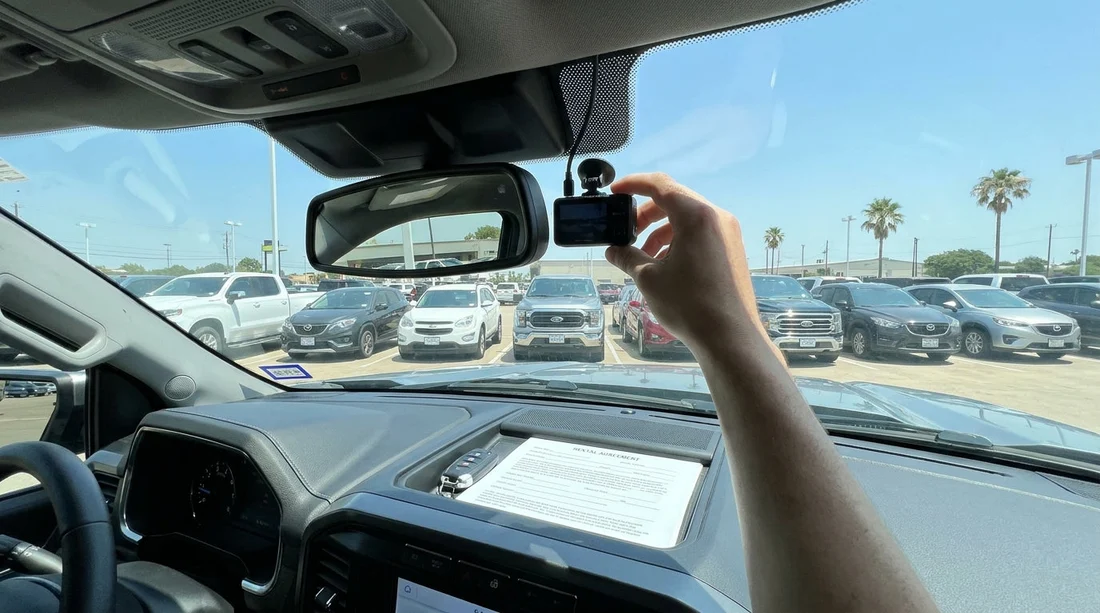
Suction cup mount: Generally the most rental-friendly choice when used correctly. Clean the glass first, slightly moisten the suction surface, and mount high behind the rear-view mirror. Avoid textured areas or dot-matrix frit edges where suction fails. Before returning the car, release the lever and remove without twisting, then wipe the spot with a dry microfibre cloth.
Static cling pad: A clear cling film pad placed on the windscreen can protect coatings and help suction cups grip. It is also easier to remove than adhesive pads. Ensure it does not create bubbles that reduce suction.
Adhesive mount: Best avoided in rentals. Even “removable” adhesive can lift tint film or leave residue, and some agreements treat adhesive use as damage. Use only if you have explicit permission in writing and you understand the surface risks.
Regardless of mount, confirm the camera does not sit in your direct line of sight, does not block the VIN plate, and does not interfere with rain sensors or lane-assist cameras often located near the mirror housing.
Power options: keep it simple and avoid wiring conflicts
In a rental, plug-in power is the least controversial. A standard USB cable to a USB port or 12V socket is usually acceptable, and it avoids accusations of electrical tampering.
Avoid hard-wiring: Fuse taps and hidden wiring may violate the agreement and can create liability if something fails. Even a neatly installed kit can be seen as unauthorised modification.
Route cables safely: Do not tuck cables behind A-pillar trims where airbags may deploy. Instead, route along the top edge near the headliner only if you can do so without prying panels, or simply run the cable down the centre area near the mirror and along the dashboard edge, securing it with removable clips that do not use adhesive. The safest rental approach is minimal tucking and no panel removal.
If you are picking up in different Texas cities, it helps to plan your setup around likely vehicle types. A larger cabin, such as a people carrier from minivan rental in Austin AUS, may make cable routing easier without interfering with airbags, whereas smaller saloons might require a shorter cable and more careful placement.
Inspection and return: leave no trace
To prevent arguments at return, remove the camera, mount, and all cabling before you reach the drop-off lanes. Wipe the windscreen where the suction cup sat, check for any residue, and make sure no clips or ties are left behind. Look for scuffs on the dashboard edge where a cable might have rubbed.
If you notice any accidental mark, document it with time-stamped photos and inform the desk calmly. Transparency helps, and small issues are more easily resolved when reported promptly rather than discovered later.
If your trip involves major airports, build time for this cleanup step. Locations such as National car rental in Texas IAH or Thrifty car rental Houston IAH can be busy at peak hours, so arriving a little earlier makes it easier to remove equipment without rushing.
So, is it allowed before pick-up?
In most cases, yes, using a dash cam is allowed for car hire in Texas, provided you do not damage the vehicle, you do not obstruct visibility, and you respect privacy. The practical answer is to read the modification and damage clauses before pick-up, avoid adhesives and hard-wiring, and be ready to remove everything cleanly at return. If the agreement language is strict or unclear, keep the setup minimal and ask the counter staff to note any approval on your paperwork.
FAQ
Can a rental company in Texas ban dash cams in the agreement? Yes. Even if dash cams are legal, the rental agreement can restrict attachments, wiring, or modifications. Always follow the contract you accept at pick-up.
Is it OK to record audio inside the rental car? It can be risky if passengers have not agreed. The safest approach is to turn off audio recording unless everyone explicitly consents.
Will a suction mount damage the windscreen or tint strip? Usually not, but adhesives and aggressive twisting can mark tint film or coatings. Clean the glass, use gentle removal, and avoid adhesive pads.
Can I hide the power cable behind trim in a rental? Avoid prying trim or routing near airbags. Use simple plug-in power and minimal, non-invasive cable management to prevent safety and contract issues.
Should I tell the rental desk I am using a dash cam? If the agreement is unclear or you plan any mounting beyond a basic suction cup, it is sensible to ask. Getting verbal confirmation and keeping the setup reversible reduces disputes.































































































