


Quick Summary:
- Choose pay-at-pump if you can refuel within five miles.
- Pick prepaid fuel only when you expect to return nearly empty.
- Confirm whether a service fee applies to prepaid fuel options.
- Photograph the fuel gauge and mileage at pickup and return.
When you collect a car hire in Texas, the fuel option you accept at the counter can be the difference between a smooth return and an unexpected refuelling charge. Texas has long driving distances, plenty of fuel stations, and busy airport returns, so it pays to understand the two most common choices: prepaid fuel and pay-at-pump (often called “return full”).
In simple terms, pay-at-pump means you leave with a full tank and you bring it back full. Prepaid fuel means you pay the rental company upfront for a tank (sometimes “full”, sometimes “full to empty”), and you can return the car with any amount left. On paper, prepaid fuel sounds convenient. In practice, it is only good value in a narrow set of situations.
How pay-at-pump works in Texas
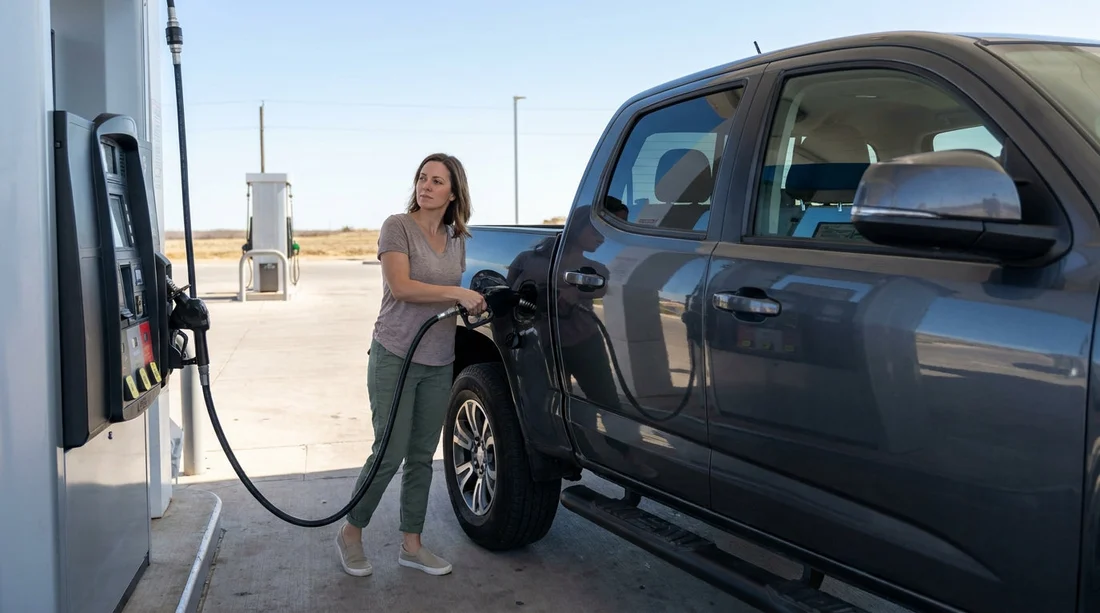
With pay-at-pump, you are responsible for topping up the tank before drop-off. If you return short, even by a little, the rental company typically charges a higher per-gallon price plus a service fee. That is why this option rewards anyone who can plan a final fuel stop.
Texas is generally friendly for pay-at-pump. Fuel stations are common near major airports and along the interstates. The main “gotcha” is airport traffic. If you leave refuelling until the last minute around Dallas, Houston, Austin, San Antonio, or El Paso, you may end up returning slightly under full because you skipped a final stop to avoid being late.
If you are collecting from a busy hub like Houston IAH or returning to San Antonio SAT, build in time for one last fill-up and keep the receipt. Some companies do not ask for it, but it can resolve disputes quickly if a fuel charge appears later.
How prepaid fuel works, and where people overpay
Prepaid fuel usually means you pay in advance for a full tank at a set price decided by the rental company. You can then return the vehicle without refuelling. The convenience is real, but so is the likelihood of overpaying, because you rarely time a trip to arrive with the tank genuinely close to empty.
The biggest cost trap is unused fuel. Any petrol left in the tank when you return is typically not refunded. If you bring it back half full, you have effectively paid for fuel you did not use, on top of paying a premium rate in some cases.
A second trap is assuming prepaid fuel guarantees you will not be charged again. If the terms are “prepay” plus a requirement to return at a minimum level, or if the contract includes a refuelling service in addition to the prepaid amount, you could still face charges if the paperwork is misunderstood. Always confirm the exact wording on the rental agreement before signing.
Which is better for most Texas car hire trips?
For most travellers, pay-at-pump is better value, because you only pay for what you use at local pump prices. It is also more transparent, since you control where you refuel and can match the gauge to “full” before returning.
Prepaid fuel can be the better choice if all of these are true: you expect a long final driving day, you will be arriving close to the airport at an awkward hour, and you are confident the tank will be very low at return. That combination is more likely on one-way itineraries or when you are driving a large vehicle with high consumption and you do not want a final stop.
For example, families collecting a larger vehicle, such as through minivan hire at Dallas DFW, might consider prepaid fuel if they are managing tired children, heavy luggage, and a very early flight. The point is not that prepaid is always bad, it is that convenience is what you are buying, and you should know the price of that convenience.
A practical cost comparison you can do at the counter
You do not need perfect maths to choose well, but you should do a quick sense check before accepting prepaid fuel.
First, look at the prepaid fuel price and ask what it covers. Is it a full tank? Is there any service fee? Second, estimate how much of the tank you will actually use. If you are returning to the same airport after mostly city driving, you may use less than expected. Third, compare the prepaid price to a rough pump price nearby. If prepaid is noticeably higher, you will need to return almost empty for it to make sense.
How to avoid unexpected refuelling charges with pay-at-pump
The risk with pay-at-pump is not the concept, it is execution. Most surprise charges come from being a fraction under full, returning to the wrong place, or misunderstanding what “full” means on the gauge.
Plan a final fuel stop within a short distance of the return location, ideally within five miles, and avoid topping up too early. Keep the receipt and take a quick photo of the gauge after refuelling. When you drop off, photograph the dashboard again showing the fuel level and mileage. This takes seconds and can protect you if the return inspection is rushed.
Also, check the fuel type before you drive away. Many vehicles have a label inside the fuel door, and the contract often lists it. Putting the wrong fuel in can lead to recovery charges that dwarf any refuelling fee.
How to avoid overpaying with prepaid fuel
If you choose prepaid fuel, treat it like a time-saving add-on and make sure it matches your plans. Ask whether the tank is full at pickup, and check the gauge in the lot. If the car is not actually full, go back immediately and have it corrected or noted on the agreement.
If you are hiring through a branded counter, such as Dollar at Austin AUS, you may see multiple fuel-related products presented quickly. Slow the process down and ask for the exact name of the option being added. A few extra seconds at the desk can prevent paying for two different fuel services unintentionally.
FAQ
Is prepaid fuel ever cheaper than pay-at-pump in Texas? It can be, but only if the prepaid price is close to local pump prices and you return with the tank nearly empty. If you return with significant fuel left, prepaid usually costs more overall.
What happens if I choose pay-at-pump and return the car slightly under full? Most rental companies charge a higher per-gallon rate than local stations and may add a service fee. Keeping a fuel receipt and photos helps if you believe the car was returned full.
Do I need to keep the petrol receipt when returning a rental car? It is a smart precaution, especially at airport returns. Even if staff do not ask for it, a receipt from near the drop-off location can resolve billing queries quickly.
Is there a best time to refuel before returning to a Texas airport? Refuel within a short distance of the airport so the gauge still reads full at return. Leaving it too early can drop the level below full after idling in traffic.
Can the fuel gauge reading differ between pickup and return? Yes. Small variations happen due to parking angle, temperature, and how the gauge updates. That is why photos at pickup and return, plus a recent receipt, are useful evidence.































































































