


Quick Summary:
- Full-to-full is usually cheapest if you can refuel near return.
- Prepaid can cost more, but saves time and stress.
- Check whether prepaid is a full tank purchase or fuel option.
- Confirm station distance, opening hours, and whether receipts are required.
When you arrange car hire in Orlando, the fuel option can change the true price more than many people expect. The two common choices are full-to-full (collect with a full tank, return full) and prepaid fuel (you pay the rental company up front for a tank, then return as empty as allowed by the contract). Neither is automatically “better”, because it depends on how and where you drive, how tight your schedule is, and the exact wording in the rental terms.
This guide compares real-world costs, time trade-offs, and the contract phrases that matter most, so you can pick the fuel option that fits your trip rather than just the headline rate. If you are collecting at the airport, the location and traffic patterns around MCO make the last fill decision particularly important for Orlando.
If you are comparing providers and pickup points, Hola Car Rentals has several Orlando pages that show typical rental structures and inclusions, such as Orlando MCO car rental and car hire Orlando MCO.
How full-to-full usually works in practice
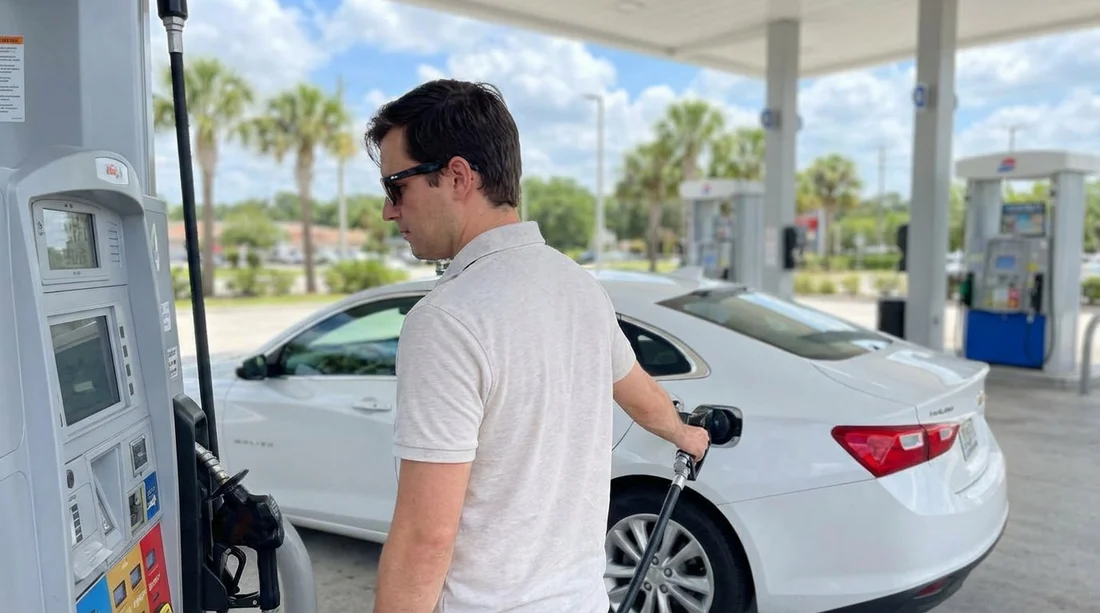
With full-to-full, the fairest outcome comes when you can fill up shortly before returning the car. In Orlando, that often means using a station within a few miles of MCO, keeping the receipt just in case, and allowing extra time for a queue at the pump during peak periods.
Cost-wise, full-to-full tends to be cheaper because you buy fuel at local pump prices. You also control how much you buy, which matters if you only need a partial tank to reach the airport. The risk is not the fuel price, it is the logistics. If you cannot find a convenient station at the end of the trip, or you arrive late and rush, you may return the car with the gauge slightly under full. Many rental agreements then apply a refuelling charge plus an inflated per-gallon rate. That is where full-to-full can become expensive.
Common wording to look for includes “return with same level”, “refuelling service charge applies”, and any mention of “fuel is charged at a higher rate than local pump prices”. If the contract adds “admin fee” or “service fee” on top of fuel, even a small shortfall can cost more than expected.
How prepaid fuel really behaves on your bill
“Prepaid” sounds straightforward, but it can mean different things. Some suppliers sell it as a full tank purchase with no refund for unused fuel. Others offer a fuel purchase option where you pay for a full tank, and they promise not to charge the refuelling service fee, but you still lose value on any unused fuel.
In Orlando, prepaid becomes attractive when your return timing is tight, when you have an early flight, or when you know you will not want an extra stop on the final morning. The trade-off is that you are paying a convenience premium. The prepaid rate per gallon can be higher than nearby stations, and any fuel you leave in the tank is money you have already spent.
Prepaid can still be the cheaper choice for some travellers, but only when the time saved is genuinely valuable, or when the alternative is a likely refuel penalty.
A realistic cost comparison for Orlando trips
The cheapest option depends on how empty the tank will be at return. With full-to-full, your effective cost matches pump pricing, assuming you return full. With prepaid, you are buying an entire tank regardless of how much you use. The break-even point is usually when you expect to return nearly empty, because then you have used most of the prepaid fuel.
Consider what “nearly empty” means in reality. Many people do not want to push the needle to the bottom with unfamiliar roads and airport stress. If you return with a quarter tank left, that quarter represents unused prepaid value. On a larger vehicle such as a minivan, that can be a meaningful amount.
Vehicle size is a key factor. A compact car’s full tank is smaller, so the potential waste with prepaid is lower. A larger SUV or minivan magnifies both the prepaid cost and the risk of wasting unused fuel. If you are comparing larger people carriers, it helps to review likely fuel costs alongside the rental quote, for example on minivan rental Orlando MCO.
Time trade-offs at MCO, what you actually save
Time is the strongest argument for prepaid. A final refuel stop can add 10 to 30 minutes, sometimes more if traffic is heavy or the station is busy. It is not just the pumping, it is the detour, the turns, and the time to merge back towards the airport.
However, full-to-full does not have to be painful if you plan it. If you refuel the evening before and then drive only a few miles on the last day, you can often return with the gauge still full. This is especially workable if your hotel is close to the airport. The risk is that modern fuel gauges are not precise. Some contracts expect the needle to be exactly on full, and some staff rely on the car’s fuel bars rather than your receipt.
Contract phrases that decide the winner
Before choosing, scan the terms for these points. They are the difference between a reasonable deal and a costly surprise.
1) “Fuel service charge” or “refuelling fee”. This is often applied if you return under full on a full-to-full contract. It can be a flat fee, plus fuel at a premium rate.
2) “Fuel charged at the supplier’s rate”. This usually signals a higher-than-pump price when the supplier refuels for you, or charges for estimated fuel.
3) “Non-refundable” prepaid fuel. If it is non-refundable, any fuel left in the tank is forfeited value. That can be fine if you will use almost all of it.
4) “Return as empty as possible”. This phrase appears with some prepaid options, but it does not mean you can safely run the tank dry. If you end up adding fuel because you are anxious, you effectively pay twice for the last portion.
5) Receipt requirements. Some terms say a fuel receipt from a station within a certain distance or time window is needed to dispute a refuel charge. Even if not required, keeping the last receipt is sensible.
Because contract wording can vary by brand and counter, it is helpful to check the supplier context on the pickup page you are using. For example, many travellers compare mainstream desks and value brands when looking at Avis car rental Orlando MCO versus Thrifty car rental Orlando MCO.
Which option is usually cheaper, and when to pick each
In most everyday Orlando trips, full-to-full is usually cheaper because it aligns your spend with actual pump pricing and actual usage. It is especially cost-effective when you can plan a final fill nearby, or when your itinerary means you will not be arriving at the airport with a nearly empty tank.
Prepaid is often more expensive in pure pounds-per-mile terms, but it can be the better overall choice when your time is tight or when the risk of a refuel penalty is high. Early flights, heavy luggage, unfamiliar routes, and travelling with children all increase the practical value of prepaid convenience.
FAQ
Is full-to-full cheaper than prepaid fuel for car hire in Orlando? Often yes, because you pay local pump prices and only for what you use. Prepaid can cost more if you return with fuel left in the tank.
When does prepaid fuel make sense at Orlando MCO? It can suit early departures, tight schedules, or travellers who want to avoid a last refuel stop and the risk of refuelling charges for returning slightly under full.
What contract wording should I check before choosing a fuel option? Look for “refuelling service charge”, “fuel charged at supplier’s rate”, “non-refundable prepaid fuel”, and any receipt requirements tied to disputes.
Can I dispute a refuelling charge if I refuelled near the airport? Sometimes. Keep your final fuel receipt and ensure it is close in time and location to the return, as some terms specify distance or time limits.
Does vehicle type change the best fuel choice? Yes. Larger vehicles usually have bigger tanks, so prepaid waste can be higher. Full-to-full is often more economical for larger cars if you can refuel easily.































































































