


Quick Summary:
- Expect a pre-authorisation commonly between $200 and $500 in California.
- Larger vehicles, premium categories, and young drivers usually increase the hold.
- Ensure your card name matches the driver and has available credit.
- Declineable extras or policy mismatches can slow release and collection.
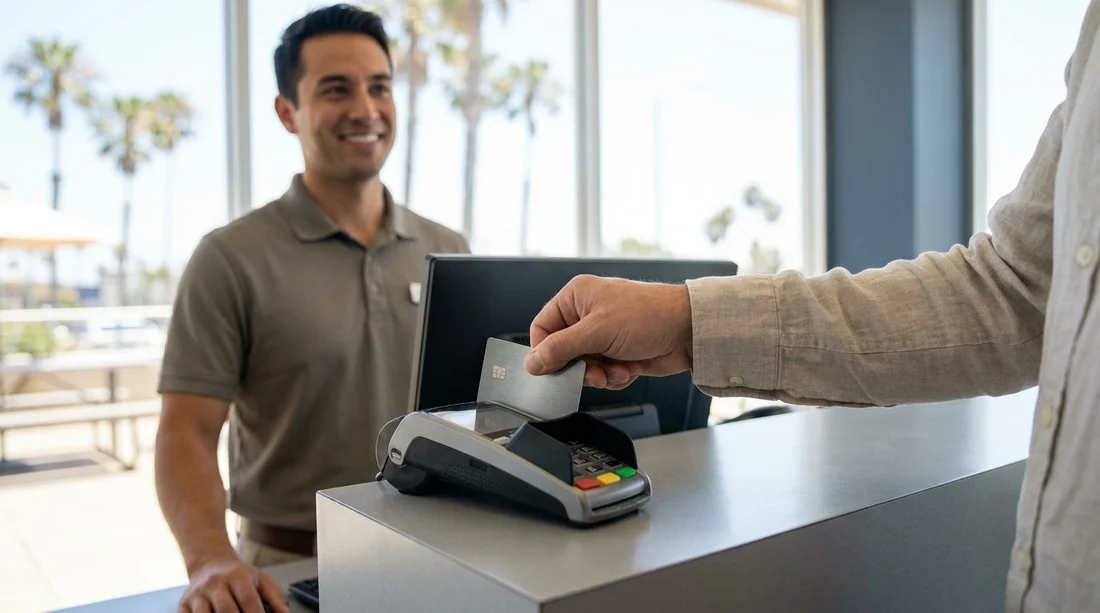
A credit-card deposit hold, also called a pre-authorisation, is a temporary amount your card issuer sets aside when you collect a car hire in California. It is not the same as a charge, and it is not the rental price itself. Instead, it is a security amount held to cover potential costs such as fuel differences, toll administration, parking tickets, traffic violations, damage excess, or extra days. Understanding the typical range and what can change it helps you arrive prepared and avoid counter delays.
In California, pre-authorisation amounts vary by supplier, vehicle group, and the protections you have in place. With Hola Car Rentals you may see a range that commonly sits around $200 to $500 for standard vehicles when using a major credit card in the main driver’s name. Some rentals can be lower, and some can be significantly higher, depending on the risk profile of the booking and local rules at the pick-up location.
Typical deposit hold ranges for car hire in California
Most travellers collecting a compact, economy, or mid-size vehicle should expect a deposit hold in the low hundreds of dollars. A practical planning figure for many bookings is $300 to $500 available credit on top of the rental cost, so you have headroom for incidentals and any unexpected adjustments.
However, the realistic range is broader. A small hold may be used when the booking includes strong coverage and the supplier’s policy allows a reduced security amount. A larger hold may apply when the supplier requires a higher excess security, when the vehicle category is more expensive to repair or replace, or when certain optional items are added at the counter.
Pick-up location can matter as well. Airports may have slightly different procedures and processing times compared with off-airport desks, mainly due to higher customer volume and operational constraints. If you are collecting near Los Angeles, details for your chosen provider are usually summarised on the location landing page such as car rental Los Angeles LAX. In Northern California, you can also check the practical information on pages like van rental San Francisco SFO, especially if you are considering larger vehicle classes.
What can increase your pre-authorisation hold
The size of the hold is a product of risk, and several common factors increase it. Being aware of them lets you choose a car hire setup that suits your budget and available credit.
Vehicle type and value. Premium cars, SUVs, convertibles, and people carriers typically come with higher deposit holds than compact cars. Vans and specialty categories can also require a larger hold because replacement values and repair costs are higher.
Age and additional driver profile. Young drivers often trigger higher holds, sometimes alongside a young driver fee, because insurers and suppliers treat the booking as higher risk. Additional drivers can also affect requirements, particularly if the supplier needs all named drivers to meet specific conditions.
Protection level and excess. The more financial responsibility remains with the driver in the event of damage, the more likely the supplier is to require a larger pre-authorisation. If your booking is based on a higher excess, the hold may be closer to that exposure.
One-way rentals and cross-region plans. Dropping the car at a different location can lead to different deposit structures. Even within California, supplier policies can change based on return station, vehicle logistics, and expected utilisation.
Optional extras and equipment. Items such as child seats, GPS units, or certain roadside packages can change the amount held, either because they add value at risk or because they change the way the supplier secures payment. If you are likely to add extras, keep additional headroom on your card.
Paying with debit cards or non-standard cards. Many suppliers prefer credit cards for deposit holds because authorisations are smoother and funds are easier to secure. If a debit card is accepted at all, it can come with higher holds, stricter documentation, or longer release times. For the smoothest car hire experience, plan on using a major credit card in the main driver’s name.
How deposit holds work, and why the amount looks “missing”
A pre-authorisation is a bank-to-bank message that reserves part of your credit limit. Your available credit reduces by that amount, even though the funds have not been taken. When you return the vehicle and the supplier closes the rental, the supplier releases the authorisation or converts any final balance into a charge, depending on what is owed.
Release timing depends mostly on your card issuer. Some banks show the release within hours, while others can take several business days. This is why two people can have identical rentals, but see different timelines for when the held amount becomes available again.
It also explains why you should avoid running your card close to its limit before arrival. Even if you can afford the rental, insufficient available credit for the deposit hold can cause delays, require an alternative card, or in worst cases prevent vehicle collection.
How to avoid pick-up delays with a credit card
Delays at the counter are usually caused by mismatches between the booking, the driver’s documents, and the payment method. The steps below reduce the risk of a problem and help your collection process move faster.
Bring the right card, in the right name. The main driver should present a credit card with their name embossed or printed, matching the driving licence. Using a card in someone else’s name can lead to refusal, even if that person is present. If you are travelling as a couple or group, it can be sensible for the main driver to carry their own card with sufficient limit.
Check available credit, not just the limit. Pre-authorisations reduce available credit instantly. If you have pending transactions, hotel holds, or recent large purchases, your available credit can be lower than expected. Clearing space before arrival helps avoid an awkward stand-off at the desk.
Arrive with documents aligned. Have your driving licence, any required ID, and your booking confirmation ready. Where needed, bring proof of address or additional identification. Document checks can be more detailed for airport collections, such as at car rental Santa Ana SNA, where counters can be busy and policies strictly enforced.
Avoid last-minute category surprises. Changing vehicle class at the counter often changes the deposit. If you arrive expecting a small car but decide you want an SUV, the hold can jump. Pick a category you are comfortable supporting with your available credit.
Be cautious with late arrivals. If your flight is delayed and you collect near closing time, staff may have less flexibility to resolve payment issues. If you are collecting around Sacramento, you can review the local guidance on car hire airport Sacramento SMF and plan your arrival accordingly.
Common scenarios and what to do
You see a higher hold than expected. First, confirm whether you added optional items or changed vehicle class. Next, ask the desk to explain what the hold covers and whether any portion is related to toll programmes or fuel policies. If everything matches the rental agreement, it may simply be the supplier’s standard security amount for that category.
The hold has not been released after return. Start by checking your final receipt to confirm the rental is closed. Then allow a few business days for your bank to process the release. If it remains pending beyond your bank’s typical timeline, contact the supplier with your agreement number and return details, and also ask your card issuer what they can see on their side.
You want to minimise the hold. The most reliable approach is to use a mainstream vehicle category, keep the driver profile straightforward, and avoid counter changes. Ensure your booking’s protection level and terms match what you plan to present at pick-up.
FAQ
Q: What is a typical credit-card deposit hold for car hire in California?
A: Many standard bookings fall around $200 to $500, but the amount varies by supplier, vehicle group, and driver profile.
Q: Is the deposit hold the same as the rental cost?
A: No. The hold is a temporary security amount separate from the rental price, and it reduces your available credit until released.
Q: What makes the pre-authorisation higher?
A: Larger or premium vehicles, young drivers, higher excess responsibility, one-way plans, and adding extras at the counter commonly increase it.
Q: How long does it take for the hold to be released?
A: It depends mainly on your card issuer. Some releases appear quickly, others can take several business days after return.
Q: How can I avoid pick-up delays related to payment?
A: Use a credit card in the main driver’s name, keep enough available credit for the hold, bring matching documents, and avoid last-minute vehicle changes.































































































