


Quick Summary:
- LDW often excludes underbody, oil pan, and suspension damage claims.
- Kerb strikes and pothole impacts may be treated as misuse.
- Read the Damage Waiver section, not just the LDW name.
- Inspect, photograph, and confirm key exclusions before you drive off.
When you arrange car hire in California, the Loss Damage Waiver (LDW) is usually presented as the big protection add-on that limits what you pay if the vehicle is damaged. The confusion starts because LDW is not a universal policy with identical rules. It is a contractual waiver, and its exclusions matter as much as what it covers. Underbody damage from kerbs, potholes, speed bumps, debris, or rough surfaces is one of the most commonly excluded categories, even when the rest of the vehicle damage might be waived.
This article explains how LDW typically treats underside damage on a California rental car, why kerb and pothole incidents can be rejected, and what to check in the terms before pick-up so you know where you stand.
What LDW usually does, and why “usually” matters
LDW generally means the rental company agrees to waive some or all of its right to charge you for vehicle damage or theft, subject to conditions. In practical terms, that can reduce your financial responsibility from the full repair cost down to a deductible, or to zero, depending on the product. But LDW is not the same as “anything goes”, and it is not automatically the same as your personal car insurance.
In California car hire, the LDW language is typically found in the rental agreement and a separate terms booklet. Those documents define “damage” and list exclusions such as prohibited roads, careless use, or specific vehicle parts. Underbody and mechanical components are frequently called out as excluded, or covered only in limited scenarios.
If you are collecting a vehicle in Southern California, you may want to review the terms in advance for the location you are using, for example SUV hire Los Angeles LAX or Hertz car rental California LAX, because waiver options and wording can differ by supplier and desk.
Does LDW cover underbody damage from kerbs or potholes?
Most of the time, no, or not fully. Many rental agreements treat underbody damage as excluded from LDW, even if the same incident also scuffs a bumper or wheel. The underside is hard to inspect at check-out and hard to prove when the damage happened, so suppliers often restrict waiver coverage to reduce dispute risk.
When you hit a kerb, bottom out on a dip, or strike a pothole, damage can occur to:
Oil pan, transmission casing, exhaust, catalytic converter, fuel tank: These sit low and can crack or dent from a hard impact. Even a small crack can lead to oil loss and engine damage.
Suspension, steering components, alignment: Pothole impacts can bend control arms, damage tie rods, or knock out alignment. Some agreements treat this as “mechanical” damage rather than body damage.
Undertrays, splash shields, brackets: These plastic panels can tear off when scraping on a kerb or road debris.
Wheels and tyres: Not strictly “underbody”, but often bundled into similar exclusions. A pothole can cause sidewall bulges or cracks, and wheel damage can be expensive.
Even when LDW applies to general collision damage, you may still be charged for excluded components. The key point is that “I bought LDW” does not automatically equal “I am covered for kerb and pothole underside damage”.
Common LDW exclusion wording to look for
You are looking for the actual definitions in the rental terms, not the marketing label. In the Damage Waiver section, watch for wording such as:
“Underbody” or “undercarriage” excluded: Sometimes listed plainly as not covered under LDW.
“Mechanical damage” excluded: Potholes can trigger mechanical or suspension damage claims, even though the cause was a road hazard.
“Negligence” or “misuse”: Kerb strikes can be framed as careless driving. If the supplier believes the driver failed to take reasonable care, they may deny the waiver.
Tyres, wheels, glass excluded: These are commonly separate. If a pothole bends a rim and damages the underside, you could face multiple charge lines.
If you are picking up around Northern California, check the location’s terms before you arrive at the desk, for instance car hire San Francisco SFO or car hire Sacramento SMF. The core idea is the same across the state, but the detail can vary by supplier and product.
What to check in the rental terms before pick-up
To avoid surprises, focus on these practical checks before you sign:
1) The exact list of excluded parts. Look for “underbody/undercarriage”, “oil pan”, “suspension”, “drive train”, and “mechanical damage”. If it is excluded, ask what protection, if any, can reduce that exposure.
2) The deductible and what it applies to. Some products waive collision damage but still apply a deductible to certain categories, or exclude them entirely. Confirm whether the deductible is per incident, and whether towing and loss-of-use are separate.
3) Tyre and wheel coverage. Potholes often damage tyres and rims first. If wheels and tyres are excluded, you may still have significant costs even if body damage is waived.
4) Reporting obligations. Many agreements require you to report damage promptly and sometimes to obtain a police report for certain incidents. If you wait until return, you can weaken your position.
5) The inspection procedure and evidence. Ask whether the vehicle is checked with you present, and whether existing underbody scuffs are recorded. Even if the staff cannot lift the car, you can still document what is visible.
If you are collecting from a busy airport station, consider allowing extra time at pick-up to read the waiver section carefully, for example at car rental airport San Diego SAN, where queues can make it tempting to sign quickly.
Pick-up and return steps that reduce disputes
Underbody issues are tricky because you cannot easily see everything. Still, you can reduce risk with a consistent process:
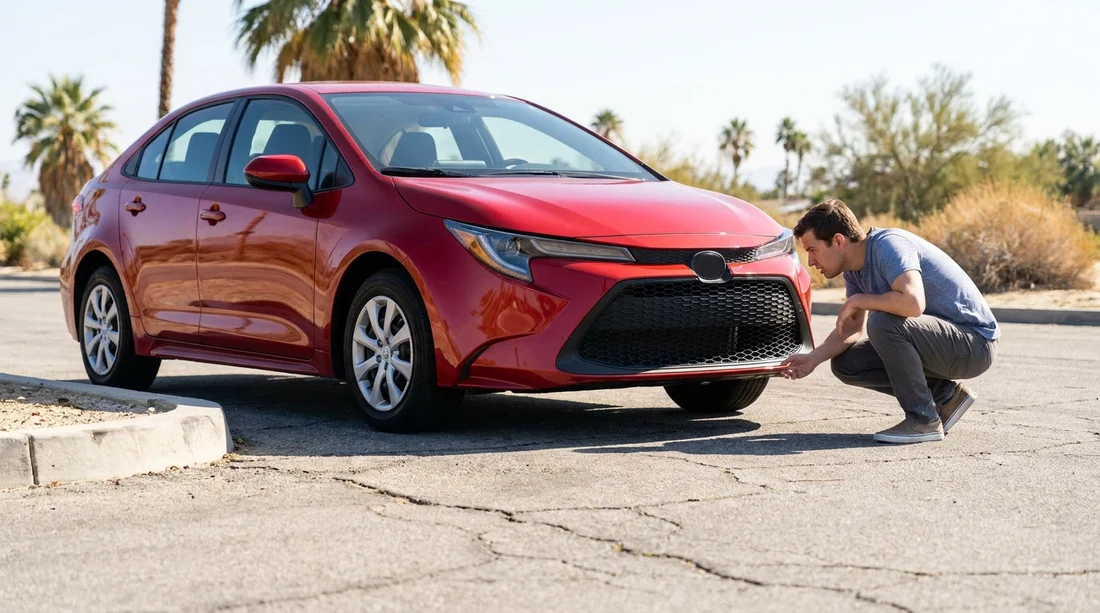
Photograph the exterior and wheels in good light. Include close-ups of each wheel, tyre sidewalls, lower bumper edges, and sills. Kerb rash and low scrapes often correlate with underbody contact.
Check warning lights and messages. If you hit a pothole and later see an oil pressure warning, stop safely and contact the supplier. Continuing to drive can turn a small crack into major engine damage, and that may be classed as negligence.
Ask for existing damage to be noted. If you see any low scrapes or hanging plastic undertrays, get it written on the check-out report or electronic condition report.
Return during staffed hours if possible. A check-in with an agent present can help confirm condition on the spot, rather than days later.
FAQ
Is underbody damage the same as wheel and tyre damage? Not always. Wheels and tyres are often listed separately, but pothole impacts commonly affect both, so check each exclusion.
Can LDW be voided if I drove on an unpaved road? Yes. Many agreements exclude damage that occurs on prohibited roads or off-road surfaces, which can void the waiver for that incident.
If I bought LDW, can I still be charged for towing? Potentially. Some terms treat towing, roadside assistance, storage, or recovery as separate fees, especially if the incident involves an excluded category.
What evidence helps if there is a dispute about when the damage happened? Time-stamped photos or video at pick-up and return, plus prompt incident reporting, can help establish the vehicle’s condition and timeline.
Should I report a pothole hit even if the car seems fine? It is wise to report any significant impact. Underbody cracks and alignment issues can develop symptoms later, and early reporting supports your position.































































































