


Quick Summary:
- Tell your car hire company if you plan to drive out of state.
- Confirm permitted states, mileage rules, and any cross-border fees before departure.
- Check insurance, roadside cover, and breakdown numbers still apply out of state.
- At pick-up, verify paperwork, registration, and emergency kit requirements are met.
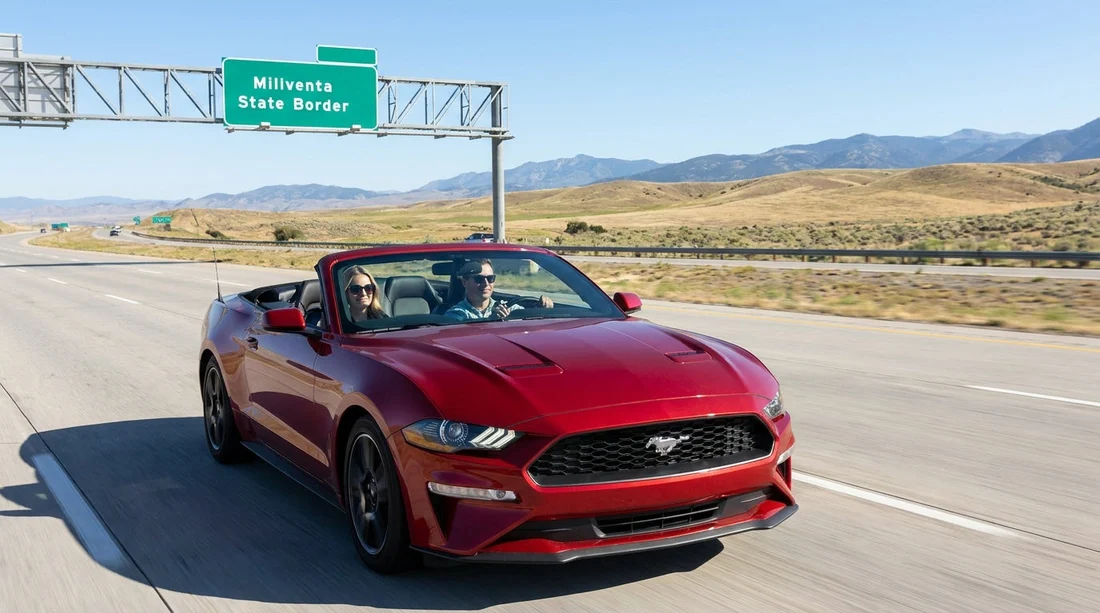
Crossing state lines from California is common, whether you are heading to Nevada for Las Vegas, Arizona for the Grand Canyon, or Oregon for a coastal road trip. In most cases, you can take a rental car across state lines within the US, but you should not assume it is always automatic. The safest approach is simple: tell your car hire company your plan and get clarity on any restrictions, insurance implications, and what you must carry in the vehicle.
This matters because car hire policies are set by the rental brand, the vehicle type, and sometimes the pick-up location. Restrictions are usually about where the vehicle can go, how long it can be away, and whether any extra cover or authorisation is required. If you skip the conversation and later need roadside help or have an accident, you do not want to find out too late that a condition was breached.
Do you need to notify the car hire company?
For most standard rentals starting in California, driving into another US state is permitted, but it may still require disclosure. Some companies phrase it as “authorised use” or “permitted use area”, others simply advise you to inform them if you will leave the state. The practical takeaway is that telling them protects you: it lets staff confirm the correct contract terms, ensures your vehicle is eligible for your route, and reduces disputes if something happens.
Common restrictions to check before you leave California
While interstate travel within the contiguous US is commonly allowed, restrictions can still appear. Ask for specifics rather than relying on general statements. Key items to confirm are:
Permitted states or regions. Some fleets restrict travel to certain states only, or require extra approval for specific areas. Restrictions are more common for certain vehicle classes or during high-demand periods.
Mileage rules. Your rate may be unlimited mileage or it may not. If mileage is capped, an interstate trip can add up quickly. Confirm how mileage is calculated and what the per-mile charge is if you exceed the allowance.
Road type restrictions. Car hire agreements often forbid unpaved roads, off-roading, and certain high-risk routes. Even within national parks, some scenic tracks are classed as unpaved. If your trip involves these, get written clarification.
One-way vs return-to-origin. Crossing state lines is different from returning the car in another state. If you plan to drop off elsewhere, that is one-way hire and needs to be arranged in advance, often with a one-way fee.
Paperwork and documents that may apply
Within the US, you generally do not need special border paperwork to drive a hire car from California into another state. However, you still need to travel with the right documents so you can prove lawful use if stopped or if you need help.
Rental agreement and receipt. Keep a copy accessible, paper or digital. If you are stopped, it helps to show you are authorised to drive the vehicle and confirms the rental period.
Vehicle registration and proof of insurance (as supplied). The car should have registration documents in the glovebox, and the rental company’s insurance documentation where applicable. If anything is missing at pick-up, ask before leaving the lot.
Your driving licence and ID. Carry your licence at all times. For international visitors, check whether your licence is accepted as-is or whether an International Driving Permit is recommended alongside it.
Additional driver documentation. If someone else will drive in Nevada or Arizona, make sure they are added as an authorised driver before you depart. Unauthorised drivers can invalidate cover.
Tolling information. California and neighbouring states use different toll systems. Ask how tolls are handled, whether the vehicle has a transponder, and how charges and admin fees are applied.
Insurance and liability, what changes when you leave California?
Insurance is where assumptions cause the most trouble. In general, the rental company’s required liability coverage follows the vehicle, and optional waivers or protection products remain in force across state lines. That said, policy wording can vary, and your protection can depend on permitted use. Verify these points before you leave:
Collision cover or damage waiver conditions. Even if cover is valid in other states, it may not apply if the car is used contrary to the contract, such as on prohibited roads, for commercial use, or by an unauthorised driver.
Personal travel insurance and credit card cover. If you rely on third-party cover, confirm it applies for the states you will visit and for the vehicle class you are hiring. Also confirm what documentation you must obtain after an incident, as claims often require police reports or specific invoices.
What to confirm at pick-up, a practical checklist
The pick-up counter is your best chance to prevent problems, because staff can see the exact vehicle class and contract terms for your reservation. Make these confirmations before you drive away:
State-line travel is permitted for your booking. Ask the agent to note your intended states on the reservation, or provide written confirmation in the agreement notes.
Emergency contact and breakdown numbers. Save the number in your phone and check whether there is a separate number for out-of-state towing.
Vehicle condition report. Photograph the vehicle at pick-up, especially existing scuffs and the windscreen. Do the same at drop-off, which is useful if you travel through dusty or gravelly areas.
Toll programme and fuel policy. Clarify how tolls will be billed and whether you must return the vehicle full-to-full.
Location considerations, airports and long-distance routes
If you are picking up near major airports, you are likely to be offered a broad choice of brands and vehicle categories. For instance, travellers starting in Southern California often compare options around Los Angeles LAX, and groups may prefer larger vehicles such as minivan hire in California for multi-state drives. If your route begins in Northern California, you might start from San Jose SJC or the capital region via Sacramento SMF.
What happens if you do not tell them?
In many cases, nothing happens, because interstate travel is permitted and you never need help. The risk is not day-to-day driving, it is what happens when something goes wrong. If you need towing, a replacement vehicle, or you are involved in a collision, the rental company and insurer will look at contract compliance. If your agreement required notification or restricted travel to certain areas, failing to disclose can complicate assistance, delay claims, or create disputes about liability.
FAQ
Do I need written permission to drive a hire car from California to Nevada? Usually it is permitted without special paperwork, but you should confirm your specific rental terms and any mileage or road restrictions before leaving.
Will my car hire insurance still cover me in another state? Typically yes within the US, provided you follow the contract, use authorised drivers, and avoid prohibited roads. Confirm roadside and damage cover terms at pick-up.
Can I return the car in another state if I decide to extend the trip? That is a one-way change and must be arranged with the rental company. Availability, drop-off locations, and one-way fees vary by brand and season.
Do I need to carry any special documents when crossing state lines? No special border documents are required, but you should carry your licence, rental agreement, and any registration or insurance documents supplied with the vehicle.
What should I ask at pick-up if I plan a multi-state road trip? Confirm permitted states, mileage rules, toll billing, roadside assistance coverage area, and that all intended drivers are listed on the agreement.































































































