


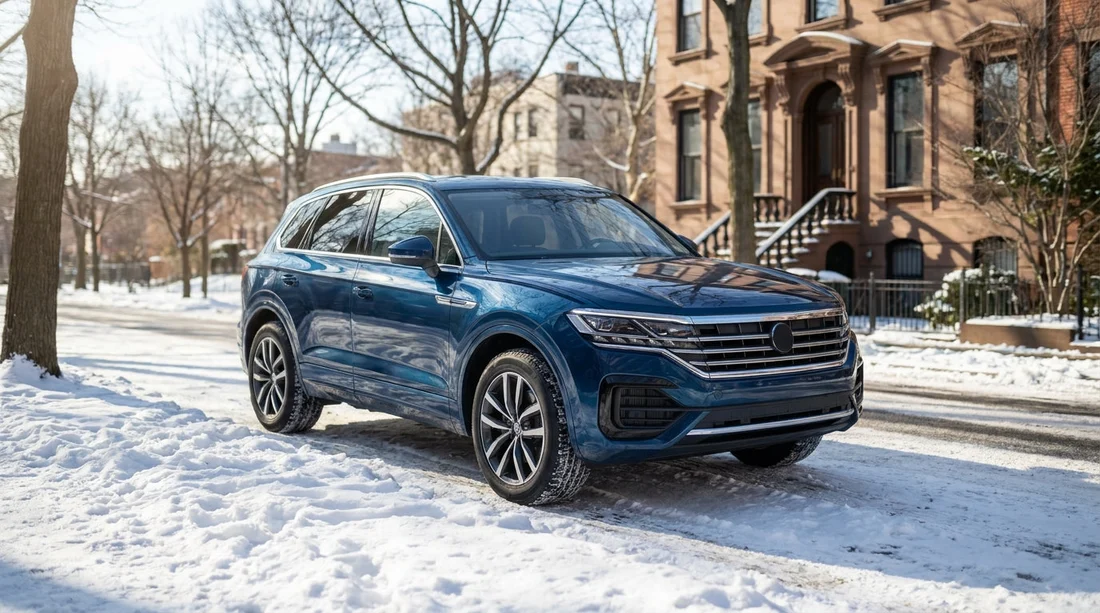
Quick Summary:
- Choose AWD when driving in snow, slush, ice, or hilly routes.
- Tyres matter more than AWD for braking, steering grip, and control.
- AWD is most common in SUVs, crossovers, and some premium sedans.
- Before pick-up, confirm drivetrain, tyre condition, defrost, and chain rules.
Winter driving in New York can mean anything from clear, cold motorways to sudden squalls, slushy city streets, and icy bridges. If you are arranging car hire for a winter trip, it is natural to wonder whether all-wheel drive (AWD) is essential, or just a nice-to-have that adds cost without much benefit.
The honest answer is that AWD can make a real difference in specific conditions, but it is not a magic solution. It helps you get moving and keep traction when accelerating, yet it does not shorten braking distances on ice and it does not substitute for sensible speed, safe following distances, and tyres suited to the temperature.
Below is a practical way to decide when AWD is worth prioritising for car hire in New York, which categories are most likely to include it, and what to verify before you collect the keys.
What AWD actually improves in winter (and what it does not)
AWD sends power to more than two wheels, which generally helps when traction is limited. In winter, that means you are less likely to spin the driven wheels when pulling away from a stop sign, merging from a slushy on-ramp, or climbing a slick incline.
However, AWD does not change the laws of physics when it comes to stopping. Braking is governed mostly by tyre grip, road surface, and speed. If the road is glazed with ice, an AWD vehicle can still slide straight on under braking. Likewise, cornering grip depends on tyres and speed, not just drivetrain.
Think of AWD as an aid for traction while moving forward, not as a guarantee of overall safety. If you pick AWD for car hire, pair it with conservative driving and careful attention to conditions, especially on bridges, shaded stretches, and early mornings after a refreeze.
When AWD makes a real difference in New York winter travel
AWD tends to be most valuable when you expect low-traction starts and climbs, or when you need to keep moving in messy conditions. Consider prioritising AWD in your car hire plan if any of these match your trip.
1) You will drive during or immediately after snowfall. Snow on the road often turns into compacted slush at junctions and intersections. AWD can help you pull away smoothly without excessive wheelspin, especially if you are navigating suburban streets that have not yet been fully cleared.
2) Your route includes hills, steep driveways, or rural roads. Even within the wider New York area, elevation changes can catch drivers out. A short, icy incline on a side road can be more challenging than a well-ploughed main route. If you will be visiting areas outside the densest parts of the city, AWD can reduce the chance of getting stuck.
3) You have early-morning or late-night drives. Temperatures often drop overnight. Meltwater can refreeze into black ice, especially on bridges and flyovers. AWD will not help you stop on black ice, but it can help you maintain steady progress with gentle inputs.
If your itinerary is mostly city driving on ploughed roads, or you can avoid travelling during storms, AWD can be optional. In many winter weeks, New York roads are cold but clear, and a front-wheel-drive vehicle with good tyres is entirely capable.
The bigger factor many renters overlook: tyres
In winter, tyres often matter more than drivetrain. Even the best AWD system cannot create grip if the tyres are hard and cold, or worn enough to struggle on slush. For car hire, you may not be able to choose a specific tyre brand or winter tyre set, but you can still check a few practical items at pick-up.
Tread depth and condition: Look for evenly worn tread and no obvious damage. If the tyres look very worn, ask whether an alternative vehicle is available.
Tyre type: In many US rental fleets, you will often see all-season tyres rather than dedicated winter tyres. All-season tyres can be fine on cold, clear roads and light snow, but their grip may fall short on packed snow or ice.
Tyre pressure warning lights: Cold weather can trigger pressure alerts. Ensure any warning lights are addressed before you leave, because under-inflated tyres reduce grip and increase stopping distance.
Which rental categories are most likely to be AWD
Availability varies by supplier, season, and location, but certain categories are more likely to include AWD in New York winter fleets.
Compact and midsize cars: Many are front-wheel drive. Some models may be AWD, but it is less consistent, so treat AWD here as uncertain unless explicitly confirmed.
Standard and full-size cars: Some larger sedans offer AWD trims, but fleets may supply either drivetrain depending on what is on hand.
SUVs and crossovers: This is where AWD is most common. If AWD is a priority for your car hire, browsing SUV-oriented options can improve your odds. If you are comparing choices around JFK, see what is typically available on the SUV hire New York JFK page.
Premium and luxury categories: Premium crossovers and some higher-end sedans may have AWD more often, but it can still vary by model year and trim.
The key point for New York car hire is that “SUV” does not automatically mean AWD. Some SUVs are front-wheel drive, and some AWD systems are part-time, activating only when slip is detected. That can still be helpful, but it is different from a full-time setup.
What to confirm before pick-up (and why it matters)
To avoid surprises, confirm the details that affect winter performance. Do this as early as practical, and then verify again when you inspect the car.
Confirm the drivetrain wording: Look for “AWD” or “4WD” in the vehicle description, not just the category name. If your itinerary depends on it, ask whether AWD is guaranteed or “subject to availability”. If you are arranging collection at JFK, the car hire New York JFK page is a useful starting point to compare options by location.
Understand AWD vs 4WD: Many crossovers are AWD. Some larger SUVs may be 4WD. For winter road driving, AWD is often smoother and needs less driver input, whereas 4WD can be more specialised.
Ask about any chain restrictions: Some rental agreements restrict snow chains, and some vehicles do not have the clearance for them. Even if you do not plan to use chains, knowing the rules can shape your route choices during severe weather.
Inspect wipers, washer fluid, and defrost: Winter visibility is a safety issue. Make sure the windscreen clears quickly, the rear defrost works, and the washer jets spray properly.
Plan the airport logistics: Many New York itineraries involve Newark and EWR. If you are comparing pick-up points, see car rental Newark EWR and car hire airport New Jersey EWR for location-specific options and practical context.
So, do you need AWD for winter car hire in New York?
You need AWD when your plans include driving during storms, heading into hillier or less-cleared areas, or travelling at times when refreezing is likely. In those scenarios, AWD can reduce stress and lower the chance of getting stuck, especially when pulling away on slippery surfaces.
If your trip is largely urban, your schedule is flexible, and you can wait out heavy snowfall, AWD is often optional. In that case, prioritise a well-maintained vehicle with good tyres, working defrost, and predictable handling. Most importantly, drive to conditions, because braking and cornering limits arrive quickly on ice whether you have AWD or not.
FAQ
Is AWD the same as 4WD for winter driving? Not exactly. AWD is typically automatic and suited to mixed, slippery road conditions. 4WD is often found on larger SUVs and may require selecting a mode, which can help in deeper snow but is not inherently safer for braking.
Will AWD help me stop faster on ice in New York? No. AWD mainly helps you accelerate and maintain traction while moving. Stopping distance depends on tyre grip and speed, so slow down and leave more space regardless of drivetrain.
Are SUVs always AWD when arranging car hire? No. Some SUVs are front-wheel drive, and the supplied vehicle can vary by fleet availability. If AWD is essential, confirm it is specified rather than assumed from the category name.
What should I check on the rental car before leaving the pick-up location? Confirm the car is AWD if required, then check tyre condition, wipers and washer fluid, defrost and heating, and that no warning lights are showing. These are the practical items that affect winter safety immediately.
If roads are clear, is AWD still worth paying extra for? If you are driving mostly on ploughed, dry roads, a front-wheel-drive car is usually adequate. AWD can still offer reassurance, but the value is highest when you expect snow, slush, or steep, slippery starts.































































































