


Quick Summary:
- Upgrading your vehicle class can change your LDW excess and price.
- Changes in supplier, category, or location can reprice waiver terms.
- Check the refreshed quote shows LDW terms for the upgraded class.
- Confirm the rental agreement states the final excess before signing.
When you arrange car hire for San Francisco, an upgrade can feel like a simple switch to a nicer vehicle. In practice, a vehicle upgrade can affect your Loss Damage Waiver (LDW) price, the excess you would pay if the car is damaged or stolen, and sometimes which items are excluded. That means the answer to “Will a rental car upgrade change your LDW excess before pick-up in San Francisco?” is: it can, and you should assume it might until you see the updated terms in writing.
LDW is commonly offered by suppliers in the United States to limit your financial responsibility for damage or theft of the rental vehicle, subject to an excess (also called a deductible) and conditions. The excess is not universal across all cars. Suppliers often tie it to the vehicle class, value, repair costs, and risk profile. So moving from a compact to a full-size car, or from a standard car to an SUV, can legitimately change the excess and the waiver cost.
If you are comparing options around the Bay Area, it can help to see how different locations and vehicle types are presented on Hola Car Rentals. For example, SUV categories at San Francisco airport are shown on SUV rental San Francisco SFO, while supplier-specific pages such as Hertz car rental San Francisco SFO and Alamo car hire San Francisco SFO can be useful reference points when you are checking what class you are actually being quoted for.
Why an upgrade can change LDW excess
An “upgrade” usually means you move into a higher vehicle group than originally quoted, whether that happens online before you travel or at the counter in San Francisco. LDW excess can change because the supplier recalculates risk and exposure for the new group.
Vehicle value and repair costs: A larger, newer, or more premium model can cost more to repair. Even if your LDW price stays similar, the excess could increase because the supplier carries more risk on that vehicle class.
Different waiver tiers for different categories: Some suppliers structure waiver packages so that certain categories have separate LDW products or different deductibles. SUVs, people carriers, and premium cars are frequently treated differently.
Supplier change or desk change: If an upgrade is processed as a new reservation or a reissue, your booking can effectively move onto a different rate plan. That can trigger a new excess, new inclusions, and sometimes new deposit requirements.
Before pick-up vs at the counter, the timing matters
Upgrades can happen in two main ways, and the impact on LDW excess is often clearer when you do it before you arrive.
Upgrade before pick-up: If you change the car class online or via your confirmation, the quote should refresh. This is the moment to check whether LDW is still included, optional, or priced differently, and whether the excess amount has changed. If you are travelling via nearby airports, you might also compare nearby pickup options such as car hire airport San Jose SJC, because location and supplier can change the overall insurance presentation and deposit rules.
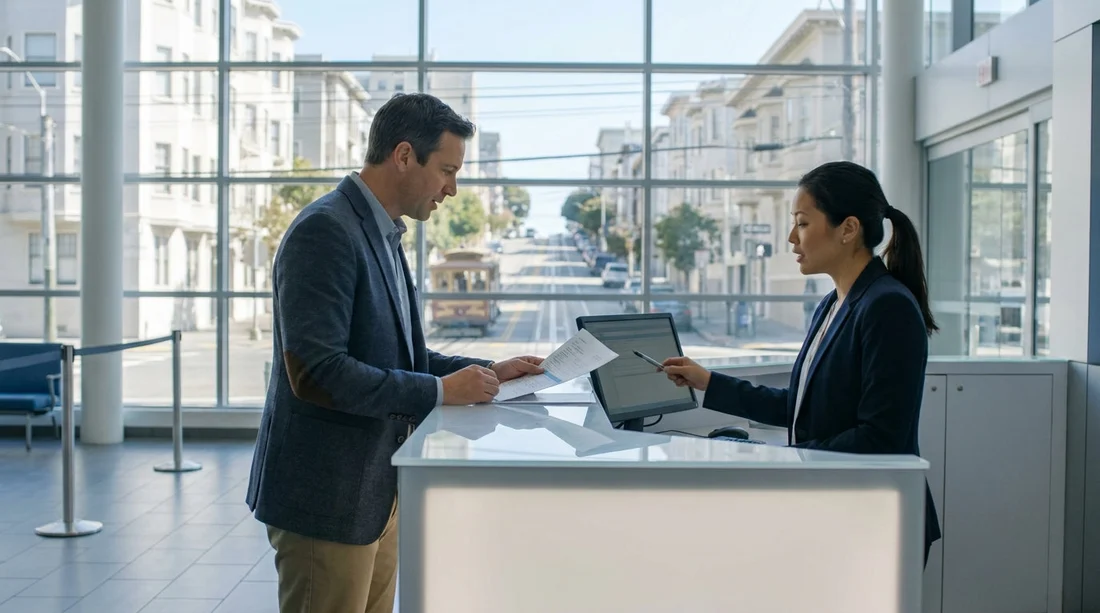
Upgrade at the counter: This is where surprises tend to happen. The counter can present an upgrade price that bundles waiver changes, or it can keep the base rate similar but adjust the excess and hold a higher deposit. You should treat the counter offer as a new deal and verify the excess stated on the rental agreement, not just the verbal description.
What exactly to check on your updated quote
If you upgrade before pick-up in San Francisco, do not rely on the original quote. Look at the updated documentation and confirm these points.
1) The vehicle category name and code: Quotes often show a category, such as “Intermediate” or “Standard SUV”, sometimes with a group code. LDW excess is typically tied to that category, not to the specific make and model.
2) Whether LDW is included or optional: If it is optional, your total cost can change significantly at pickup. If it is included, check whether it is standard LDW or a reduced excess option.
3) The excess amount and currency: Excess is typically stated as a dollar amount. Confirm it is the excess for the upgraded class, not the original class. If the excess is not shown on the quote, you need it clarified before you sign the agreement later.
4) Exclusions and conditions: Even when excess stays the same, exclusions can differ by category. Pay attention to tyres, windscreen, underbody, roof, and off-road use.
5) Deposit and credit card hold: Higher categories can require a larger pre-authorisation. This is not the LDW excess, but it can affect your budget and card limit on the day.
What to confirm on the rental agreement before you sign
The rental agreement is the final document that governs LDW and the excess. Before you accept the keys, confirm the following items match what you intended to buy.
LDW or similar waiver line item: Make sure it is present if you expected it to be included, and confirm the daily cost if it is being added.
Excess or deductible amount: Look for the specific figure stated for damage and theft. If the staff describe “no worries” cover, still insist on seeing the actual deductible number written on the agreement.
Vehicle group and any upgrade notation: If the agreement shows a different group than you agreed to, ask for a revised agreement before signing.
Driver, location, and dates: Changes to return location, adding an extra driver, or extending the rental can alter package pricing. Even when it does not alter the LDW excess, it can change the overall cost and sometimes the deposit.
Pre-existing damage record: Walk around the car, check the damage sheet, and ensure any marks are logged. LDW reduces liability, but the excess can still apply if damage is attributed to your rental period.
Common San Francisco upgrade scenarios and how LDW excess can shift
Switching to an SUV: Many travellers prefer higher seating for highway driving or trips to wine country. An SUV can carry a different LDW excess. If you are browsing SUV options, verify the waiver terms for that category rather than assuming they match a standard saloon.
Accepting a “free” upgrade due to availability: Sometimes staff provide a better car at the same price. Even then, you should confirm the excess did not change. A free upgrade should not automatically mean the waiver terms are identical.
Upgrading because of luggage or passengers: If you move into a larger class for practicality, treat it like a new booking for insurance purposes. Larger vehicles may come with higher repair costs, which can translate into a higher excess.
Changing pickup area from SFO to San Jose: If your trip plan changes, reviewing nearby pickup points can be sensible. For context on San Jose pages, you might compare car hire San Jose SJC with your San Francisco options, but always re-check LDW inclusions and excess on the refreshed quote because location can trigger a new rate structure.
How to reduce surprises without overcomplicating your car hire
Keep your approach simple and document-led. First, decide the vehicle class you actually need in San Francisco, then confirm the LDW status and excess for that class. If you upgrade, request an updated quote or revised confirmation that clearly states the inclusions. On the day, read the rental agreement lines for waiver products and the deductible, then ask for corrections if anything differs from what you expected.
Finally, remember that LDW excess is only one part of your financial exposure. Deposits, exclusions, and how damage is defined can matter just as much. The goal is not to avoid upgrades, it is to ensure the upgrade does not quietly change the cover you thought you had.
FAQ
Can my LDW excess go up even if the upgrade price looks small? Yes. The upgrade fee may reflect vehicle availability, but the deductible is usually tied to the vehicle class and can change independently.
If the counter offers a free upgrade, should I still check LDW excess? Yes. Ask to see the deductible on the rental agreement for the new vehicle group before you sign.
Is LDW excess the same as the deposit held on my card? No. The excess is what you may owe after a claim, while the deposit is a pre-authorisation held during the rental.
What is the single best place to verify the final excess? The signed rental agreement. Quotes and confirmations help, but the agreement states the binding deductible.
Can changing pickup location near San Francisco alter waiver terms? It can. A different location or supplier can reprice waivers and change the excess, so always review the updated quote and agreement.






























































































