


Quick Summary:
- Most California rentals use Regular 87, confirm on the fuel-door label.
- Match the pump’s octane number to the car’s minimum requirement.
- Premium required means use Premium, Premium recommended can allow Regular.
- Check at pick-up, take a photo, and refuel consistently all trip.
Choosing the right petrol grade for your rental car in California is usually simpler than it looks. The confusion comes from unfamiliar US pump labels, plus the fact that different cars display their fuel requirements in different places. If you are arranging car hire for a road trip along the coast or driving between airports and cities, getting the fuel choice right helps you avoid unnecessary cost and gives you confidence at the pump.
In the US you will typically see three petrol options: Regular, Midgrade (sometimes called Plus) and Premium. These are not “better” fuels in a universal sense, they are different octane ratings. Octane is mainly about how resistant the fuel is to knocking in higher compression engines. Many modern engines are designed to run on Regular without issue, while some performance models and a few turbo engines may call for Premium.
If you are picking up from a major hub such as Los Angeles Airport (LAX) or San Francisco Airport (SFO), you will see a mix of compact cars, mid-size saloons, SUVs and occasionally higher spec trims. The good news is that most mainstream rental fleets are built around vehicles that take Regular. Your job is to confirm what your specific car requires, then match it to the pump.
What “Regular”, “Midgrade” and “Premium” mean in California
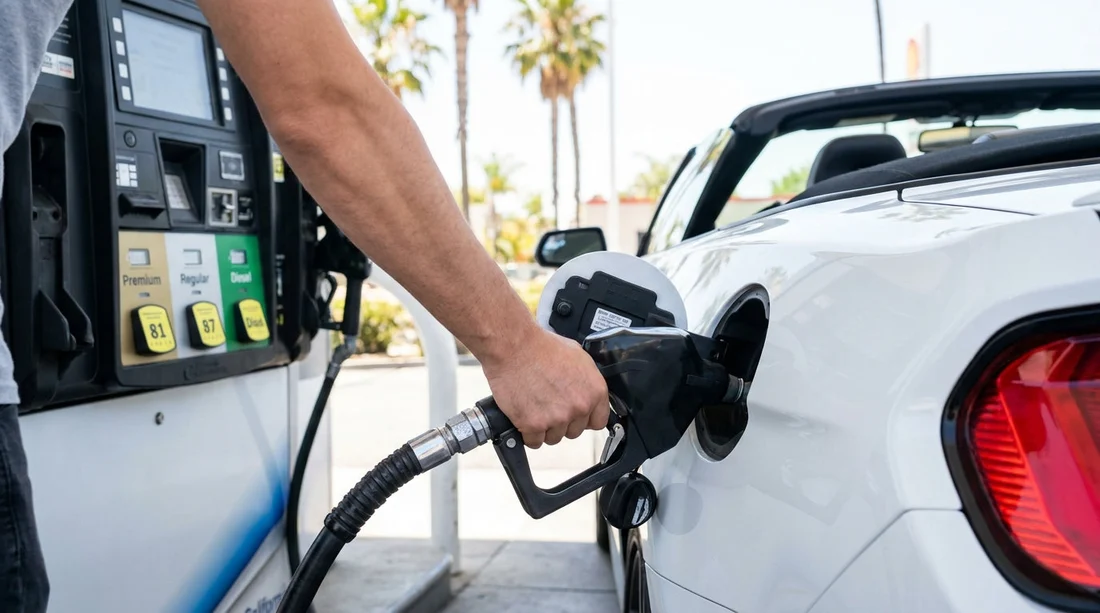
In California, petrol pumps normally show the grade name and an octane number.
Regular, usually 87 AKI. Midgrade, commonly 89 AKI. Premium, often 91 AKI in California (some states offer 93).
The “AKI” rating, also shown as (R+M)/2, is the US method of displaying octane. If you are used to UK labels like 95 RON and 97 to 99 RON, do not compare the numbers directly. They are different measurement systems, so US octane numbers look lower even though the fuels are comparable in real terms.
In practical terms for car hire, the key point is simple: use the octane required by the vehicle. Choosing a higher grade than required will not usually improve performance in a standard rental, it just costs more. Choosing a lower grade than required can lead to reduced performance, possible knocking under load, or a warning light in some cases.
What most rental cars take in California
For the majority of economy, compact, mid-size and standard vehicles, Regular 87 is the expected fuel. This includes many popular fleet models from Toyota, Nissan, Hyundai, Kia, Chevrolet and similar.
SUVs can vary. Many mainstream SUVs still take Regular, but some turbocharged or higher output versions may specify Premium. If you are selecting a larger vehicle for family travel, it is worth confirming the requirement at pick-up. If you are comparing options around SFO, a dedicated page like SUV rental in San Francisco can help you narrow down vehicle type, then you can verify the exact fuel grade on the vehicle you receive.
How to confirm the correct petrol grade at pick-up
The fastest way to confirm the correct grade is to look for a label that states the minimum octane. Check the fuel filler door first, then the owner’s manual or vehicle information screens if needed. Staff can help, but the label on the vehicle should be the deciding reference. A useful habit is to take a quick photo of the fuel-door sticker for later.
If you are picking up at a busy airport location such as San Jose (SJC), a short queue can make you feel rushed. Even so, it takes seconds to open the fuel door and check, and it can save you repeated uncertainty during the trip.
Understanding “Premium required” vs “Premium recommended”
This wording matters. Some cars specify Premium required or show a minimum octane like 91. In that case, you should use Premium, because you are meeting the engine’s needs.
Other cars say Premium recommended. That usually means the car is tuned to deliver maximum performance on Premium, but it can run on Regular. For typical holiday driving, Regular may be fine. When in doubt, follow the minimum octane number if one is listed, for example “87 minimum” means Regular is acceptable.
Common mistakes that cost money during car hire
Overpaying for Premium when Regular is required. If your car says 87, buying 91 will not add value for normal driving.
Assuming all SUVs need Premium. Many do not. Check the sticker every time you change vehicle.
Not confirming at pick-up. It is easier to confirm once, then consistently refuel correctly. If you are comparing routes or providers, pages like car hire in San Diego can help you plan logistics, but the fuel grade still comes down to the specific car you collect.
What to do if you already put in the wrong grade
If you accidentally use a higher octane than required, you can usually continue driving normally. It is not harmful, just more expensive.
If you put in a lower octane than required, drive gently and avoid hard acceleration or steep climbs until you can refuel with the correct grade. If you hear persistent knocking or a warning light comes on, contact the rental provider for guidance.
FAQ
Is Regular petrol the same as “unleaded” for rental cars in California? Regular is usually unleaded petrol with 87 octane. Most rentals take unleaded petrol, but confirm the minimum octane on the fuel-door label.
What octane is Premium in California? Premium is commonly 91 AKI in California. Some other states offer 93, so always match the octane number shown on your car’s label.
Will using Premium improve fuel economy in my rental? If the car is designed for Regular, Premium rarely improves economy. Use the octane the car requires, higher grade is typically just extra cost.
How can I confirm the fuel grade quickly at pick-up? Open the fuel filler door and look for the sticker listing minimum octane. If it is missing, check the manual or ask staff before leaving.
What if my rental says “Premium recommended”? You can usually use Regular if 87 is listed as minimum. Choose Premium if you want maximum performance, especially with heavy loads or long climbs.






























































































