


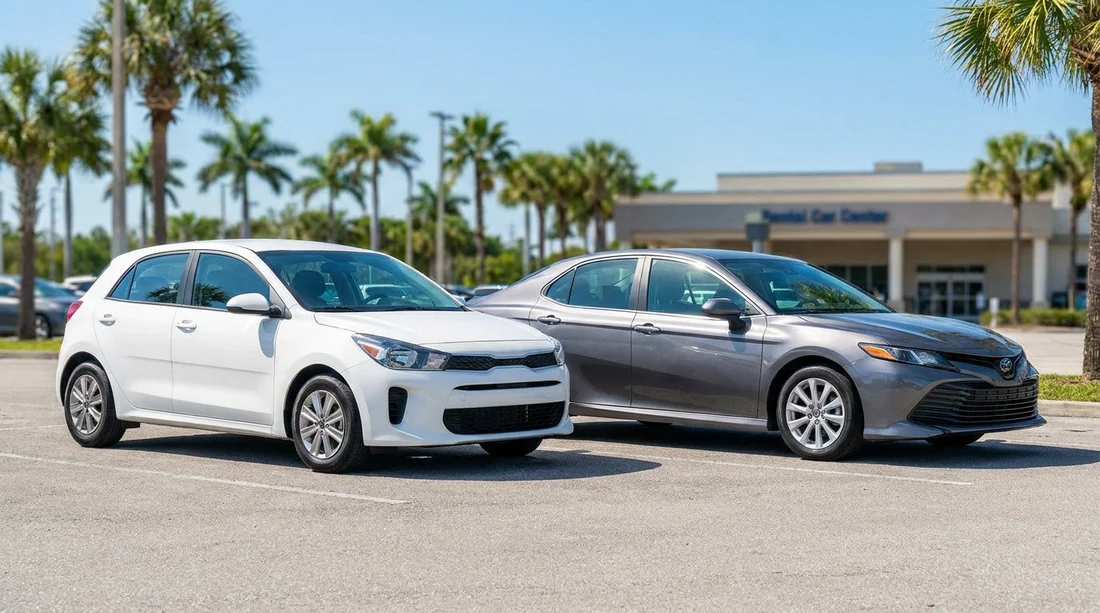
Quick Summary:
- Choose compact for city driving, easy parking, and lower fuel use.
- Pick intermediate for more rear legroom, wider seats, and calmer motorway cruising.
- Expect intermediate boots to fit more suitcases, prams, or beach gear.
- Match car class to passengers, luggage, and daily mileage across Florida.
When you’re arranging car hire in Florida, “compact” and “intermediate” can sound like near-identical choices. In practice, the gap matters, especially once you add Florida realities: long, straight interstates, frequent rain bursts, bulky holiday luggage, and the mix of city parking with resort drop-offs.
Both classes are typically four-door cars designed for everyday driving. The key difference is overall footprint and cabin volume. A compact is usually the smaller, lighter option. An intermediate is a step up, often with a longer wheelbase and wider body that translates into more comfort and space. Because rental fleets vary, you’ll often see “or similar” beside model names, so it’s best to think in terms of space outcomes rather than one specific car.
If you’re collecting in South Florida, it also helps to consider where you will drive first. For arrivals into Miami International, compare what you need for the first day in traffic and tight garages around hotels and attractions. If you’re planning a pick-up near the terminals, see practical location details on car hire at Miami Airport (MIA).
Typical size and driving feel
Compact cars are designed to feel nimble. They are usually easier to thread through busy streets, merge in stop-start traffic, and slot into smaller parking spaces. In Florida, that can be valuable around beach districts, restaurant streets, and multi-storey car parks where bays feel tighter than expected.
Intermediate cars typically feel more settled at speed. The extra length and weight can make the car feel less “busy” on the motorway. If your Florida plans include frequent interstate driving, day trips between cities, or you expect to spend long stretches on I-95, I-75, or Florida’s Turnpike, intermediate often reduces fatigue simply by giving you more space and a smoother cruising posture.
Driving feel also links to visibility and turning circle. Compact often gives you a slightly tighter turning circle and quicker responses in low-speed manoeuvres. Intermediate usually trades a bit of that agility for stability and room, which many drivers prefer when roads are wet or when crosswinds kick up on open stretches.
Boot space, luggage, and real-world packing
Boot space is where the difference becomes obvious. A compact boot generally copes well with light luggage, soft bags, and day-trip gear. If you are travelling with one large suitcase each, plus extras like a cooler, beach chairs, or shopping, you may find you need to stack items higher, which can compromise rear visibility.
Intermediate cars tend to have a longer boot and a wider opening. That makes loading easier and helps when you’re carrying rigid suitcases, prams, or larger backpacks. It is also more forgiving if you plan to keep the rear seats free for passengers rather than folding them down.
A practical way to decide for car hire in Florida is to list what must fit in the boot at the same time: suitcases, day bags, and any special items. If you expect beach days, theme-park purchases, or outlet shopping, intermediate gives you buffer space so you are not reorganising luggage daily.
Travelling to a busy area like Miami Beach can highlight this, because unloading quickly at hotels or rentals is easier when the boot is less cramped. If your stay is centred there, check local pick-up options around car hire in Miami Beach (MBC).
Cabin comfort and passenger space
For two adults in the front, compact and intermediate can feel similar at first glance. The biggest comfort difference usually shows up in the back seats and across longer drives.
Compact is often best described as “comfortable enough” for short hops. Rear legroom can be tight if front seats are pushed back, and three passengers across the rear bench can feel squeezed. If you’re mostly doing quick trips, like driving to dinner, beaches, and nearby attractions, this may be perfectly fine.
Intermediate usually improves rear legroom and shoulder room, which matters for adults, taller teens, and anyone using child seats. With intermediate, passengers tend to feel less boxed-in, and you’re more likely to keep everyone comfortable when you hit heavier traffic or take longer day trips.
Consider Florida’s climate too. You will use air conditioning a lot, and a slightly larger cabin can feel more pleasant if you’re carrying more people, as airflow and personal space become more noticeable during humid days.
Fuel use, toll roads, and overall running costs
It’s tempting to assume compact always wins on running costs. In many cases it does, but the gap is not always huge, especially with modern engines and the steady speeds found on Florida highways.
Compact usually uses less fuel in city driving and short trips with frequent stops. If you expect heavy urban driving, it can be the economical choice. Intermediate can be comparable on motorway journeys because the engine may not need to work as hard to maintain speed, although it still tends to consume a bit more overall.
Tolls are a separate topic. Florida has many toll routes and express lanes. Toll cost is generally unrelated to car class, but using toll roads can change your total trip cost more than the difference between compact and intermediate fuel spend. If you are planning longer routes, budgeting for tolls can matter as much as choosing the smaller car.
Florida-specific scenarios: who each class suits
Compact is usually the best fit if: you are travelling as a couple or solo, you pack light, and you will spend a lot of time in built-up areas where parking is at a premium. It also suits travellers who prefer a smaller car for confidence in unfamiliar places.
Intermediate is usually the best fit if: you have three to four adults, you’re carrying larger luggage, or you expect long drives across the state. It’s also a good compromise if you want more comfort but do not need the height and space of an SUV or minivan.
If you know you’ll be travelling with a bigger group, bulky child gear, or lots of beach kit, stepping beyond intermediate may be sensible. For instance, larger families sometimes compare intermediate against people carriers, and you can review options such as minivan hire in Miami Beach (MBC) to understand capacity differences before deciding.
Availability, “or similar”, and managing expectations
With car hire categories, you are selecting a class, not a guaranteed model. That means one compact may have a surprisingly generous boot, while another may prioritise rear passenger space instead. Likewise, intermediate cars can range from slightly larger compacts to roomy saloons depending on the fleet mix.
To manage expectations, focus on what you need most: boot volume, rear-seat comfort, or easy parking. If boot space is critical, intermediate is the safer bet. If manoeuvrability is critical, compact is often the safer bet.
It can also help to think about your pick-up point and likely drive. If you’re flying into Tampa for Gulf Coast plans, you may be driving longer distances between beaches and cities, which can push you towards intermediate. For local information around collection, see Payless car hire at Tampa (TPA).
Choosing quickly: a simple checklist
If you want a fast decision, start with passengers, then luggage, then driving pattern. For one to two people with modest luggage and lots of city parking, compact will likely feel easiest. For four people, larger suitcases, or plenty of motorway time, intermediate tends to be the more comfortable, less stressful option.
Finally, consider your daily rhythm. Florida trips often involve early starts, hot afternoons, and multiple stops. A little extra space, especially in the rear seats and boot, can make the day smoother even if the car looks only slightly bigger on paper.
FAQ
Is an intermediate car much bigger than a compact for car hire in Florida? Usually it’s a noticeable step up in cabin and boot space rather than a dramatic size jump. Intermediate often feels wider inside and steadier on motorways.
How many suitcases fit in compact vs intermediate rental cars? Compact generally suits light packing and smaller suitcases. Intermediate typically handles more large suitcases at once and leaves more room for day bags.
Which is better for Miami Beach parking, compact or intermediate? Compact is often easier in tight bays and busy streets. Intermediate can still work, but you may spend more time manoeuvring in crowded areas.
Is intermediate worth it for longer Florida road trips? For longer drives, intermediate often feels less tiring due to extra legroom and a calmer ride at speed, especially with more than two passengers.
Should families choose intermediate or something larger? Intermediate can work for small families with moderate luggage. If you need space for multiple child seats, prams, and beach gear, a larger class may suit better.






























































































