


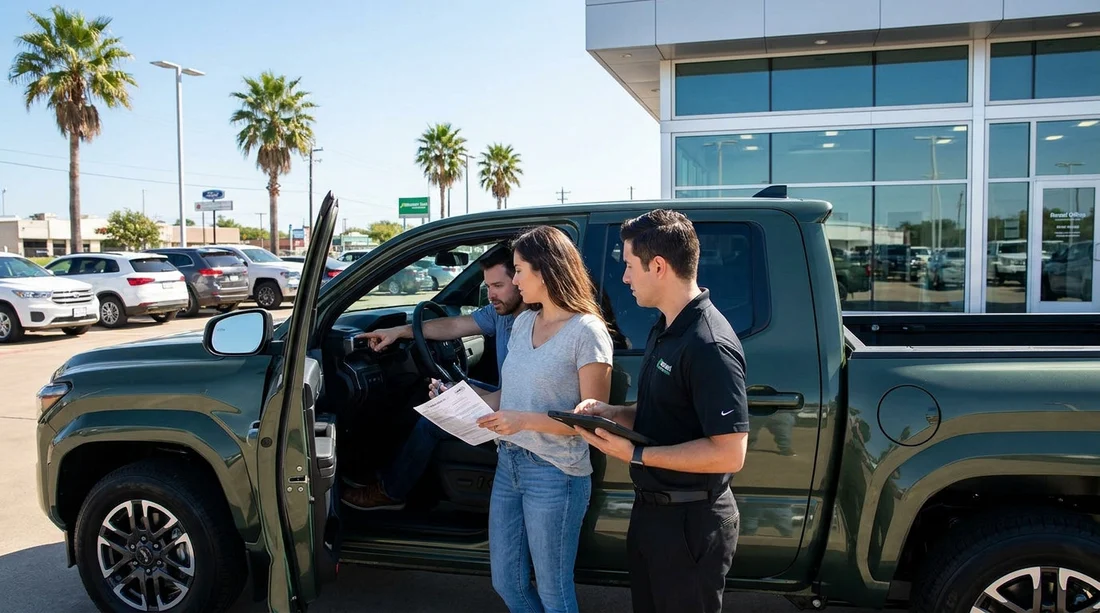
Quick Summary:
- Check the gauge and range estimate before leaving the rental bay.
- Photograph the fuel gauge, odometer, and contract details clearly together.
- Return to the counter and get the fuel level corrected.
- Ask staff to note the discrepancy in writing with date and time.
Fuel disputes at car hire pick-up are common because paperwork is often generated before the vehicle is staged, moved, or idled. In Texas, where airport lots are busy and vehicles can be shuttled between rows, a contract showing “full” might not match a gauge sitting at seven eighths, three quarters, or even less. The safest approach is to resolve it before you exit the rental bay and join the road. Once you drive away, it becomes harder to prove what you received, and you risk refuelling charges or an argument at return.
This counter-to-car checklist is designed to help you spot a mismatch, document it clearly, and get the rental record corrected in minutes. It works whether you are collecting from a major airport location or a city depot, and it applies to any vehicle class.
Why fuel-level mismatches happen at pick-up
Most fuel discrepancies come from ordinary operational issues rather than bad intent. A car may have been fuelled, then moved around the lot, left idling with the air conditioning running, or driven to a different terminal. In Texas heat, staff may idle vehicles to cool cabins, which can drop the gauge. Some models also do not show “full” until after a short drive, while others settle after the car has been turned off and restarted.
Another cause is how fuel is recorded. A contract might say “Full to Full” as the policy, but the “out” fuel level can still be recorded as a numeric fraction or code. If that field is wrong, your return charge risk rises. The goal is simple, make sure the “fuel out” level matches the real gauge before you leave.
Your counter-to-car checklist in Texas
1) Read the contract carefully before walking to the car. At the counter or kiosk, look for the fuel policy and the “fuel out” line. Note whether it states full, a fraction, or a specific reading. Also check whether a prepaid fuel option or fuel service charge is selected, sometimes this is added by mistake.
2) At the vehicle, verify three things immediately. Turn the ignition on and capture the fuel gauge position, the odometer, and any “range” estimate. Some cars show a digital fuel percentage. Do not rely on one indicator only. If the gauge is below what the contract states, treat that as a discrepancy even if it is small.
3) Take evidence that stands up to scrutiny. Use your phone to take clear photos, then a short video. Include the gauge, the odometer, and the time on your phone screen if possible. If your contract is on paper, photograph it alongside the dashboard. If it is in an app, take screenshots showing the “fuel out” value and timestamp.
4) Do not exit the rental bay until the record is corrected. In Texas airport facilities, you often pass a booth or gate agent as you leave. If you spot a mismatch, stop and ask for a correction before you drive out. If you have already pulled away from the row, circle back to the returns or customer service area immediately. Waiting until the end of the trip is the main reason disputes go badly.
5) Ask for a written note, not only a verbal assurance. Request that staff update the contract, print a revised agreement, or add a dated note to the rental record. A good note includes the observed fuel level, for example “3/4”, and the agent’s initials. If they cannot reprint, ask them to email confirmation or provide a receipt showing the corrected “fuel out”.
What to say at the counter or exit booth
Keep it factual and specific. Explain that the contract shows one fuel level, but the gauge shows another. Mention that you have time-stamped photos. Ask for the simplest fix, update the “fuel out” to match the gauge, or swap you into a vehicle that matches the contract.
If the agent suggests that the gauge will rise after driving, you can respond politely that you prefer the paperwork to reflect what you received at pick-up. If you accept their explanation, still request a note that you collected the car showing the lower reading and were advised it would normalise.
If they offer to swap the car, decide quickly
A swap can be the fastest resolution if the discrepancy is large. Before accepting a replacement, repeat the same checks on the new vehicle. Confirm the new contract is tied to the correct registration and fuel level. Do not assume the replacement is better, verify it on the spot.
This is especially relevant at busy locations such as car hire at Houston IAH where vehicles move quickly through cleaning and staging.
How much mismatch is worth disputing?
Even a one bar difference can translate into a meaningful amount of fuel on some vehicles, and fuel service fees can make a small shortfall expensive. In Texas, where you may be driving long distances between cities, a minor underfill at pick-up can also complicate your return plan. A practical rule is to flag anything that is not clearly at the documented level. If the contract says “full” and it is not visibly full, address it.
For SUVs and vans, the value of the discrepancy can be higher because tanks are larger. If you are using a bigger vehicle from a page like SUV rental in Dallas DFW or transporting a group via van rental in Austin AUS, it is especially worth getting the record right before leaving.
What if you notice the mismatch after you have driven away?
Sometimes you only spot it once you have left the facility. If that happens, pull over safely as soon as you can and document the gauge and odometer again. Then contact the rental location immediately, ideally within the first hour. Ask them to add a note to the rental record based on your photos. The longer you wait, the easier it is for the company to argue that the fuel was consumed during your drive.
If you cannot reach the pick-up desk, use the general customer support line shown on your agreement, and keep records of call times. When you later return the vehicle, remind the return agent that the “fuel out” was disputed and should be checked against the note.
Return-day steps to prevent surprise charges
When you bring the car back, aim to return it at the documented level, not the incorrect one. If your contract was corrected to “3/4”, return it at roughly three quarters and keep your final fuel receipt if you topped up. Take a photo of the gauge at the return lane too, including the odometer. If the return agent marks a different level, politely ask them to recheck while you are still present.
At larger terminals such as car hire airport Houston IAH, return lanes can be fast-moving. Do not feel rushed. A 30 second photo can save a later admin fee discussion.
Common contract details to double-check besides fuel
While you are resolving fuel, take one extra minute to review the agreement for other charge drivers that often travel with fuel issues. Confirm the correct pick-up location, correct vehicle class, mileage policy, and any added products you did not request. If you are collecting near DFW, you might also compare options shown on the agreement to what you expected from listings such as budget car rental in Dallas DFW. The goal is not to argue, it is to leave with paperwork that matches reality.
FAQ
Q: My contract says “Full to Full” but the gauge is not full, what should I do?
A: Treat it as a discrepancy. Photograph the gauge and odometer, then ask the counter or exit booth to correct the recorded “fuel out” level in writing before you leave.
Q: Is a single bar below full worth reporting at car hire pick-up?
A: Yes. On many vehicles one bar can represent several litres, and fuel service fees can make it costly. Get the contract updated to match the actual gauge.
Q: What evidence is best if the fuel gauge does not match the paperwork?
A: Clear photos or a short video showing the fuel gauge, odometer, and a timestamp, plus a picture or screenshot of the contract’s fuel out field.
Q: What if staff tell me the gauge will rise after driving?
A: Ask for a written note stating the level you observed at pick-up and the advice given. If possible, request a corrected fuel out entry so charges align with what you received.
Q: I only noticed the mismatch after leaving the lot, can it still be fixed?
A: Sometimes. Pull over safely, document the gauge and odometer, then contact the pick-up location immediately and request a note added to your rental record.






























































































