


Quick Summary:
- Confirm keys, paperwork, fuel policy, and authorised drivers before leaving.
- Walk around, photograph all damage, then match notes to agreement.
- Test lights, wipers, horn, air conditioning, screens, and parking camera.
- Check emergency gear, spare wheel or inflator, plus roadside contact details.
Collecting a car hire in Texas often happens after a flight, in a busy garage, and with unfamiliar vehicles. Taking ten calm minutes at the car hire centre can prevent hours of hassle later, especially if you need to report existing damage, find essential kit, or work out how the fuel door opens. The checklist below focuses on what should be in the car and what should work before you pass the exit barrier.
If you are picking up at a major hub such as Houston Airport car hire, you may be directed straight to a bay and asked to drive to the booth with minimal interaction. In that case, it is even more important to check the car thoroughly while you still have easy access to staff.
1) Keys, documents and the basics you should have in hand
Keys and spares. Verify you have the right key fob for the vehicle in front of you, and check if a spare key is provided. Many rentals supply only one key. If there is only one, make a plan, for example, keep it on one person and avoid leaving it in the boot.
Rental agreement. Confirm the vehicle registration, make, model, colour, and fuel type match the agreement. If the agreement lists a different car, ask for it to be corrected immediately. Also confirm the return location and opening hours so you are not surprised later.
Insurance and incident guidance. Ensure you have written information on what to do in an accident or breakdown, including any required phone number, claim reference process, and whether you must obtain a police report in certain situations. Keep this paperwork somewhere accessible, not buried under luggage.
Authorised drivers. If more than one person will drive, check that all drivers are listed. If a driver is not on the contract, coverage can be affected. Sort it at the desk, not after you have left the facility.
2) Damage inspection, photos and matching the report
A quick walk around is not enough. Do a slow, full inspection while the car is still in the bay, and take photos and short video in good light.
Exterior. Check bumpers, wheel arches, door edges, mirrors, windscreen, roof, and the underside of the front bumper, which often has scrapes. Photograph each panel. Pay attention to alloy wheels and tyres, as kerb rash is common and can be disputed later.
Glass and lights. Look for chips and cracks in the windscreen and headlamp covers. Small chips can spread in Texas heat. If you see anything, document it and ask for it to be added to the condition report.
Interior. Check seats for tears, stains, burns, and the headlining for marks. Look at the dashboard for warning lights. Test seatbelts for all seats you may use.
Match paperwork to reality. If the agreement has a damage diagram, make sure every scuff and dent you photographed is noted. If you collected the car through a fast pick-up process, you still need to stop and get corrections made before leaving the site.
3) Emergency and safety items that should be present
Texas driving can include long stretches of highway, sudden storms, and high temperatures. Knowing what safety items are in the car, and where they are stored, matters.
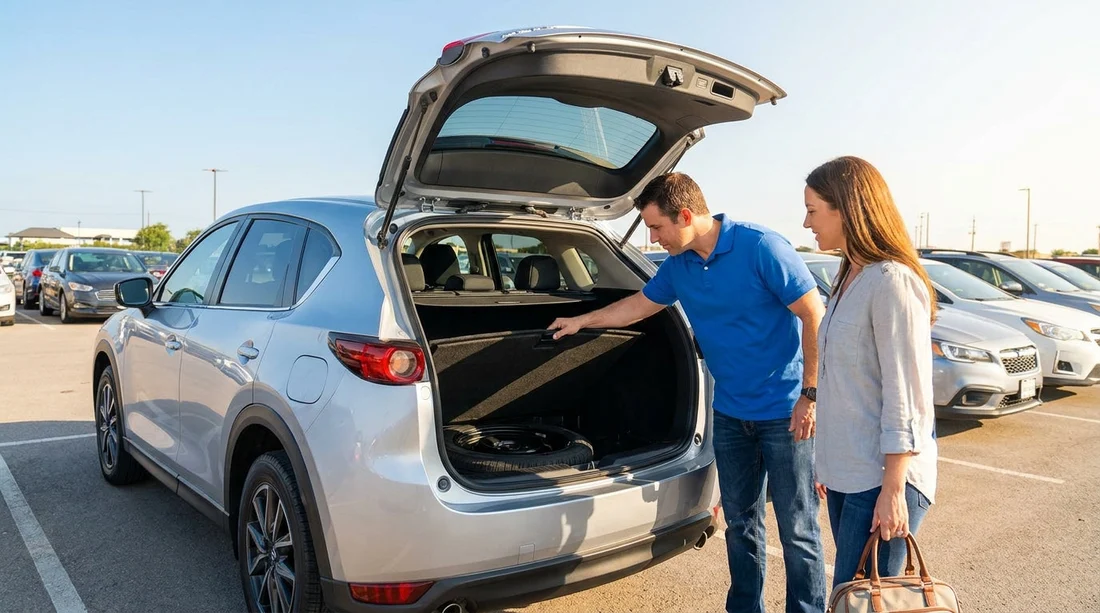
Spare wheel or tyre inflator. Open the boot and check whether the car has a spare wheel, a jack, and a wheel brace, or instead has a sealant and inflator kit. Confirm the kit looks complete and unopened, and find the towing eye if the car has one.
Warning triangle and high-visibility items. Requirements vary by operator, but many vehicles carry a warning triangle or similar equipment. If present, locate it. It is helpful if you have to stop on a hard shoulder.
First aid and basic supplies. A first aid kit is not guaranteed, so do not assume one exists. If you need one, check now and buy one later if missing. Also check for a torch or emergency light if provided.
Roadside assistance details. The most important item is the correct number to call. Save it in your phone and keep a paper copy in the glovebox. If you are collecting around Dallas, the desk arrangements can differ by provider, so keep the contract handy, for example with Hertz at Dallas DFW.
4) Controls and features to verify before you exit
Confirming key controls prevents unsafe moments on the road, especially if you are not used to the specific model.
Fuel type and fuel door. Confirm whether it is petrol, diesel, or an alternative, then find the fuel door release. Check the fuel level on the gauge and match it to the paperwork. If the policy is full-to-full, make sure you are starting with the correct level noted.
Dashboard warnings. Turn the ignition on and look for warning lights that remain lit, such as tyre pressure, engine, or airbag. If a warning stays on, report it and ask for a different vehicle, or get it recorded in writing.
Air conditioning. In Texas heat, air conditioning is essential. Test that it blows cold, switches between vents, and has usable fan speeds. Also test the demister.
Lights, indicators and hazards. Check headlights, brake lights, indicators, and hazard lights. This is quick if you use reflections in nearby cars or ask a staff member to confirm.
Wipers and washer fluid. Test front and rear wipers, plus washer spray. Bugs and sudden storms can make a clean windscreen crucial.
Brakes, handbrake and transmission. While stationary, press the brake pedal to check it feels firm. Understand how to engage Park, Reverse, and Drive, and how to release any electronic parking brake.
Driver assistance features. If the car has parking sensors or a reversing camera, confirm they are working and learn where the buttons are. If you are hiring a larger vehicle, this matters even more, and you may want to compare what is typically included with an SUV rental in Houston.
7) Final checks at the barrier, mileage and where to get help
Odometer and fuel reading. Take a quick photo of the odometer and fuel gauge before you roll out. If there is a dispute later, this timestamped photo helps.
Know the support route. Confirm whether support is via the on-site desk, roadside assistance, or a central number. If you are starting a longer trip across the state, keep the process clear. If your travel begins from the Houston area, Hola Car Rentals also provides guidance around car rental in Texas so you can align your paperwork and pickup expectations.
Do not rush. It is normal to feel pressured by cars queueing behind you. Pull into a safe corner of the garage or lot, complete the checks, and only then head to the exit.
FAQ
Q: What is the single most important thing to check before leaving a Texas car hire centre?
A: Ensure any existing damage is documented on the agreement, and you have clear photos and video taken at pickup.
Q: Should I check for a spare wheel in a rental car?
A: Yes. Confirm whether the car has a spare wheel and tools, or a sealant and inflator kit, and locate them so you can act quickly if needed.
Q: What if the fuel level does not match what the paperwork says?
A: Report it before you leave the facility and ask for the contract to be corrected, or for the fuel level to be adjusted and recorded.
Q: Do I need to test the air conditioning at pickup?
A: In Texas it is wise. Test that it blows cold and that the fan and vent modes work, as faults can be uncomfortable and may indicate other issues.
Q: What should I do if a warning light stays on after starting the car?
A: Do not drive off assuming it will clear. Inform staff, request a different vehicle if needed, or get the issue noted in writing on your paperwork.






























































































