


Quick Summary:
- Locate the toll tag and confirm it matches the vehicle registration.
- Ask how tolls are billed, including any daily programme fees.
- Photograph the device, serial number, and placement before leaving the lot.
- Get written confirmation of opt-in status, caps, and the dispute process.
With car hire in Miami, tolls can be the biggest source of unexpected post-trip charges. South Florida roads include tolled expressways, managed lanes, and cashless gantries where you cannot stop to pay. If the toll device is missing, mis-registered, or you are unknowingly enrolled into a toll programme, the final bill can include toll amounts plus administrative or convenience fees.
This counter checklist is designed for the pickup counter, before you drive off. It focuses on three things: confirming the toll device is actually in the car, understanding exactly how billing works, and capturing evidence so any errors are easy to resolve later.
1) Confirm the toll device is present and correctly assigned
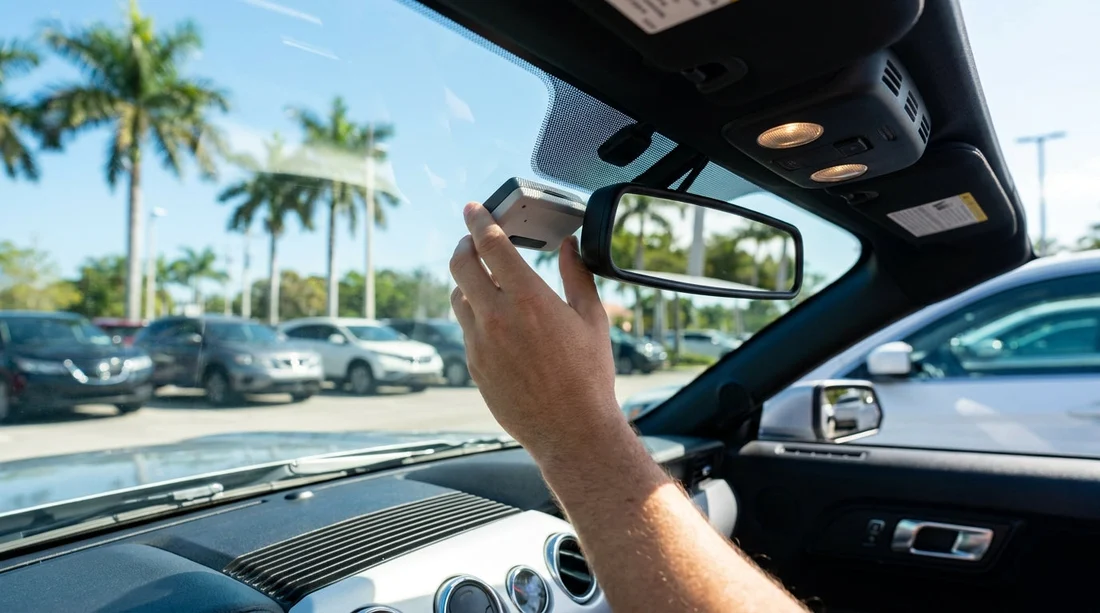
Start by asking where the toll tag, transponder, or toll pass is located. In Miami rentals it may be fixed to the windscreen near the rear-view mirror, integrated into the windscreen area, or supplied as a removable unit. Do not rely on assumptions, visually confirm it.
Next, verify that the device is assigned to your specific vehicle. Mis-assignment can happen during quick turnarounds, and it matters because toll systems read the transponder ID and sometimes back it up with plate recognition. Ask staff to confirm that the transponder number and licence plate on their system match the car you are taking.
Before leaving the lot, take clear photos of the device in place, including any serial number or barcode visible. Also photograph the vehicle’s licence plate. If a charge later appears that does not align with your route, those photos help the provider trace which tag was used.
If you are collecting near Miami but comparing pickup points across South Florida, it can help to review what’s included at different locations, for example car rental Doral pages often outline local driving considerations and typical add-ons to ask about at the counter.
2) Ask which toll system applies in Miami and where you will encounter it
Miami drivers commonly encounter tolling on routes leading to Miami Beach, connections to the airport area, and the wider network that links towards Fort Lauderdale and beyond. Many toll points are cashless, meaning there may be no booths and no way to pay on the spot. If you miss an exit or take an express lane, you can collect charges without realising it.
Ask the agent to explain how tolls are detected for your rental: transponder reads, licence plate reads, or both. The key detail is whether tolls are billed automatically through a programme, or whether you are expected to avoid toll roads unless you opt in.
If you plan day trips north, confirm how billing works across county lines and on major corridors. Even if your main stay is Miami, you might find yourself driving to Fort Lauderdale for dining, beaches, or connecting roads. If you want context for nearby hubs, see car rental airport Fort Lauderdale for region-specific pointers.
3) Identify the billing method, not just the toll amount
The toll amount itself is usually the smallest part of a surprise bill. The real cost swings come from how the rental company structures its toll billing. At the counter, ask for a plain-language explanation of each of these items:
Enrolment status: Are you automatically enrolled in a toll programme, or is it optional? If optional, ask what happens if you drive through a cashless toll without enrolling.
Fee structure: Is there a daily fee for any day you use a toll road, a fixed rental-period fee, or a per-toll convenience fee? Clarify whether the fee applies only on toll days or on all rental days.
Charge timing: Will tolls and fees be charged at return, or posted later to your card? Many systems post after the rental closes, which is why you want the policy in writing.
Authorisation and receipts: Ask how you can get an itemised breakdown showing toll locations, dates, and administrative fees. Itemisation is essential for checking accuracy.
If you are choosing between different providers and neighbourhoods, you may notice varying approaches to toll programmes. For instance, urban districts often see frequent toll usage, so it is worth reviewing local rental details such as Budget car hire Brickell to anticipate the questions to ask at pickup.
4) Confirm whether you can opt out and how to do it properly
Many travellers assume they can decline toll service and simply pay tolls themselves. In Miami, that may not be practical because cashless tolling is common. If you want to opt out, ask what alternatives exist. Some providers allow you to use your own transponder, but rules vary and missteps can create duplicate billing.
Get the opt-out status noted on your agreement, and ask for a printed or emailed copy reflecting it. Verbal confirmations are hard to rely on later.
5) Clarify maximum charges, caps, and multi-day fee triggers
Some toll programmes have caps, for example a maximum daily charge or maximum per-rental-period fee. Others do not. Ask directly: “What is the maximum I could pay in toll programme fees on a seven-day rental if I use tolls on three days?” You want the agent to explain the trigger logic.
Also confirm what counts as a “toll day”. If you drive through a single toll point at 11:50pm and another at 12:10am, that could be two toll days under some definitions. Knowing the cut-off time helps you avoid accidentally doubling daily charges.
6) Check the contract line items before you sign
Before you accept the keys, review the agreement for toll-related line items. Look for terms that indicate enrolment, such as “toll pass”, “toll programme”, “plate pass”, “cashless tolling service”, or “administrative fee”. Ensure the price and the conditions match what you were told.
If you want a quick comparison of provider rules outside Miami, it can help to check a specific operator page like Hertz car rental Fort Lauderdale and note what documentation to request at the counter.
If something is unclear, ask for a revised agreement or an explanation in writing. It is far easier to fix an incorrect selection at the counter than to dispute charges after your trip.
FAQ
Q: Where is the toll tag usually located in a Miami rental car?
A: Commonly on the windscreen near the rear-view mirror, or integrated into that area. Ask staff to point it out and confirm the ID matches the car.
Q: Can I just avoid toll roads instead of paying for a toll programme?
A: Sometimes, but Miami and South Florida include cashless toll points and express lanes that can be easy to enter by mistake. Confirm your options and what happens if you pass through a cashless toll without enrolment.
Q: What fees should I look for besides the toll amount?
A: Ask about daily usage fees, per-toll convenience fees, administrative fees, and whether fees apply on every rental day or only on days you use toll facilities.
Q: How can I reduce the chance of incorrect toll charges later?
A: Photograph the transponder and licence plate at pickup, keep simple notes of which days you used toll roads, and request itemised toll reporting if charges appear after return.






























































































