


Quick Summary:
- Confirm the wash or tow method, conveyor rolling needs true Neutral.
- Keep ignition in accessory or on, and foot on brake.
- Use the car’s Neutral override or shift-by-wire sequence if fitted.
- Never switch off fully in Neutral, parking pawl may re-engage.
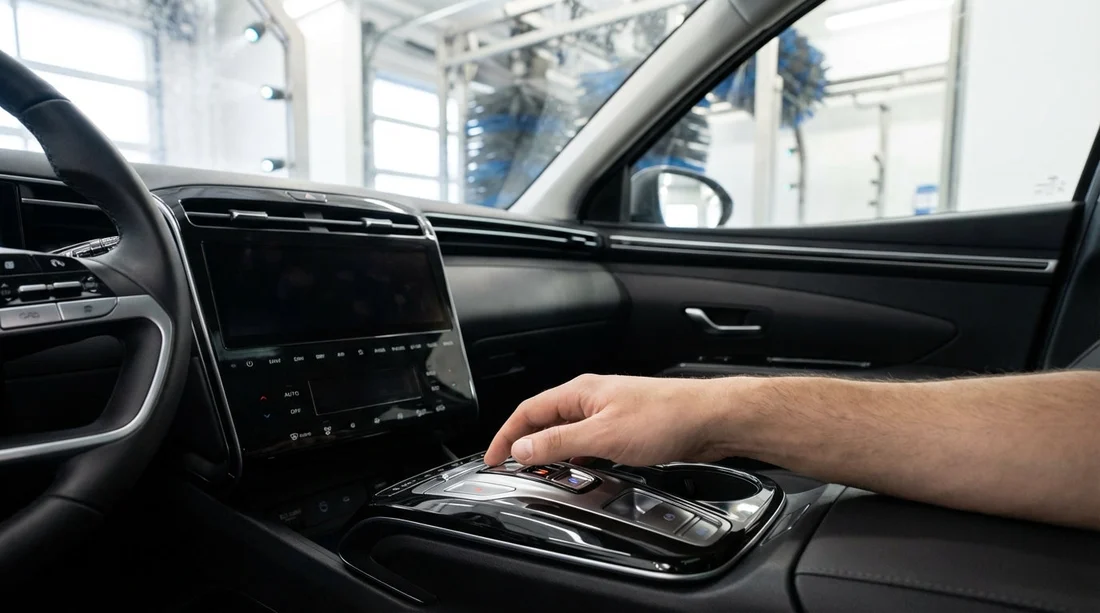
Putting a car hire into Neutral sounds simple, until you meet modern shift-by-wire and push-button selectors. Many newer vehicles do not have a traditional mechanical linkage between the shifter and the transmission. That means the car can decide when to allow Neutral, when to hold Park, and when to re-engage Park automatically if it thinks you are leaving the vehicle. In a conveyor car wash or when being towed, those safety features can become a problem if you do not follow the right sequence.
This guide explains model-agnostic, safest-practice steps that work across most automatics in the United Estates, including rotary dials, electronic toggles, and push-button Park. It focuses on preventing parking lock engagement and avoiding drivetrain damage. If the instructions here differ from the vehicle’s manual card in the glovebox, always follow the vehicle-specific guidance first.
If you are organising a rental and want to understand what type of vehicle you might receive, Hola Car Rentals has helpful pages for car rental in the United States and car hire in the United States, including common vehicle categories that may use electronic selectors.
Why Neutral is tricky on modern rentals
Traditional automatics have a physical lever with clear detents, and Neutral is just a mechanical position. With shift-by-wire, Neutral is a command sent to a control unit. The car may block the command if the driver door is open, if the seatbelt is unlatched, if the engine is off, or if it detects a slope. Some vehicles also auto-shift to Park if you lift out of the seat or open the door, even if you selected Neutral moments earlier.
In a conveyor car wash, the car is pulled by a wheel guide, so the transmission must be in true Neutral and must stay there while the vehicle rolls. If Park engages mid-wash, the conveyor can drag a locked wheel, stressing tyres, axles, and the parking pawl. For towing, the situation depends on the tow type: flatbed towing usually does not require Neutral, while a two-wheel dolly or wheel-lift may require Neutral or a specific towing mode.
Before you try: identify the situation and the selector type
Start with two checks. First, confirm whether you are entering a conveyor wash (the car must roll freely) or a self-drive wash bay (you drive, so Neutral is not needed). Second, confirm how the vehicle is towed. Flatbed is best for most cars. If a tow operator plans to tow with driven wheels on the ground, ask whether the car has an approved towing mode. Some do, many do not.
Now identify the selector type:
Conventional lever: a PRNDL gate and a button on the lever, usually straightforward.
Rotary dial: a dial for P, R, N, D, often paired with a push-button Park.
Electronic toggle: a small joystick-like selector that springs back to centre.
Push-button gear selection: separate buttons for P, R, N, D.
All of these can work, but the sequence matters for shift-by-wire.
The safest general method to select Neutral
Use this as the default sequence for most automatics, especially if the car hire has a push-button Park or electronic selector. These steps are designed to keep the control modules awake and reduce the chance of auto-Park.
1) Come to a complete stop and straighten the wheels. A straight steering position reduces rolling resistance and helps the conveyor guide track the tyre properly.
2) Keep your foot firmly on the brake. Many systems will not allow a shift out of Park without the brake applied.
3) Switch the car to ignition on, not fully off. In keyless cars, press the Start button without letting the car time out. In keyed cars, keep the key in the run position. The goal is to keep transmission control powered so Neutral remains commanded.
4) Select Neutral deliberately and confirm it. Move the lever to N, rotate the dial to N, or press N. Wait a second and check the instrument cluster. You should see “N” clearly displayed, not “D” or “P”. If there is a message like “Shift to Park” or “Neutral not available,” stop and reassess.
5) Keep your foot off the accelerator, release the brake gently when instructed. In a conveyor wash, staff usually signal when to release the brake. Only release once the vehicle is aligned in the track.
6) Do not open the door or unbuckle unless the car is secured. Many vehicles auto-shift to Park when the driver door opens while the car is not in Park. If you must open the window to speak to staff, do that instead of opening the door.
7) Avoid switching the car fully off while still in Neutral. Some cars will drop into Park when power is removed. Others may stay in Neutral but then engage a parking lock when the driver exits. In a conveyor, the safer approach is typically ignition on, Neutral selected, hands off the wheel, feet off pedals, and follow attendant guidance.
8) At the exit, apply brake, select Drive, then proceed slowly. Wait until the conveyor releases you and you have space. Confirm “D” on the dash before moving.
Shift-by-wire Neutral override and “car wash mode”
Some vehicles include a dedicated car wash mode or Neutral hold feature. It may be labelled on the infotainment screen, the driver information display, or within a vehicle settings menu. If present, use it, because it is specifically designed to keep Neutral engaged while the car rolls and while the driver’s foot is off the brake.
A related feature is a Neutral override procedure, intended for situations where the vehicle cannot be started normally or must be moved in a workshop. This may involve holding the Neutral button for several seconds, or holding a combination such as brake plus a long press on a shifter toggle. Because this varies widely, look for on-screen prompts or a small instruction card that some fleets keep with the registration and insurance documents.
If you are renting larger family vehicles that more often include these electronic modes, see the Hola Car Rentals page for minivan hire in the United States, as minivans commonly use rotary dials and electronic push-button Park.
Conveyor car wash: practical do’s and don’ts
Do follow staff instructions, but protect the gearbox first. If an attendant tells you to switch the engine off, pause and confirm your car has a car wash mode, because switching off can trigger auto-Park on some models. A safer compromise is often ignition on with engine running, Neutral selected, and hands and feet clear.
Do disable auto-hold if it is engaged. Brake auto-hold can keep the brakes applied even after you lift your foot, which can fight the conveyor. If you see an “AUTO HOLD” indicator, switch it off before entering the track.
Do not use the electronic parking brake. Ensure it is released. Some cars auto-apply it if they think you are parking.
Do not turn the steering wheel. Let the conveyor guide the wheels. Fighting it can cause tyre scuffing or wheel-track climb.
Do not panic if the car creeps slightly. In Neutral on a conveyor, small movements are normal. Keep your feet off pedals unless instructed for safety.
Do not leave the vehicle unless explicitly required and safe. Most conveyor washes require you to stay inside. Exiting can trigger auto-Park in some models and introduces personal safety risk.
Towing scenarios: Neutral is not always the answer
Towing a car hire incorrectly can cause expensive damage quickly. The right approach depends on how the vehicle is being moved.
Flatbed tow: Usually does not require Neutral. The vehicle is winched onto the bed, then secured. Some operators still like Neutral to roll the car, but the safest is to follow the operator’s procedure while keeping the ignition in the appropriate position for steering unlock if needed.
Wheel-lift or dolly towing: If the driven wheels are off the ground, Neutral may not be necessary. If driven wheels remain on the road, Neutral might be required, but many automatics are not approved for this. If you are unsure, insist on a flatbed.
All-wheel drive (AWD): Extra caution. Many AWD systems can be damaged if towed with any wheels on the ground unless a specific tow mode is enabled. Neutral alone may not disengage all driveline components.
If a tow operator asks you to “just put it in Neutral and we will pull it,” ask what tow method they are using and whether the vehicle has a manufacturer-approved procedure. It is better to slow down and avoid damage than to force a shift sequence under pressure.
Common problems and safe fixes
The car will not shift out of Park. Confirm foot is on brake, ignition is on, and the key fob is inside the car. If it still will not shift, there may be a shift interlock issue or a low battery. Do not force the selector. Ask staff or roadside assistance for guidance.
Neutral selects, then it snaps back to Park. This often happens when the driver door opens, the seatbelt is unbuckled, or the car thinks the driver is leaving. Close the door, buckle up, keep ignition on, press brake, then reselect Neutral. If the vehicle has a car wash mode, enable it.
The dashboard says “Shift to Park” or “Transmission not in Park.” The car is warning that it may not be secure. For a conveyor wash you still need Neutral, but you must ensure the car will hold Neutral properly. If warnings persist, skip the conveyor wash and choose a self-drive bay to avoid a mid-wash Park engagement.
You cannot find Neutral on a push-button layout. Look for a dedicated “N” button. On some designs, you must press and hold N briefly rather than tap. Always confirm “N” on the instrument cluster.
Electronic parking brake keeps reapplying. Turn off any automatic parking brake features in vehicle settings if available, and keep the door closed. If it still reapplies, do not enter a conveyor wash.
Good practice when you are in a rental
A car hire can be unfamiliar, and the safest approach is to practise the basics before you need them. In a quiet, flat area, with plenty of space, practise shifting P to N to D, and observe what the car does when you open the door in Neutral. If you see it auto-Park, you know to keep the door closed in a conveyor wash.
Also take a moment to locate the following: the Start or ignition button, the electronic parking brake switch, any auto-hold button, and the gear indicator on the dash. Those are the controls that most often cause confusion under time pressure at a wash entrance or during a tow.
If you are renting through a major supplier, the selector type can vary within the same category. For additional context on what you might encounter, you can browse Hola Car Rentals’ brand pages such as Avis car rental in the United States and Budget car hire in the United States, as fleets often include a mix of conventional and electronic shifters.
Key safety reminders to avoid damage
Never force the shifter. If the car refuses Neutral, there is a reason, and forcing controls can break trim or the selector mechanism.
Never let a conveyor pull against Park. If you feel a harsh tug or hear tyre hopping, press the brake immediately and signal for the wash to stop.
Never assume Neutral is safe for towing. Many automatics require flatbed towing, especially AWD. Neutral does not guarantee internal components are disengaged.
Keep the electronics awake. The most universal trick for shift-by-wire is ignition on, brake applied to select N, then keep the door closed so the car does not auto-secure itself by reselecting Park.
FAQ
Can I put a keyless car hire into Neutral with the engine off? Often no. Many keyless, shift-by-wire vehicles require ignition on and brake applied to command Neutral. If you switch fully off, it may re-engage Park automatically.
Why does my rental switch back to Park when I open the door? It is a safety feature on many modern cars. The system assumes you are exiting and secures the vehicle by selecting Park, which is risky in a conveyor wash.
Is Neutral required for every car wash? Only for conveyor or track washes where the car is pulled through. In a self-drive bay or hand wash area, you stay in control and usually remain in Park.
What should I do if I cannot keep Neutral engaged for a conveyor? Do not enter the conveyor. Choose a self-drive wash or hand wash, because a mid-wash Park engagement can cause mechanical damage.
For towing, is Neutral enough to prevent transmission damage? Not always. Flatbed towing is safest for most automatics, especially AWD. If any driven wheels remain on the ground, use only manufacturer-approved towing procedures.






























































































