


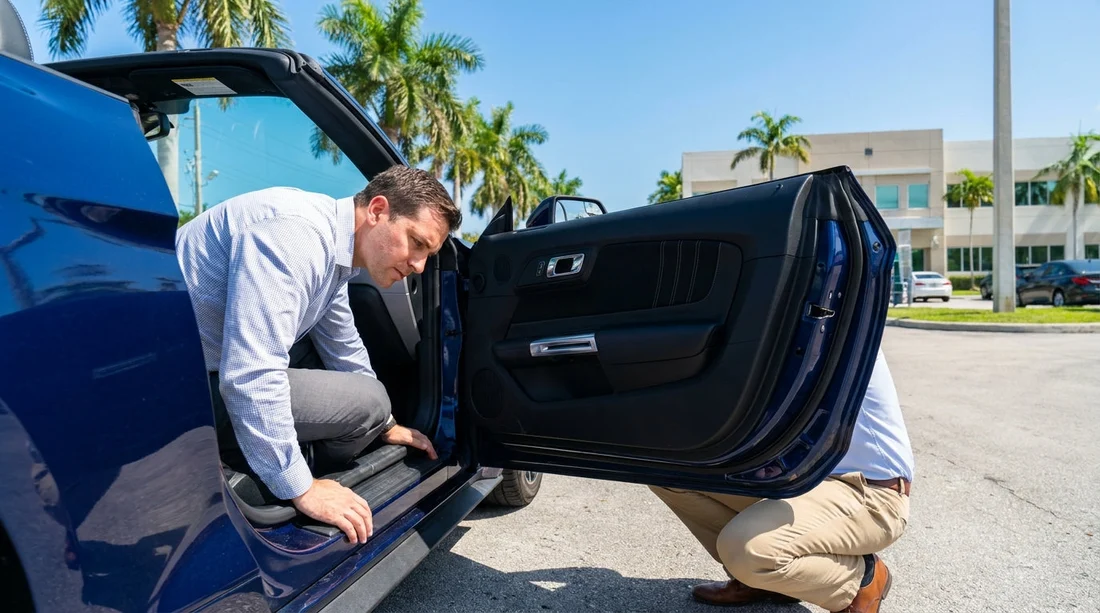
Quick Summary:
- Smell the cabin and boot for mustiness, fragrance masking, or mildew.
- Press carpets and under-mats for dampness, staining, and gritty silt.
- Check seat rails, pedals, and bolts for rust or white corrosion.
- Start the car, confirm warning lights clear, test electrics and AC.
Flooding can happen quickly in South Florida, and Miami’s storm season means standing water is a real risk for parked cars. Most rental fleets are well managed, but if a vehicle has been exposed to floodwater previously, the signs can linger. A few minutes of careful inspection before you drive off can help you avoid musty odours, electrical glitches, and safety issues that might otherwise spoil your trip.
This guide focuses on fast, practical checks you can do at the pickup area during car hire in Miami. You do not need tools, just good light, a calm approach, and the confidence to ask for a different vehicle if anything feels off.
Why flood damage matters on a rental car
Floodwater is rarely clean. It can carry salt, sewage, and fine sand, which can settle into carpets, wiring looms, seat mountings, and vents. Even if a car looks fine at first glance, water ingress can cause corrosion inside connectors, intermittent warning lights, and lingering mould growth. Those problems may not show up on a short forecourt manoeuvre, so your best defence is to spot early clues before accepting the vehicle.
If you are collecting near the airport, you may find it helpful to read the pickup details for Miami Airport car rental, then arrive with enough time to inspect without feeling rushed.
Step 1, use your nose first
Odour is one of the quickest indicators of prior water exposure. Open the driver’s door and take a slow breath before the air conditioning starts masking smells. A persistent musty, earthy, or mouldy scent is a classic red flag. Be cautious if the cabin smells heavily of fragrance, as strong air freshener can be used to cover damp odours.
Check the boot as well. Lift it, lean in, and smell near the carpeted floor and side panels. Water often pools in the spare wheel well. If the boot smells worse than the cabin, that is particularly suspicious.
Tip, ask for the car to be turned off while you do this first sniff. Recirculating air or a recently sprayed deodoriser can make an otherwise obvious problem harder to spot.
Step 2, feel for dampness and look for water lines
Next, move to touch checks. Press the carpet with your fingertips in several places, including the driver footwell, rear passenger footwells, and the area near the door sills. Carpets can feel dry on top while the padding underneath remains damp, so apply firm pressure for a second or two.
Pull back the floor mats. Look for staining or tide marks along the edges of carpet, gritty particles or fine sand trapped under the mat, a tacky or spongy feel that suggests soaked underlay, and discolouration around seat mount points or floor bolts.
Do not forget to check beneath the boot mat. If you see a water line, rust-coloured staining, or silt in the spare wheel well area, request another vehicle.
If you are picking up in the city rather than the airport, you can compare notes with the location information for car hire in Downtown Miami and allow time for a proper walkthrough.
Step 3, hunt for corrosion in hidden metal parts
Corrosion is a strong clue because it persists long after a car has been dried and cleaned. Focus on areas that are normally protected from weather but exposed to floodwater.
In the cabin, look closely at the metal seat rails. Use your phone torch if needed. Light surface rust might appear on older cars, but fresh orange rust, flaking, or pitting on multiple rails is concerning. Check the pedals, especially metal brackets behind them, and look at lower dashboard bolts if visible.
Open the bonnet and look for unusual corrosion on clamps, fasteners, and electrical connectors. White powdery corrosion on aluminium parts or greenish residue on copper can indicate moisture exposure. Also inspect the bonnet latch and hinges, which are usually clean and lightly greased, not rusty.
Step 4, check the electronics and warning lights properly
Electrical issues are among the most inconvenient after flood exposure, and they can appear intermittently. When you start the car, watch the instrument cluster. All the standard warning lights should illuminate briefly, then go out. If any warning light stays on, flickers, or returns after a minute, ask the agent to note it and consider switching cars.
Test a small set of high value electrical functions before leaving the lot: headlights, indicators, hazards, brake lights, electric windows and mirrors, central locking, wipers at multiple speeds, and the infotainment system if fitted.
Pay attention to odd behaviour such as a window moving slowly, random warning chimes, or a screen rebooting. Those symptoms can be unrelated to flooding, but they are also consistent with moisture in connectors.
Step 5, look for silt in awkward places
Even a detailed valet can miss silt that settles into crevices. Look for fine sand or dried mud around seat track corners, under plastic trim at the door sill, and in the boot hinges. Check the spare tyre area if accessible, and glance at the cabin air vents for dusty clumps that do not look like ordinary lint.
Also inspect the lower seat belt webbing. Pull it out fully and look near the bottom, where muddy staining can remain. A belt that retracts slowly can be a sign of contamination or dampness inside the retractor mechanism.
Document what you find before you drive off
Whether or not you suspect flood damage, take clear photos and a short video walkaround. Capture the odometer, fuel level, instrument cluster with the engine running, and any existing marks inside the footwells, boot, or door sills. If you notice dampness, corrosion, or warning lights, report it immediately and ask for the issue to be recorded in the rental agreement or digital check out notes.
If you are travelling with a larger group and switching vehicles is easier than dealing with a questionable car, you might compare availability for minivan hire in Brickell or van rental in Coral Gables, depending on where you are staying.
What to do if you suspect prior flood damage
If you pick up even one strong red flag, like persistent mildew smell plus damp carpet, or multiple electrical glitches, the safest move is to request a different vehicle. Keep the conversation factual: mention what you observed, show photos, and ask to swap before you leave the premises. If you have already driven off and notice symptoms soon after, contact the rental provider promptly and document the symptoms with time stamped photos or video.
For travellers combining Miami with a wider South Florida itinerary, it can also help to know there are alternatives for pickup, such as Fort Lauderdale Airport car rental, if your plans change and you need flexibility.
FAQ
How long does a musty smell last after a car has been flooded? It can persist for months if moisture reached the carpet padding or ventilation system. Strong fragrance masking is also a warning sign.
Is a little condensation inside headlights always a flood sign? Not always, minor fogging can happen with humidity or temperature changes. Heavy condensation, visible water lines, or repeated fogging is more concerning.
Which interior areas are most likely to hide flood evidence? Under floor mats, the boot well, seat rails, lower seat belt webbing, and the edges of carpets near door sills often reveal silt or staining.
What warning lights matter most when checking for water related issues? Airbag, ABS, traction control, engine warning, and any battery charging alerts deserve attention. If a light stays on or flickers, request documentation or a different car.
Should I refuse the car if I find damp carpet but everything else looks fine? Yes, damp underlay can indicate trapped moisture and future mould or electrical problems. It is reasonable to ask for another vehicle before starting your trip.






























































































