Quick Summary:
- LDW may cover dents, but some cosmetic scuffs can be excluded.
- Check definitions, underbody, trim, wheels, and roof are often excluded.
- Excess still applies, many minor repairs stay within that limit.
- Photograph and record existing marks at pick-up and drop-off.
When arranging car hire in Florida, “LDW” (Loss Damage Waiver) is one of the most misunderstood items in the quote. Many drivers assume it automatically covers every scratch and small dent. In practice, LDW is a waiver of the rental company’s right to claim certain damage costs from you, provided you follow the rental terms. Whether it covers minor bodywork damage depends on the company’s definitions, the type of damage, and any exclusions written into the agreement.
This guide breaks down how LDW typically treats scratches and dents, what to look for before you confirm car hire, and how the excess (sometimes called a deductible) affects your real financial risk.
What LDW usually means for scratches and dents
In Florida, LDW is commonly presented as protection that reduces or removes your financial responsibility for damage to the rental vehicle. It often includes collision damage, theft, and vandalism, but the exact scope varies.
Scratches: LDW may cover scratches if they are considered “damage” under the rental company’s criteria. Some providers treat light scuffs, paint transfer, and superficial marks as normal wear. Others charge if a scratch exceeds a certain length, penetrates the paint, or requires refinishing rather than polishing.
Dents: LDW more commonly applies to dents because they are harder to classify as wear and tear. Even a small door ding can be treated as chargeable damage if it requires panel repair. Under LDW, you may still owe an excess, or you may owe nothing if you have a zero-excess waiver.
The key point is that LDW is not a universal promise that all cosmetic blemishes are ignored. It is a contract term, and the contract usually contains definitions and exclusions that decide the outcome.
Minor damage versus wear and tear, why it matters
The phrase “wear and tear” is where many disputes start. Florida rental agreements often differentiate between acceptable wear from normal driving and chargeable damage that reduces the vehicle’s value or requires repair before the next rental.
Some companies use practical thresholds, such as scratch length, dent diameter, or whether bare metal is exposed. Others rely on an inspector’s judgement and documented photographs at return. Because the threshold is not always printed in the marketing summary, you should look for the damage policy section within the rental terms before confirming car hire.
If you are comparing pick-up points, you can still apply the same checks. For instance, if you are arranging car hire near central areas like Downtown Miami or Brickell, the LDW rules are set by the supplier, not the neighbourhood. Your focus should be on the specific supplier terms and what counts as “damage”.
Common LDW exclusions to watch for in Florida
Even when LDW applies to bodywork damage, exclusions can remove protection for certain areas, certain causes, or certain behaviours. Read these carefully, because they are where scratches and dents can become your responsibility.
Tyres, wheels, glass, and mirrors: Many LDW products exclude tyre sidewall damage, wheel scuffs, cracked windscreens, or mirror housings. A curb scrape can be classed as wheel damage rather than a body scratch, which can change whether LDW helps.
Underbody and roof: Scrapes underneath the car, damage from steep kerbs, or contact with parking barriers can fall outside LDW. Roof damage from low-clearance garages is also frequently excluded, particularly with vans or taller vehicles.
Interior damage: Tears, burns, stains, or odours (including smoke) are usually excluded from LDW entirely. These can be billed as cleaning or refurbishment, not collision damage.
Negligence or prohibited use: If the car is driven off-road, through flood water, or in violation of the rental terms, LDW can be void. Florida weather makes this relevant, because water damage during storms can be argued as avoidable if you drove into flooded streets.
Unreported incidents: Even minor damage may require you to report the incident promptly and obtain a police report in some cases. Failure to report can invalidate LDW and leave you liable for full costs.
When choosing car hire at major hubs, the convenience of the location does not change these legal and contractual exclusions. Whether you collect at Miami Airport and Downtown or elsewhere, your protection is only as good as your compliance with the rental conditions.
How the excess affects your real risk
LDW often comes with an excess, meaning you pay up to a set amount before the waiver covers the rest. This is crucial for scratches and dents, because many minor repairs fall entirely within the excess. In that scenario, LDW may technically apply, but you still pay the whole bill if it is below the excess level.
Small scratch repair: Polishing or a small respray can be low enough that you pay it all, because it sits under the excess. If the supplier treats it as chargeable damage, you might see a charge even when you have LDW.
Panel dent repair: Paintless dent removal may still sit within excess. Larger dents requiring bodyshop time can exceed the excess, meaning your cost stops at the excess amount if LDW remains valid.
Multiple marks: Some suppliers charge per incident or panel. Several small scratches can add up quickly, potentially reaching the excess cap.
Before you finalise car hire, check whether you are looking at a standard LDW with excess, or a product that reduces excess to a lower figure. Also check whether there are separate excesses for different damage types, for example bodywork versus theft.
What to do before driving away, practical steps that prevent disputes
Because minor cosmetic marks are easy to miss at pick-up and easy to dispute at return, your best protection is a careful inspection and clear records. These steps are useful even if you believe LDW will cover scratches and dents.
Inspect in good light: If you collect at night or in a covered garage, ask to move the car into brighter light so you can see swirls and scuffs.
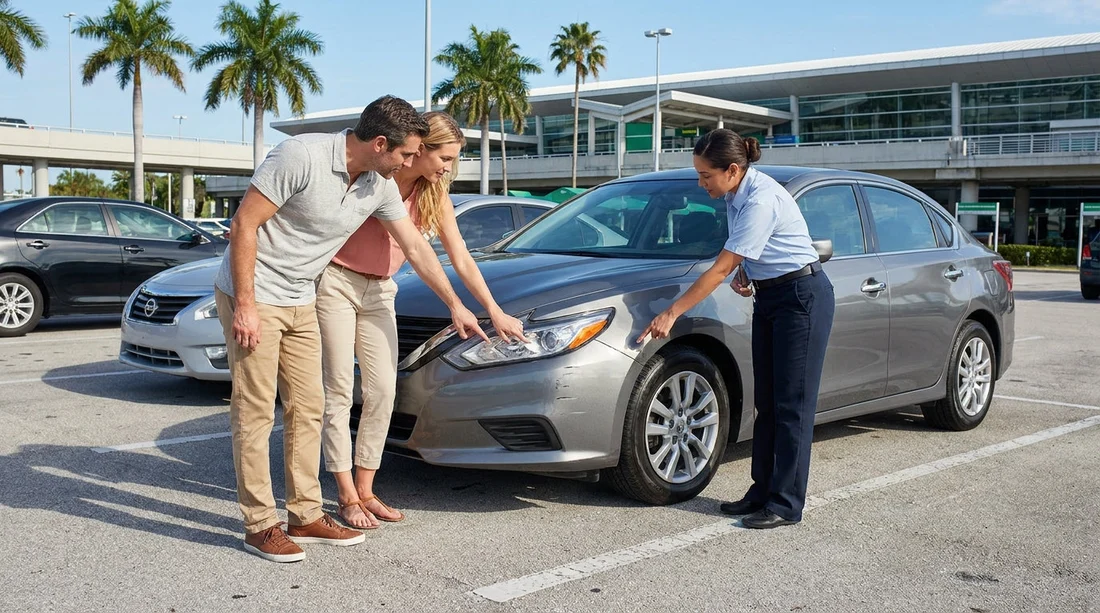
Photograph every side: Take wide photos and close-ups of any existing scratches, dents, wheel scuffs, and bumper corners. Include the number plate, mileage, fuel gauge, and a time-stamped phone photo set if possible.
Match photos to the condition report: Ensure every mark is written on the checkout sheet or logged in the app. If it is not recorded, request an update before you leave.
Know the return process: Ask whether they do a joint inspection at drop-off and whether you will receive a signed return condition receipt. This can reduce surprise claims.
These habits apply whether you are hiring a standard car or a larger vehicle. For example, if you are looking at a family trip option like van hire in Disney Orlando, the larger body panels and higher roofline make car park scrapes more likely, so documentation becomes even more important.
FAQ
Does LDW automatically cover all scratches on a rental car in Florida? Not automatically. LDW may cover scratches classed as damage, but light scuffs can be treated as wear, and some policies exclude trim, wheels, or specific causes.
If I have LDW, can I still be charged for a small dent? Yes. If the dent is chargeable and the repair cost is within the excess, you may pay the full amount up to that excess.
What exclusions most often catch people out with minor damage? Wheel and tyre damage, glass and mirrors, underbody scrapes, roof impacts, and any incident not reported as required by the agreement.
How can I reduce the chance of a scratch or dent dispute? Photograph the car thoroughly at pick-up and drop-off, ensure existing marks are recorded on the condition report, and keep any signed return confirmation.
Is LDW the same as insurance for car hire in Florida? It is usually a contractual waiver rather than a standalone insurance policy. It limits what the rental company can charge you, but only within its terms, exclusions, and excess.