


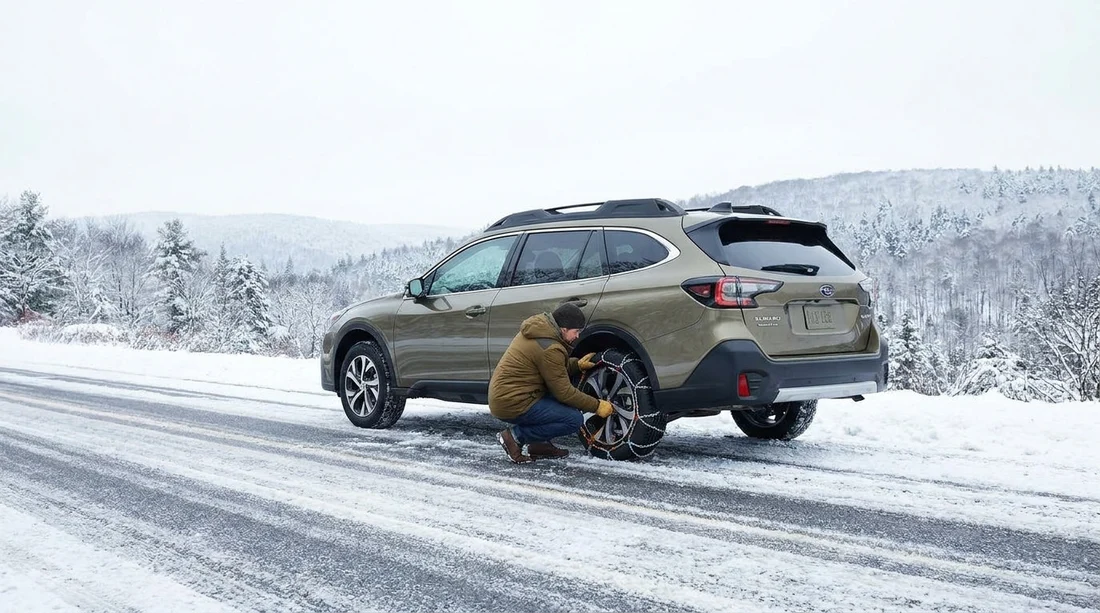
Quick Summary:
- Expect all-season tyres by default, not dedicated winter tyres.
- Snow chains are often prohibited, confirm rules before travelling.
- Plan routes around interstates, and avoid steep mountain roads after storms.
- Choose flexible dates, winter weather can disrupt pick-up and travel.
When you’re arranging car hire in Pennsylvania during winter, the big question is whether you’ll need winter tyres or snow chains. The practical answer is that most rental cars are supplied with all-season tyres, and chains are commonly restricted. That does not mean you cannot drive safely, but it does mean you should plan around tyre type, local weather patterns, and where you intend to drive.
Pennsylvania can swing from clear, cold days in Philadelphia to heavy lake-effect snow in the northwest and icy mountain conditions in the Alleghenies. A smart plan begins before you confirm your dates, because tyre and chain policies are usually set by the rental company and can be hard to change at the counter.
What tyres are typically fitted on rental cars in Pennsylvania?
Most rental fleets in Pennsylvania run on all-season tyres as standard. All-season tyres are designed for a broad range of temperatures and wet roads, and they cope reasonably well with light snow when tread depth is good. However, they are not the same as dedicated winter tyres, which use a softer compound and biting edges to improve braking and traction on snow and ice.
Dedicated winter tyres are not routinely provided on standard US rental vehicles, especially in cities and at airports where fleets rotate across states. If winter tyres are available at all, they are usually limited, may be restricted to certain vehicle categories, and may be treated as an optional extra rather than a default fit.
If your trip starts around Philadelphia, you are most likely to receive a vehicle on all-season tyres. That is typical whether you collect in town via Philadelphia car hire pages or collect after landing through Philadelphia Airport car hire. The key is to plan for the equipment you are most likely to get, rather than the equipment you wish were standard.
Are snow chains required in Pennsylvania?
Pennsylvania does not have a blanket, statewide legal requirement for snow chains for private vehicles. Instead, road safety is managed through ploughing, salting, speed restrictions, and temporary closures. In extreme weather, authorities may restrict travel for certain vehicles or advise against non-essential travel, but this is different from the chain-control checkpoints you might encounter in parts of the western United States.
Because of that, chains are rarely a necessity for most winter driving in Pennsylvania, particularly if you stay on major routes. The bigger risk is overestimating what a rental vehicle on all-season tyres can do on untreated back roads, steep grades, or during freezing rain.
Are snow chains allowed on rental cars?
Even if chains are not broadly required by law, many rental providers restrict or prohibit fitting snow chains. The reason is simple, incorrect fitting can damage tyres, wheels, bodywork, and suspension, and chains can be unsafe at higher speeds or on cleared pavement.
Policies vary by company and vehicle category, so the safest approach is to assume chains are not permitted unless your rental agreement explicitly allows them. If your itinerary depends on mountain access after a storm, you should confirm chain rules and consider alternative approaches such as delaying travel or choosing different roads.
How to plan your routes for winter car hire in Pennsylvania
Route choice matters as much as tyre choice. Pennsylvania’s interstates and major highways are typically prioritised for clearing and treatment. Secondary roads, rural routes, and shaded mountain stretches can remain icy long after the main roads look fine. If you have flexibility, choose routes that stay on well-maintained corridors, even if they add a little time.
If you need extra space for winter luggage, skis, or family travel, be realistic about vehicle size and clearance. A standard car may be fine for cleared urban routes, while an SUV can help with deeper slush and driveways, but it still will not replace winter tyres on ice. For group trips that require more capacity, browsing options like van rental in Philadelphia can help align vehicle choice with your winter load and comfort needs.
How to plan dates and pick-up times to reduce risk
Winter disruption is often about timing. A major storm can affect flight schedules, opening hours, and vehicle availability, and it can also delay cleaning and preparation of cars returning to the fleet. If you can, build in buffers and plan for daylight driving, when temperatures are usually higher and visibility is better.
What to check at the counter or on pick-up
You may not be able to change tyre type, but you can still verify a few practical points before leaving the lot. Look for safe tread depth, check the washer system works, and test wipers and defrost so you are prepared for salt spray and slush.
Does vehicle choice change the winter tyre and chain question?
Yes, but mostly in how you manage traction and clearance rather than what is fitted by default. Many SUVs have all-wheel drive, which can help you move off from a stop on slippery surfaces. It does not shorten braking distances on ice, and it does not substitute for appropriate tyres.
If budget is a key consideration, you can still plan for winter sensibly. Compare inclusions, vehicle class, and pick-up logistics rather than relying on the hope of winter tyres. Options like budget car rental in Philadelphia may suit city-based itineraries where roads are treated promptly, especially if you avoid driving during active snowfall.
When should you reconsider driving at all?
Even with good planning, there are times when the safest option is to delay a drive or change the itinerary. Reconsider driving if freezing rain is forecast, if winds are strong enough to cause whiteouts, or if local authorities advise against travel.
For travellers who want to compare providers and policies in one place, Hola Car Rentals listings such as Dollar car hire in Philadelphia can be a useful starting point for reviewing what’s available for your dates and vehicle class, then confirming winter equipment rules in the rental terms.
FAQ
Do rental cars in Pennsylvania come with winter tyres? Most rental cars in Pennsylvania are fitted with all-season tyres, not dedicated winter tyres. Availability of winter tyres, if offered, can be limited and varies by provider and vehicle class.
Can I add snow chains to my rental car? Often no. Many rental agreements restrict or prohibit chains due to damage and safety risks. Check the terms for your specific rental company before assuming chains are allowed.
Do I need an SUV for winter driving in Pennsylvania? Not necessarily. For city and major highway driving, a standard car on good all-season tyres is commonly adequate if you avoid active storms. An SUV with AWD can help with traction and clearance, but it does not improve braking on ice.
What is the best way to plan my winter route? Prioritise interstates and main highways, and avoid steep rural roads after storms. Build in daylight driving and time buffers so you can wait for ploughing and treatment.
What should I check on the car before leaving the rental location? Look at tyre tread, test wipers and defrost, and ensure washer fluid works. These basics make a major difference in snow, slush, and salty road spray.






























































































