


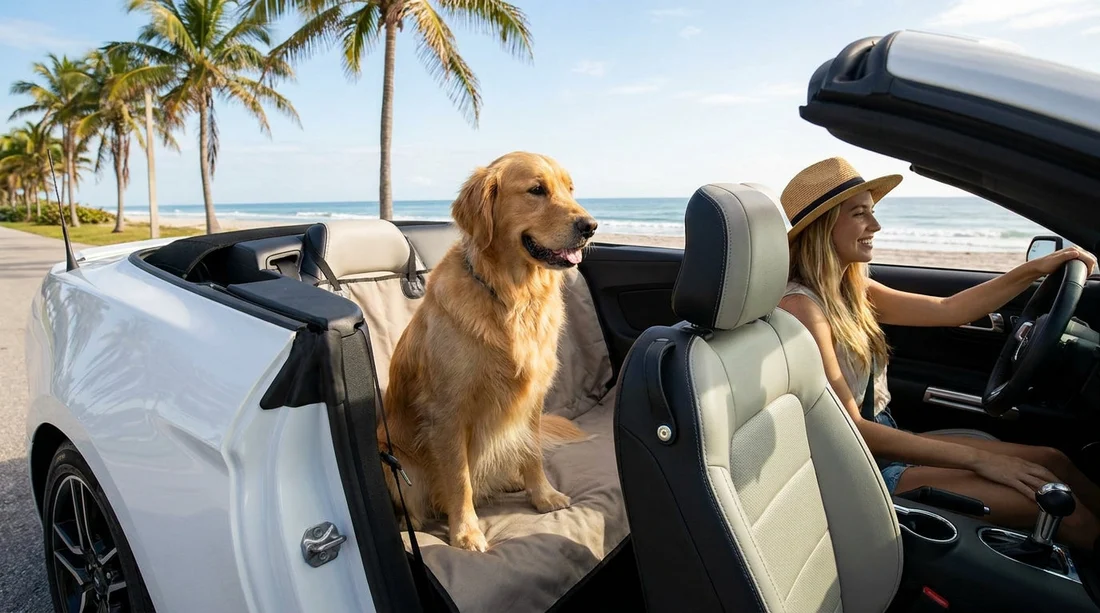
Quick Summary:
- Pets are often allowed, but fees depend on the car’s condition.
- Use a crate or cover to protect seats from hair.
- Take photos at pick-up and drop-off to document cleanliness.
- Vacuum, wipe surfaces, and deodorise lightly before returning the car.
Yes, you can usually take a pet in a rental car in Florida, but avoiding cleaning fees depends on condition at return, not on whether an animal travelled with you. Most providers focus on hygiene and damage: pet hair woven into upholstery, muddy pawprints, drool on glass, lingering odours, scratches, or any sign that the car needs more than a standard turn-around clean can lead to a valeting charge. The good news is that with a little preparation before pick-up, and a routine for keeping the cabin tidy during your trip, you can reduce the likelihood of extra charges and speed up drop-off.
If you are arranging car hire around Miami or Fort Lauderdale, it helps to choose a convenient collection point and plan pet-friendly stops. For example, you can compare collection locations such as Fort Lauderdale (FLL) car rental or Enterprise at Miami (MIA), then build in time to protect the interior before your pet gets in.
Are pets allowed in Florida car hire?
In most cases, pets are allowed in hire cars in Florida, but they are not treated the same way as a human passenger. Assistance animals are typically protected under different rules, while pets are usually permitted as long as you return the vehicle in a clean, undamaged condition. The rental agreement often states you are responsible for any additional cleaning required to bring the vehicle back to the provider’s standard. That is why the practical question is less “are pets allowed?” and more “what condition will the vehicle be in when I hand back the keys?”
Also remember that individual brands and locations may apply slightly different processes at return. If you are collecting in a city location, such as car rental in Brickell, allow a little extra time for a quick interior check at drop-off if you travelled with an animal.
What usually triggers cleaning or valeting charges
Cleaning fees are typically charged when staff judge that extra time, products, or specialist equipment are needed beyond the usual turnaround. With pets, common triggers include:
Embedded hair: Short hairs can work into seat fabric, boot carpet, and air vents. Even if the car looks tidy, a quick hand swipe can reveal hair that needs a deep vacuum.
Odours: Wet dog smell after beach trips, accidents, or damp towels can linger, especially in Florida humidity. Strong odours often lead to additional deodorising steps.
Stains and marks: Mud, sand, drool, and pawprints on headliners, doors, and seatbacks are obvious reasons to charge for valeting.
Scratches and damage: Claw marks on door panels, torn seat material, or damaged trim are not cleaning issues, they may be treated as damage.
Flea or tick concern: Even if unconfirmed, any sign of pests can prompt a specialist clean.
The key is that a fee is usually based on the result, not your intentions. You can do everything right and still miss hair in the boot carpet, which is why prevention and a final inspection routine matter.
Pre-pick-up checklist to minimise fees and delays
The best time to avoid cleaning fees is before your pet ever sits in the car. Build these steps into your pick-up routine.
1) Choose the right vehicle type for your pet
More space can mean fewer problems. A cramped back seat makes it more likely your pet brushes against doors and seats, spreading hair and dirt. If you have a large dog, a people carrier style vehicle can help keep them stable and contained in the rear area. If that is relevant to your trip, look at options like minivan rental in Doral where the boot area can be easier to protect with liners and blankets.
2) Pack a simple “pet in car” kit
Bring items that stop mess rather than cleaning it later: a washable seat cover or old blanket, a towel for drying, a lint roller, poop bags, wipes safe for interior plastics, and a spare lead. Add a travel water bowl to avoid spills from bottles.
3) Confirm restraints and keep safety first
Use a crate secured in the boot area, or a harness attachment suited for car travel. Besides safety, restraint reduces roaming, which reduces hair across every surface. Avoid letting pets ride in the front seat where they can scratch dashboards and doors.
4) Inspect and document the car before leaving
Do a quick walkthrough and take photos of seats, door panels, boot carpet, and any existing stains or scuffs. If you notice heavy hair already present, flag it promptly. Documentation helps if there is any dispute later about whether mess was pre-existing.
Cleaning routine before drop-off in Florida
Your goal is to make the car look, feel, and smell like a vehicle that had no unusual use. Plan 20 to 30 minutes before return.
1) Remove covers and shake them out off-site
Do not shake blankets next to the car, you will just blow hair back in. Bag them and deal with them later.
2) Vacuum thoroughly, including hidden zones
Focus on seams between seat cushions, under child-seat anchors, and the boot lip. Hair often clings to felt-like trim in the boot and rear seatbacks. If you used a crate, check underneath it for trapped hair and sand.
3) Wipe plastics, doors, and glass
Pawprints on windows and nose smears on the inside of glass are common. A quick wipe makes the car look cared for and reduces inspection time.
4) Neutralise odour without masking it
Airing the car out helps, but avoid heavy fragrances that can raise suspicion of covering smells. If the car genuinely smells clean, that is the best outcome.
5) Do a final walkaround with photos
Take clear pictures of the rear area and seats at drop-off. If a question arises later, you have evidence of the condition you returned.
If you are dropping off in a busy tourist corridor, such as around Disney Orlando (MCO) car rental, build in extra time for the cleaning steps so you are not rushed and tempted to skip the boot vacuum.
What to do if you are charged anyway
Even with good habits, charges can happen. If you receive a cleaning fee, ask for the reason and the supporting photos or inspection notes. Compare those with your pick-up and drop-off images. If you believe the charge is incorrect, respond promptly and calmly with your evidence. Keep your communication factual and focused on dates, times, and the visible condition of the car.
FAQ
Can I bring my dog in a car hire in Florida? In many cases, yes. Most providers allow pets, but you are responsible for returning the car clean and undamaged, otherwise extra cleaning or damage charges may apply.
How do cleaning fees work for pet hair in a hire car? Fees are usually applied when hair is embedded in seats or carpets and requires extra valeting. Light, easily removed hair is less likely to be charged than heavy buildup in fabric and the boot.
Is a crate better than a seat cover for avoiding charges? A secured crate often reduces hair spread and scratches, which can help avoid fees. A seat cover can work well too, but it must fully protect the areas your pet touches.
Should I tell the rental desk I am travelling with a pet? It is sensible to be transparent if asked, and to check any local notes on cleaning expectations. The main protection is your own prevention and cleaning routine, plus photos at pick-up and drop-off.
What is the quickest way to reduce return delays after travelling with a pet? Arrive early enough to vacuum and wipe down, remove all pet items, and take clear photos. A visibly clean, odour-free cabin usually speeds up inspection.






























































































