


Quick Summary:
- Check the voucher for fuel type, not just the vehicle photo.
- Expect “or similar” to allow swaps within class, including fuel changes.
- Ask the desk to confirm petrol before signing the rental agreement.
- Inspect the fuel cap label and dashboard warning before leaving.
When arranging car hire in California, many drivers assume the fuel type will be fixed once they choose a vehicle group. In practice, petrol versus diesel is not always guaranteed, because most bookings are made by car class rather than a specific make and model. The good news is that fuel type is often shown in the booking details, and there are several checks you can do to reduce the chance of being given the wrong fuel.
California is also a market where petrol vehicles dominate typical airport fleets, so diesel is less common in standard economy, compact, and intermediate categories. However, it can still appear in some premium, SUV, and people carrier groups, and confusion can happen when a vehicle is substituted at the counter. Understanding how fuel information is presented, what “or similar” really means, and what to confirm before you sign will help you avoid an expensive mistake at the pump.
How fuel type is shown on a car hire booking
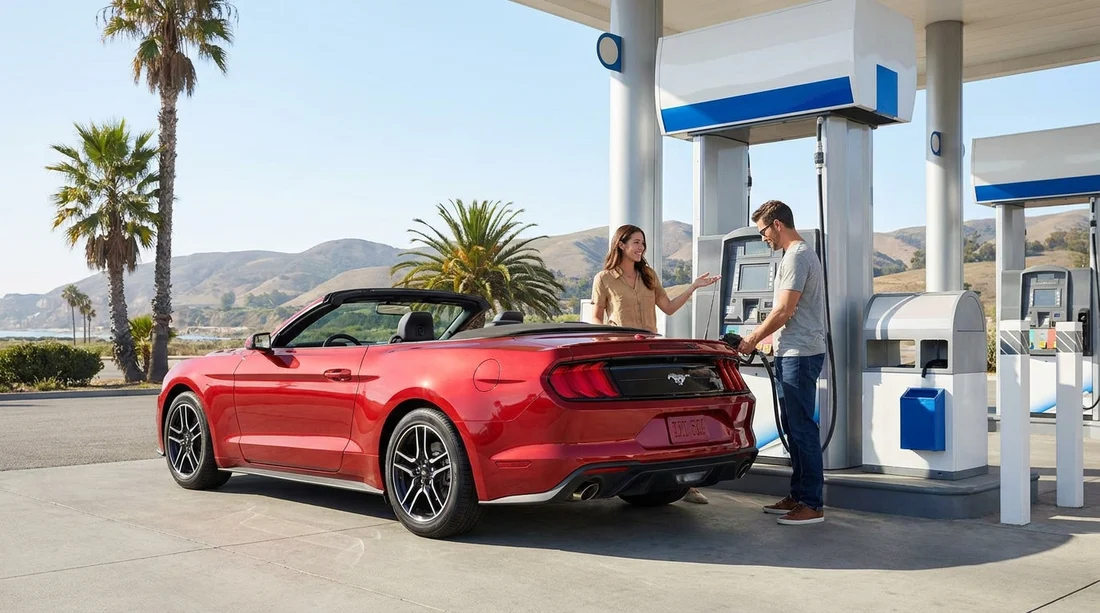
Fuel type can appear in a few places, depending on the brand and the booking channel. The key is to rely on the written specification, not the vehicle image. Photos are often representative only, and the pictured model may be petrol even if the group can include diesel, or vice versa.
Look for fuel type in these areas:
Vehicle details on the rate page: Many listings show “Petrol” or “Diesel” alongside transmission and passenger capacity. If it is missing, that is a sign the class may include multiple fuel types.
Your confirmation voucher: This is the most useful document to bring to the counter. If it states “petrol”, “gasoline”, or “gas”, keep a copy accessible on your phone. If it only lists the class and says nothing about fuel, you should assume fuel type is not guaranteed.
The rental agreement at collection: The final paperwork you sign may include the vehicle’s fuel type or engine description. Read it, because this is what you are agreeing to drive away with.
When comparing airport pick-ups, you can review the location pages for context on typical fleets and procedures, for example car hire at San Jose Airport or Payless car hire in California LAX.
Can you guarantee petrol rather than diesel in California?
A true guarantee depends on whether the supplier is offering a specific model or a strict fuel-defined category. Most mainstream car hire in California is sold as a vehicle class, such as “Intermediate SUV” or “Full-size”, where the supplier reserves the right to provide any vehicle that fits the class description. In those cases, you generally cannot guarantee petrol, even if the example vehicle shown is petrol.
You are most likely to get a reliable petrol outcome when:
The voucher explicitly states “petrol” or “gasoline” for the class, and the class is common in the supplier’s fleet.
You confirm at the desk before signing and the agent can assign a petrol vehicle from the lot.
You are less likely to get a guarantee when:
The listing says “or similar” and fuel type is not shown, or it only lists transmission and seats.
You book a premium SUV, luxury, or people carrier class where fleet mix can vary by depot.
There is limited availability and substitutions are common, such as late-night arrivals or peak holiday weekends.
What “or similar” can mean for fuel type
“Or similar” is one of the most important phrases to interpret correctly. It usually means you are not reserving the exact vehicle in the photo, you are reserving a category with comparable size, luggage capacity, and general features. Fuel type may be treated as a feature, but it is not always treated as a fixed feature unless the booking explicitly says so.
In real terms, “or similar” can lead to:
Same class, different engine: Two vehicles can be in the same class with different fuel types, particularly in larger or premium groups.
Upgrade or substitute: If your class is unavailable, you might be offered a different model that the desk considers comparable. That can include a different fuel type if the supplier’s internal category rules allow it.
Feature mismatch: A listing might show “automatic, 5 doors, air con” but remain silent on fuel. That silence is often the clearest sign that petrol is not contractually promised.
What to confirm before you sign at the counter
The most effective moment to avoid fuel problems is before you sign the rental agreement and before the vehicle is finalised. Once you have signed and left the lot, changing vehicles can be difficult and time-consuming.
Confirm the following, in this order:
Ask the agent what fuel the assigned car uses: Use simple wording, such as “Is this car petrol or diesel?” In the US you will often hear “gas” for petrol.
Match the answer to your voucher: If your voucher states petrol, and the agent assigns diesel, point out the mismatch and request a petrol vehicle within the same class.
Read the rental agreement: Look for any mention of fuel type, and confirm the vehicle details line matches what you are being handed.
Check the vehicle itself: Before leaving the bay, look for a label inside the fuel door, on the cap, or near the filler area. Many cars also show a “Diesel” label near the fuel gauge icon or on the instrument cluster at start-up.
If you want to get a feel for typical counter processes at different depots, these pages may help when planning collection logistics: car hire in San Jose SJC and car rental in Sacramento SMF.
Practical tips to avoid misfuelling in California
Even if you successfully secure a petrol vehicle, it is worth taking a few seconds to protect yourself at the pump, especially after a long flight. Use these habits:
Take a quick photo of the fuel label: It gives you something to re-check later when refuelling.
Learn the US pump wording: Petrol is typically labelled “Regular”, “Plus”, or “Premium” with octane numbers. Diesel is usually clearly marked “Diesel”, but the nozzle style and pump position can vary by station.
Ask if unsure: If you are travelling with others, a second pair of eyes at the pump helps.
These steps matter most if you are hiring a larger vehicle where diesel is more plausible. For example, when arranging a people carrier, you may be comparing options like minivan rental in California LAX, where specifications can differ across similar-looking models.
What if the supplier cannot provide petrol?
If you arrive and the depot says only diesel is available in your booked category, your options depend on what your voucher promises and what is available on the lot.
If your voucher clearly states petrol, it is reasonable to ask the desk to find a petrol alternative in the same category or a suitable substitute. If the voucher does not specify fuel, the supplier may treat diesel as an acceptable “similar” vehicle. In that case, you can ask to switch to a different class that is clearly petrol-dominated, but a price difference may apply.
FAQ
Is diesel common in rental fleets for car hire in California? Diesel is less common than petrol in California rental fleets, especially in smaller car classes. It can appear more often in some SUVs and premium categories, depending on depot stock.
If my voucher says “automatic or similar”, does that include fuel type? Often yes, it can. “Or similar” usually refers to a class, not a fixed model, and fuel type may vary unless petrol is explicitly stated in the booking details.
What wording should I look for to confirm petrol on my booking? Look for “petrol”, “gasoline”, or “gas” in the vehicle specification on the voucher or confirmation. If fuel type is not listed, it is safest to assume it is not guaranteed.
When is the last point I can change from diesel to petrol? Before you sign the rental agreement and leave the collection area. Once you have driven away, swapping vehicles is typically much harder and may depend on availability.
What should I do if I realise later that I have a diesel car? Do not guess at the pump. Check the fuel door label and rental agreement, and if you are still uncertain, call the depot before refuelling to avoid misfuelling.






























































































