


Quick Summary:
- Check your rental agreement for off-road and unpaved-road exclusions.
- Ask the supplier to confirm Loop Road use in writing.
- Inspect tyres, spare, jack, fluids, and underbody before departing.
- Avoid floodwater, keep speed low, and document existing damage thoroughly.
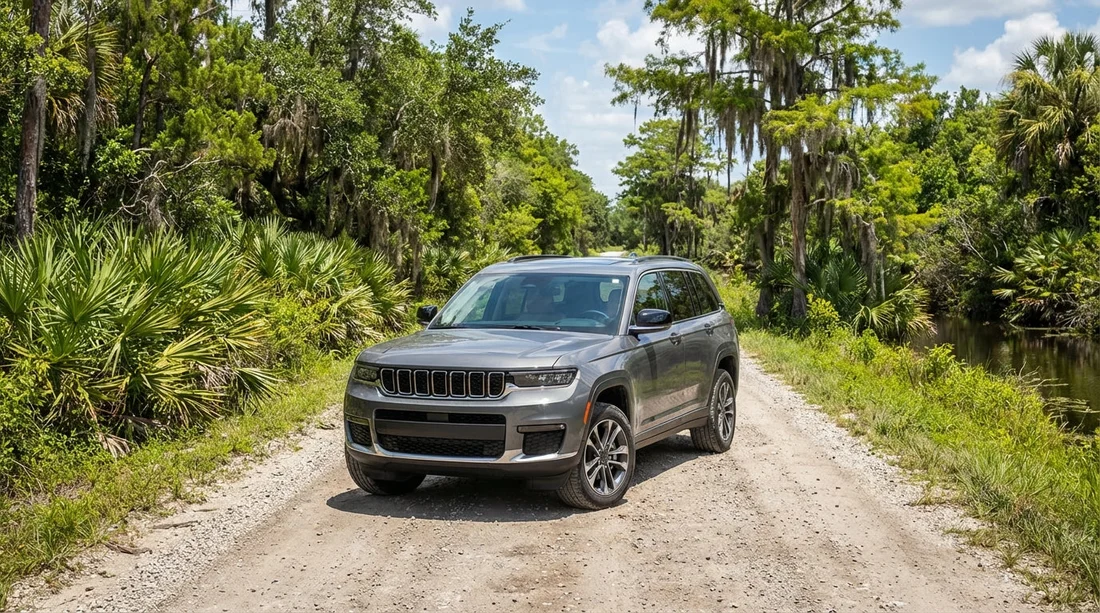
Everglades Loop Road is famous for wildlife viewing and a more remote feel than the main park roads. It is also the sort of route that can trip up car hire terms because it is unpaved in places, can develop washboard surfaces, and can become muddy or flooded after rain. The key question is not only whether you can physically drive it, but whether your Florida car hire agreement and insurance allow you to do so.
This guide covers how to confirm permission for unpaved or gravel roads, what to ask for in writing, and the practical vehicle checks to do before you go. It is written for travellers collecting from major Florida hubs such as Miami, Fort Lauderdale, and Orlando, where rental policies vary by brand, location, and vehicle class.
Is Loop Road considered “off-road” for car hire purposes?
Many car hire agreements draw a line between paved public roads and anything unpaved. Loop Road is generally a public road, but its surface can be gravel, dirt, or a mix depending on maintenance and conditions. Some suppliers treat any unpaved surface as prohibited, even if it is a public road and even if local traffic uses it daily.
What matters is how your contract defines restricted use. Look for wording such as “off-road”, “unimproved roads”, “gravel roads”, “dirt roads”, “unpaved roads”, or “roads not regularly maintained”. If Loop Road fits any of those definitions in your paperwork, driving it could void parts of your cover and leave you responsible for recovery costs, tyres, wheels, underbody damage, or glass.
If you are collecting near the Everglades from Miami, start by reviewing the location details and supplier rules when you arrange car hire through a local point such as Miami Airport car rental or, if you prefer an urban pickup, Downtown Miami car hire. Policies can differ even within the same brand depending on where you pick up.
How to confirm unpaved road permission before you drive
Do not rely on general travel forums or a verbal “it should be fine”. Your goal is to confirm whether your specific booking allows you to drive on an unpaved public road, and what cover applies if something happens. Use this checklist before you leave the counter or car park.
1) Read the “prohibited use” and “damage exclusions” sections
Ask for the full rental terms that apply to your booking, not just the summary at the desk. You are looking for:
Unpaved road bans: Some agreements state you must remain on paved roads only. Others allow unpaved roads but exclude damage from stones, sand, water, or underbody contact.
Tyre and wheel exclusions: It is common for tyres, wheels, and hubcaps to be excluded from protection products. On washboard gravel, this matters.
Underbody and roadside assistance limits: Even where driving is permitted, recovery from mud, water, or “off-road” situations can be chargeable.
Geographic restrictions: These are usually about crossing state lines or entering certain areas. It is still worth checking in case a supplier treats certain parks or remote roads differently.
2) Ask for a written answer to a specific question
Instead of asking “Can I drive in the Everglades?”, ask a closed, specific question the agent can answer clearly:
“Is it permitted under this rental agreement to drive this vehicle on Everglades Loop Road, an unpaved public road, and will my coverage remain valid while doing so?”
Then follow up with two additional points:
Damage scope: “If a stone chips the paint or windscreen, or if underbody contact occurs, what is covered and what is excluded?”
Recovery scope: “If the vehicle becomes stuck due to mud or shallow flooding, is towing covered or chargeable?”
Ask for the answer in writing. That can be an email from the location, a note on the contract, or a printed policy sheet. If they cannot provide anything written, assume the risk is yours.
3) Confirm the vehicle class you are taking
Even if unpaved driving is permitted in general, some categories are restricted. Low-clearance cars are more exposed to underbody damage from ruts, debris, and potholes. If you are collecting near Orlando for theme parks and then heading south, you might be looking at a bigger vehicle class for comfort, but still want to confirm suitability and policy terms, for example when comparing options like SUV rental in Orlando.
Be aware that “SUV” does not automatically mean higher clearance or better tyres, and it does not automatically change contract restrictions. The contract language is what decides whether you are allowed on that surface, not the badge on the tailgate.
What to ask for, in writing, before leaving the lot
Keep it simple and documentable. The most useful written confirmations are:
Surface permission: A statement that unpaved public roads are permitted, or that Loop Road specifically is permitted.
Coverage applicability: A statement that your chosen protection products remain valid on unpaved public roads, or a list of exclusions that still apply.
Assistance and towing: What counts as a billable recovery, and typical costs if you need a tow.
Damage reporting process: How to report damage, whether photos are required, and whether you should call before arranging any repair.
Vehicle condition record: A copy of the check-out report, with any existing scratches, wheel scuffs, or windscreen chips recorded.
If you are picking up from a business-heavy area where vehicles circulate frequently, such as car rental in Doral, take extra time to compare the report to the actual vehicle, since light cosmetic damage can be common.
Practical vehicle checks before you attempt Loop Road
Once you have confirmed you are permitted to drive on the route, treat Loop Road like a short remote drive where self-sufficiency matters. Do these checks in daylight, before you leave cell-friendly areas.
Tyres and wheels
Tread and condition: Look for adequate tread depth, sidewall cracks, bulges, and embedded nails. Gravel can worsen a marginal tyre quickly.
Correct pressures: Check the tyre pressure label on the driver door jamb, and confirm pressures are close. Under-inflation increases puncture risk.
Spare tyre kit: Confirm the spare is present (full-size or space-saver), inflated, and accessible. Make sure the jack, wheel brace, and locking wheel-nut key are in the car. If there is no spare and only sealant, know what that means for a sidewall puncture, sealant usually will not help.
Underbody clearance and vulnerable components
Walkaround height check: Look under the front bumper and side sills. Low air dams can scrape on ruts.
Engine splash shield: A loose splash guard can rip on washboard sections. If anything is hanging, ask for another vehicle.
Fluids, wipers, lights, and air conditioning
Coolant and temperature: Florida heat plus slow driving can push temperatures up. Confirm there are no warning lights and the temperature gauge behaves normally.
Windscreen washer fluid: Dust and bugs can make visibility worse, you want working washers and decent wiper blades.
Lights and indicators: If you are delayed and exit near dusk, you need everything functioning.
Air conditioning: Not a luxury in Florida, it helps you stay alert and reduces window-down dust exposure.
Brakes, steering, and basic road test
Before heading out, do a short paved test. Listen for clunks over bumps, feel for steering vibration, and check the brakes pull straight. A pre-existing alignment issue can become obvious on uneven surfaces.
Document the car’s condition properly
Take time-stamped photos and a slow video walkaround in good light. Focus on the areas most likely to be questioned later:
Wheels and hubcaps: Photograph each wheel face and rim edge.
Lower bumpers and sills: Get low-angle photos, these pick up scrapes easily.
Windscreen: Photograph any chips, even tiny ones.
Interior: Quick photos of seats and dashboard can help if disputes arise.
If you are travelling as a group and considering a larger vehicle for comfort and luggage, check whether a different location offers more suitable inventory, for instance van rental in Fort Lauderdale. Larger vehicles can still have low-hanging trim, so the underbody check remains important.
Driving Loop Road: practical tips that reduce risk
Go slow on washboard: High speed increases vibration and can damage suspension components. Keep a steady, conservative pace.
Avoid puddles you cannot read: Shallow water can hide a deep rut. If you cannot see the base, do not enter.
Stay centred where possible: The crown of the road can be higher, but do not straddle deep ruts if it risks underbody contact.
Keep distance from other vehicles: Stone flick from the car ahead can chip paint or glass.
Watch for wildlife and cyclists: Expect sudden stops. Braking on loose surfaces needs more distance.
Do not assume phone signal: Tell someone your plan, carry water, and allow extra time.
What if the car hire terms do not allow unpaved roads?
If your agreement prohibits unpaved or “unimproved” roads, you have three realistic options:
Choose a different route: Enjoy paved Everglades access roads, visitor centres, and boardwalks that keep you within permitted use.
Change supplier or terms: Policies differ by supplier, vehicle class, and protection products. Confirm the permission in writing before switching.
Do not take the risk: If something goes wrong, the cost is not limited to visible damage. Towing, loss of use, administrative fees, and tyre replacement can add up quickly.
When comparing suppliers, it can help to review location and brand-specific pages that outline what is typically offered, such as Enterprise car rental in Florida. Regardless of brand, always defer to the exact contract issued for your rental.
FAQ
Q: Can I drive a standard compact car hire on Everglades Loop Road?
A: Physically, many compact cars can manage in dry conditions, but permission depends on your rental agreement. If unpaved roads are excluded, do not drive it, even if the road is public.
Q: What wording in my contract usually means Loop Road is not allowed?
A: Phrases like “unpaved roads prohibited”, “off-road use”, “unimproved roads”, or “damage due to driving on roads not regularly maintained” are common red flags. Ask the desk to clarify in writing.
Q: If unpaved roads are permitted, is tyre damage covered?
A: Often not. Many car hire policies exclude tyres and wheels from damage waivers. Confirm specifically whether punctures, rim damage, and towing are covered or chargeable.
Q: What should I check on the vehicle before I leave for Loop Road?
A: Check tyre condition and pressures, confirm the spare and tools are present, inspect the underbody and bumpers for low-hanging parts, and photograph existing wheel and windscreen marks.
Q: What should I do if I encounter flooded sections?
A: Turn back rather than guessing depth. Water ingestion and underbody impact can be severe, and recovery from water or mud can be excluded from assistance. Safety comes first.






























































































