


Quick Summary:
- Under 2 years, rear-facing seat unless 40lb or 40 inches.
- Under 8 years, use a car seat or booster, not seat belt.
- Under 4’9”, keep a booster until the seat belt fits correctly.
- At pick-up, confirm expiry, recalls, and secure installation before leaving.
Choosing the right child seat for a rental in California is less about brand and more about matching your child’s size to the correct restraint category, then confirming the seat you receive is legal, complete, and installed properly. California’s requirements mainly hinge on age, height, and how the seat belt fits.
For arrivals in Southern California, you may be collecting at major airports. If you are comparing options, see Los Angeles LAX car rental or San Diego airport car hire pages for location context and supplier availability, then focus on the seat type you need.
California child restraint rules in plain English
California law requires children to be properly restrained in the rear seat where possible. The headline rules that affect which seat to book are:
Under 2 years old: a rear-facing car seat is required, unless the child weighs 40 pounds or more, or is 40 inches or taller.
Under 8 years old: the child must be secured in a car seat or booster seat in the rear seat.
At least 8 years old: the child may use a properly fitted seat belt, but a booster is still recommended until the belt fits correctly.
Height guidance: many families use the 4 feet 9 inches benchmark for moving out of a booster, because it usually correlates with correct seat belt fit.
These rules are often summarised at the counter as “rear-facing for infants, then forward-facing, then booster”, but your child’s height and weight can change what is appropriate. Always use the child seat’s own limits on the label.
Match your child to the right seat type
Rental companies typically offer broad categories such as infant seat, child seat, and booster. Those names can vary, so it helps to know what to ask for and what to verify when you see the actual seat.
Rear-facing infant seat (often called an infant carrier): usually suited to babies and small toddlers who are within the seat’s rear-facing height and weight limits. In California, this is the default choice for under-2s unless the 40 inches or 40 pounds threshold is met.
Forward-facing seat with harness: commonly appropriate for toddlers and younger children who have outgrown rear-facing limits. Confirm the harness adjusts to your child’s shoulder height and that all parts are present.
Belt-positioning booster: intended for children who are too big for a harness but too small for the adult seat belt to fit properly. A booster positions the lap belt low on the hips and the shoulder belt across the chest. Many suppliers offer backless boosters only.
Seat belt only: if your child is 8 or older, a seat belt is permitted when it fits correctly. If the shoulder belt cuts into the neck or the lap belt rides up on the abdomen, continue using a booster even if age allows seat belt use.
What to check at the counter and at the car
The most important part of car hire child seats is not the booking line item, it is the condition and completeness of the seat you receive, plus how it is installed in your vehicle. Before you drive off, take a few minutes to confirm the following.
1) Confirm you received the correct category and orientation: if you need rear-facing, say so clearly and check that the seat can be configured rear-facing. Look for a rear-facing belt path label and recline indicator on the seat.
2) Check for the instruction labels and manuals: if a paper manual is missing, ask for one or request another seat with legible labels. You should be able to identify belt paths, recline settings, and the correct harness routing.
3) Check expiry date and overall condition: child seats expire. Look for a moulded or sticker date on the shell. Also check for cracks, missing padding, frayed harness webbing, damaged buckles, or sticky adjusters.
4) Ask about recalls and crash history policy: rental fleets should have recall processes and remove seats involved in crashes. If you are not satisfied, request an alternative seat.
5) Confirm the vehicle has the right attachment options: most modern cars have LATCH anchors (called ISOFIX in the UK, but in the US it is LATCH). Check your rental vehicle’s back seat for lower anchors and top tether points, especially for forward-facing harnessed seats.
6) Do a tightness check after installing: once installed, the seat should not move more than one inch side-to-side or front-to-back when you tug at the belt path.
If you are picking up around Orange County, the Santa Ana SNA car hire area is a common gateway for family trips, so allow a few extra minutes at the counter and kerbside to check seat fit carefully.
Common car hire scenarios and the right booking choice
Travelling with a 1-year-old who is tall: you likely still need rear-facing in California unless the child is at least 40 inches or 40 pounds. Book an infant seat if available, but be prepared that an infant carrier may be outgrown sooner.
Travelling with a 7-year-old: California still requires a car seat or booster under age 8. In practice, many 7-year-olds are best in a booster if they have outgrown a harnessed seat.
Travelling with an 8 to 10-year-old: you can legally use a seat belt at 8, but many children still need a booster until the belt fits. Booking a booster can reduce fatigue and improve belt positioning, particularly in larger vehicles.
Vehicle choice can also affect belt fit and tether placement. If your group needs extra space for luggage plus child seats, a people carrier can make installation easier. For LAX comparisons, you can review van rental at Los Angeles LAX to understand typical vehicle types that may better accommodate multiple restraints.
Final checks before you drive off
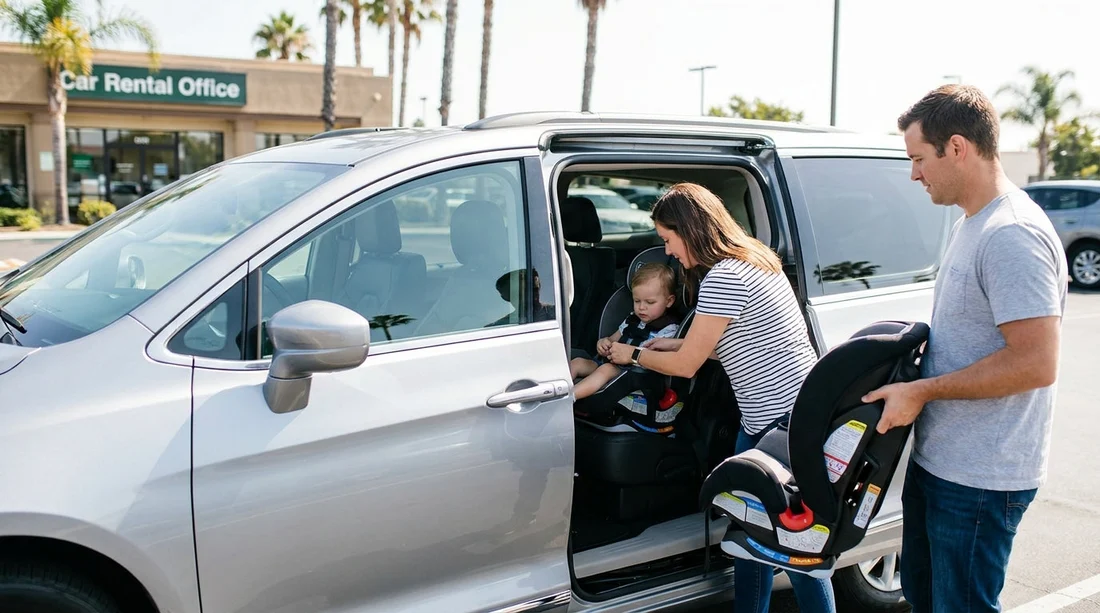
Before leaving the lot, buckle your child in and do a last review: harness snug and untwisted, chest clip at armpits, booster belt routing correct, and the seat firmly installed at the belt path. If anything feels unclear, return to the counter immediately and request assistance or a different seat.
Different suppliers can have different seat models and policies. If you are comparing pick-up options in San Diego, you might also look at Hertz car rental San Diego SAN for supplier context, then apply the same checks regardless of brand.
FAQ
Q: If my child is under 2, do I always need a rear-facing seat in California? A: Yes, unless your child is at least 40 inches tall or 40 pounds, in which case rear-facing is not mandatory. Even then, rear-facing is often safer if your seat allows it.
Q: My child is 8, can they use the seat belt in a rental car? A: California allows seat belt use at age 8, but only if the belt fits properly. If the lap belt rides up or the shoulder belt sits on the neck, use a booster.
Q: What should I check on a rental child seat before leaving the car park? A: Confirm the correct seat type and orientation, check expiry and condition, ensure all labels and parts are present, and verify a tight installation with less than one inch of movement.
Q: Is LATCH required, or can I install with the seat belt? A: Either can be correct, depending on the seat and vehicle. Many seats allow both methods, but you must follow the seat’s belt path and use a top tether for forward-facing harnessed seats when required.
Q: Can a booster seat be used with a lap-only belt? A: Generally no, boosters need a lap-and-shoulder belt to position the upper body restraint correctly. If your rental car has a lap-only belt in a seating position, choose another seat location or a different restraint option.




























































































