


Quick Summary:
- Check tread depth and even wear across every tyre before leaving.
- Inspect sidewalls for cuts, bulges, cracking and deep kerb damage.
- Confirm all four tyres match in size, type and similar tread.
- Verify the tyre type suits your route, season and driving conditions.
When you pick up a California car hire, tyres are the one safety feature that affects everything at once: braking distance, wet grip, steering response, ride comfort and fuel use. California’s driving mix is also demanding. A two-minute tyre check at the lot can prevent a shaky motorway drive, a vibration that ruins the journey, or a puncture that steals hours from your plans.
This guide explains what to look for before you drive off: tread depth and wear, sidewall damage, whether tyres match, and how to sanity-check the tyre type for the conditions you expect.
Start with tread depth and legal, practical grip
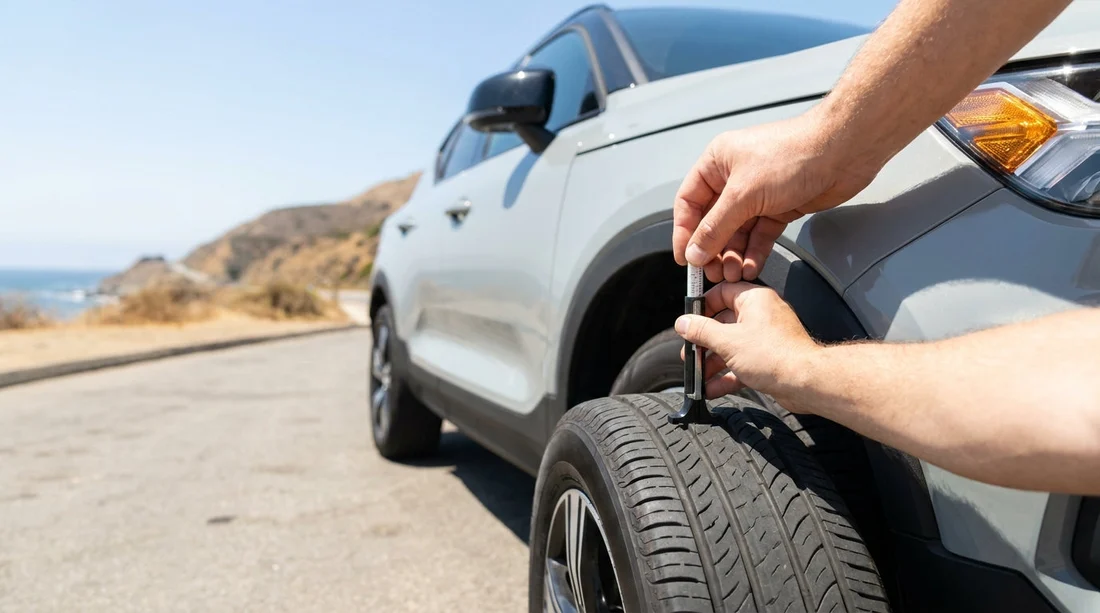
Tread depth is the simplest indicator of how well a tyre can move water away and keep rubber in contact with the road. In the US, tyres are considered legally worn out at 2/32 inch, but “legal” is not the same as “comfortable or safe” for a road trip.
At pick-up, look at the main grooves. If they appear shallow or close to the wear bars, ask for a different vehicle. If you have a tread gauge, anything around 4/32 inch or less can feel risky in heavy rain, particularly on freeways where standing water collects.
Also check all four tyres, not just one. It only takes one tyre with low tread to reduce wet braking and increase the chance of hydroplaning. If you are collecting from a busy hub such as San Francisco SFO, vehicles can turn around quickly, so a rapid visual inspection is worth doing before you pull into traffic.
Look for uneven wear that signals alignment or suspension issues
Even if the tread depth looks acceptable, the wear pattern matters. Uneven wear can indicate misalignment, underinflation, overinflation, or worn suspension components, any of which can make the car feel nervous at speed.
Inner or outer edge wear: One shoulder is much more worn than the rest. This often points to alignment issues and can make the car pull to one side.
Centre wear: The middle of the tread is more worn than the edges, a classic sign of overinflation. It can reduce the tyre’s contact patch and grip.
Both edges worn: The shoulders wear faster than the centre, typically underinflation. That increases heat build-up, which matters on long, hot California drives.
Cupping or scalloping: Dips and high spots around the tread. This can feel like a rumble or vibration on the freeway and may worsen quickly.
Uneven wear is a practical reason to switch cars, even if the tread depth looks fine. It affects stability in crosswinds and during braking, and it can be especially tiring on long routes in an SUV or people carrier. If you are planning a family trip and considering a larger vehicle, it is worth being fussy about tyre condition on options like minivan rental at San Francisco SFO.
Inspect sidewalls closely, because damage here is high risk
Sidewalls do not have much rubber compared with the tread, and damage here is more serious than a superficial scuff. Walk around the car and look at the inner and outer sidewalls on each tyre.
Bulges or blisters: A bulge can mean internal cord damage, often from a pothole impact. This is a non-negotiable reason to request another vehicle, because blowout risk increases at motorway speeds.
Cuts and gashes: Any cut that looks deep enough to expose fabric or looks freshly torn should be treated as unsafe.
Cracks or dry rot: Fine cracking can happen with age and sun exposure. California heat accelerates rubber ageing, so visible cracking suggests the tyre may not be in its best condition.
Kerb rash: Some scraping is common in city driving, but watch for a chunk missing from the sidewall or an abrasion that reaches deep into the rubber.
If you are collecting in a coastal city where kerbing is common, such as when arranging car hire in San Diego, spend an extra moment checking the tyre that sits closest to the kerb when parked.
Confirm all tyres match in size, type and similar tread
Matching tyres are about predictable handling. A rental car should ideally have four tyres of the same brand and model, but at minimum they must match in size and type, with similar tread depth across the axle pairs.
Open the driver’s door and look for the tyre information sticker, usually on the door jamb. It lists the correct tyre size and the recommended pressures. Then compare the sticker to the markings on each tyre sidewall. If one tyre is a different size, that can upset traction control systems and handling balance.
Next, look for mixed tyre types on the same axle, such as an all-season on one side and a summer tyre on the other. Even if sizes match, different compounds and tread designs can behave very differently in rain and during emergency braking. If you see a mix, ask for a replacement vehicle or for the mismatched tyre to be corrected.
This matters even more if you are driving a larger vehicle like a passenger van, where tyre load ratings and stability are critical. If your plans involve group travel, check tyre consistency carefully when collecting a vehicle through van rental at San Francisco SFO.
Check the tyre type suits California conditions and your route
Most rental fleets in California run on all-season tyres, which are a sensible compromise for typical city and highway use. Still, it helps to know what you are looking at, because tyre type affects grip in heat, rain and cold.
All-season tyres: Usually marked M+S on the sidewall. They are designed for a range of temperatures and wet conditions.
Summer tyres: Optimised for warm, dry grip and sharp steering feel. They can be fine in Southern California heat, but they generally perform worse in cold weather and can be less confidence-inspiring in heavy rain compared with a good all-season.
All-terrain tyres: Often fitted to SUVs. They have chunkier tread for gravel and light off-road use, but can be noisier on freeways and may have longer braking distances on wet tarmac than road-focused tyres.
If your itinerary includes higher elevations in winter or early spring, also check whether the tyre has the 3PMSF symbol (a mountain with a snowflake). For travellers choosing an SUV for flexibility, paying attention to tyre type is part of responsible planning, especially when arranging SUV hire from Santa Ana SNA.
Quick pressure sanity check and warning lights
Correct tyre pressure supports even wear, stable handling and better braking. First, look for a tyre that appears visibly low compared with the others. Second, when you start the car, check whether the TPMS warning light is illuminated. If it is on, do not assume it will go away. Low pressure could be a slow puncture, and it will worsen as you drive.
If you are starting a long drive through hot inland areas, remember that pressures rise as tyres warm up. You still want tyres that begin the trip at the correct cold pressure according to the door sticker.
Why these checks matter before you leave the rental lot
Tyres are your braking system’s partner. Worn tread increases stopping distances, especially on wet surfaces, and can trigger hydroplaning at freeway speeds. Sidewall damage can fail suddenly. Mismatched tyres can confuse stability control and change how the vehicle responds in an emergency lane change.
A final practical tip is to take a few clear photos of each tyre at pick-up, showing tread and sidewalls. This gives you a time-stamped record of the condition you accepted and helps avoid confusion later.
FAQ
How much tread should I look for on a California rental car? Aim for clearly visible grooves well above the wear bars on all four tyres. If tread looks close to the bars or noticeably shallow, request a different vehicle.
What sidewall damage is serious enough to change cars? Any bulge, blister, deep cut, exposed cord, or heavy cracking is serious. These indicate structural risk and are best handled by switching vehicles before leaving.
Do all four tyres need to match on a car hire vehicle? They should match in size and type, with similar tread across each axle. Mixed types or sizes can affect stability control, wet grip and braking consistency.
Are all-season tyres good enough for most California driving? Yes. All-season tyres are usually ideal for typical California city and highway trips, including occasional rain. For mountain winter conditions, check for appropriate markings and local requirements.
What if the tyre pressure warning light is on at pick-up? Tell the desk or lot staff before you drive off. It could be low pressure from temperature change, but it could also indicate a puncture that needs immediate attention.




























































































