


Quick Summary:
- Check tyre tread, sidewalls and pressures, then photograph any damage.
- Test all exterior lights, including hazards, brake lights and reverse light.
- Confirm wipers sweep cleanly, washer sprays properly, and blades are intact.
- Record every issue on the agreement, and keep time stamped photos.
When you collect a car hire in Pennsylvania, a two minute walkaround can prevent long arguments later. Tyres, lights and wipers are easy to overlook because they feel “standard”, but they are also the items most likely to affect safety, legality and whether the vehicle is usable in real weather. The goal is simple, confirm these basics work as they should, then ensure any existing problems are written on the rental agreement before you leave the lot.
This checklist is designed for a quick car park inspection outside the branch, including airport pick ups. If you are arriving at Philadelphia International, the pages for car rental at Philadelphia Airport (PHL) and car rental in Philadelphia are useful references when comparing options, but the inspection steps below apply anywhere in Pennsylvania.
Before you start, set yourself up to document issues
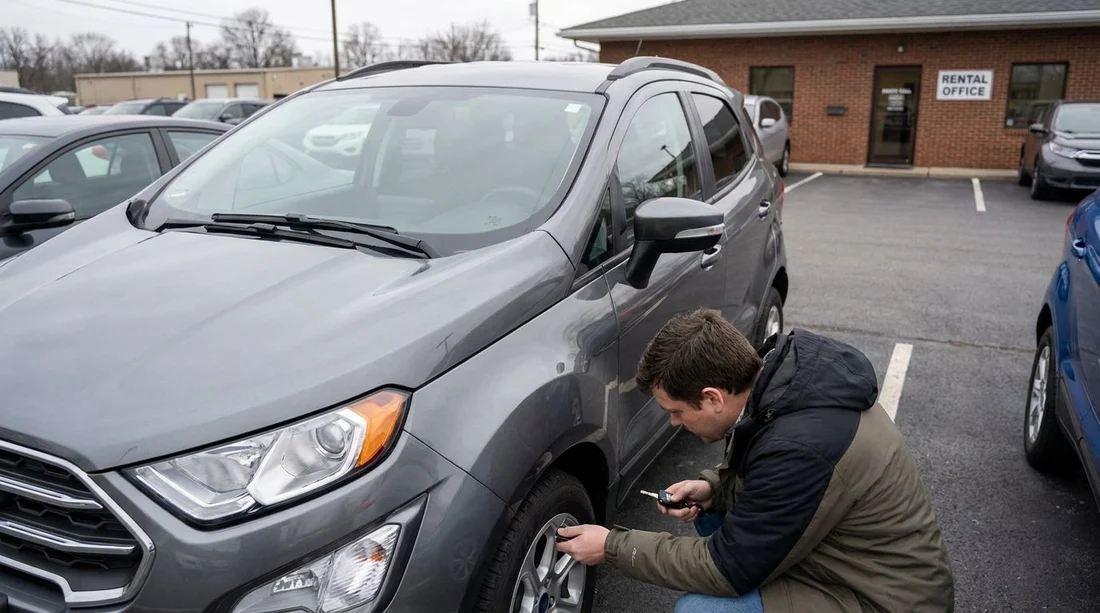
Do this before touching the car. Open your phone camera, turn on flash if it is gloomy, and take a slow video around the entire vehicle. Then take close ups of anything questionable. Time stamped photos help if a dispute appears later.
Next, locate the rental agreement and inspect sheet on your phone or paper. Your aim is to have defects added to the agreement, not just verbally acknowledged. If staff are busy, you can still note issues immediately and ask for confirmation before driving off.
Tyres: tread, damage, matching and pressure
Tyres are your only contact with the road, and Pennsylvania conditions can change quickly with rain, leaf litter in autumn, or snow and slush in winter. Spend most of your inspection time here.
1) Tread depth and wear pattern
Check each tyre’s tread. If the tread looks shallow, smooth at the shoulders, or uneven across the width, it can reduce grip and increase stopping distances. Uneven wear can also hint at alignment issues that make the car pull left or right. You do not need a gauge to spot obvious problems, but if you have one, use it.
2) Sidewalls and rims
Look for cuts, bulges, cracking, or scuffing on sidewalls, especially on the outer edge where kerb strikes happen. Bulges are a red flag because they can indicate internal damage. Also check the rims for heavy kerb rash, bends, or missing wheel trims. Photograph anything you see and ensure it is recorded.
3) Matching tyres and correct type
Glance at the tyre brand and size markings. Ideally, tyres on the same axle should match. Mismatched tyres can affect handling and braking balance, particularly on wet roads. In colder months, check whether the vehicle is fitted with all season tyres and whether the tread looks appropriate for winter driving. If you are unsure, ask staff to confirm what is fitted.
4) Pressure and warning lights
If the tyre looks visibly low, do not ignore it. Start the car and check the dashboard for a tyre pressure warning light. Even if no warning is showing, consider using the in car tyre pressure readout if available. Incorrect pressure can affect braking, fuel use and tyre wear.
Lights: confirm you can see, and be seen
Light checks are quick, but they often uncover small issues that are annoying at night and risky in poor weather. In Pennsylvania you can easily end up driving in heavy rain or fog, or leaving a restaurant after dark in unfamiliar areas.
1) Headlights, high beams and alignment
Switch on dipped headlights, then high beams. Step out and confirm both sides work. If one looks noticeably dimmer or aimed very high or low, flag it. Misaligned headlights reduce visibility and can dazzle other drivers.
2) Indicators and hazard lights
Check left and right indicators front and rear. Then turn on hazards and walk around the car to confirm all corners flash. A fast blinking indicator can suggest a bulb issue on some vehicles.
3) Brake lights and reverse light
Brake lights are easiest with help, but you can manage alone. Back the car near a wall or window, press the brake and look for the reflection, or use your phone camera on video facing the rear. Put the car in reverse (with the parking brake engaged and your foot firmly on the brake) to confirm the reverse light activates.
4) Tail lights, number plate light and reflectors
Turn on the lights and check rear tail lamps glow on both sides. Also look for the number plate light at the back, it is small but required. Confirm reflectors are present and not cracked.
If you are hiring a larger vehicle, such as a people carrier or cargo option, light placement can be higher and more prone to damage. It is worth comparing vehicle classes via van rental in Philadelphia, then doing the same lighting checks carefully at each corner.
Wipers and washers: clear glass is a safety feature
Wipers are easy to test and critical in Pennsylvania rain, road spray, and winter slush. Poor wipers can turn a night drive into a stressful experience very quickly.
1) Blade condition
Lift each wiper arm gently and inspect the rubber edge. Look for splits, missing chunks, hardened rubber, or a blade that is coming loose. If blades look worn, request a replacement before departure.
2) Wipe quality on front and rear
Run the wipers on intermittent, normal and fast speeds. They should sweep smoothly without chattering, skipping or leaving heavy streaks. If the car has a rear wiper, test it too. Rear visibility is important when parking in tight city spaces.
3) Washer spray and aim
Activate the washer jets and confirm fluid sprays strongly onto the windscreen. Weak spray can mean an empty reservoir or blocked jets. Ensure the spray hits the glass, not the roof or bonnet. Ask for the washer fluid topped up if it is low.
4) Demisters and heated elements
While not a wiper part, demisting works with your wipers to keep the windscreen clear. Turn on front demist and check airflow increases. If the car has a heated rear window, switch it on and look for the indicator light. In wet or cold Pennsylvania weather, this can be essential for safe driving.
How to note issues on the agreement without slowing everything down
The most important step is turning your observations into a written record. Use this simple approach.
Be specific: “Front left tyre sidewall scuff” is better than “tyre mark”. “Right rear indicator lens cracked” is better than “light damage”. Specific notes reduce ambiguity.
Match photos to notes: Take a close up photo, then one wider shot showing the location on the car. If the branch uses a digital check out, ask how to attach images or where to upload them.
Check the final version: Before you drive away, confirm the marked damage appears on the agreement you will keep. If the system updates after you leave, ask for an emailed copy.
Do not accept unsafe items: If tyres look dangerous, a light is out, or wipers smear badly, request another vehicle. It is easier to swap before you leave than to return later.
When comparing suppliers for car hire, you may notice different procedures at the counter. Whether you collect from Thrifty Car Rental in Philadelphia or National Car Rental in Philadelphia, the same principle applies, inspect, document, and make sure the agreement reflects reality.
FAQ
How long should the tyre, lights and wipers check take?
Plan for five to eight minutes. That includes a quick video walkaround, testing all lights, and running washers and wipers once.
What tyre issues should make me ask for a different car immediately?
Visible bulges, deep cuts, cords showing, a tyre that looks significantly underinflated, or a persistent tyre pressure warning light are good reasons to request another vehicle.
Is it OK to leave if one light bulb is out?
It is better not to. A non working brake light, headlight, indicator, or number plate light can be a safety and legality issue, and it should be fixed or documented before departure.
What counts as acceptable wiper performance?
Wipers should sweep smoothly without loud chatter, and they should not leave heavy streaks in the driver’s line of sight. Washers should spray firmly and clear road grime quickly.
How do I make sure pre existing damage is officially recorded?
Ask staff to add it to the agreement, then check your copy shows the notes. Keep time stamped photos that clearly match each written item.




























































































