


Quick Summary:
- Photograph every panel, wheel, and the roof, then report damage immediately.
- Confirm fuel type and level, and understand the return policy.
- Check tyre condition and pressures, plus spare, jack, and locking nut.
- Test lights, wipers, and key features, then pair your phone safely.
Picking up a car hire in Texas can be quick, but the quickest way to create a problem later is to drive off without checking the vehicle first. Texas conditions amplify small issues, long highway runs between cities, sudden rainstorms, and intense heat that can expose weak tyres or batteries. A five to ten minute inspection on the lot helps you avoid being blamed for pre existing damage, reduces the chance of a breakdown, and ensures the car fits what you actually need for the trip.
If you are collecting at a major hub such as Houston IAH car rental or Austin AUS car hire, the pick up area can be busy and staff may not walk around the vehicle with you. That makes your own checklist even more important. The goal is not to be picky, it is to be precise, document everything, and sort it before the wheels leave the lot.
1) Paperwork and basics: match the car to the contract
Before looking at paintwork, confirm you have been given the correct vehicle. Check the licence plate, make, model, and colour against the agreement, and verify the odometer reading if it is listed. If you have added a second driver, verify they are on the agreement now, not “later”, as Texas traffic stops and insurance claims are where paperwork gaps hurt.
Also check the fuel policy on the agreement, especially whether you must return full to full, same to same, or if a prepaid option has been applied. Ask for clarification while you are still at the booth, because once you leave, disputing a fuel charge becomes harder.
2) Exterior damage: document now or argue later
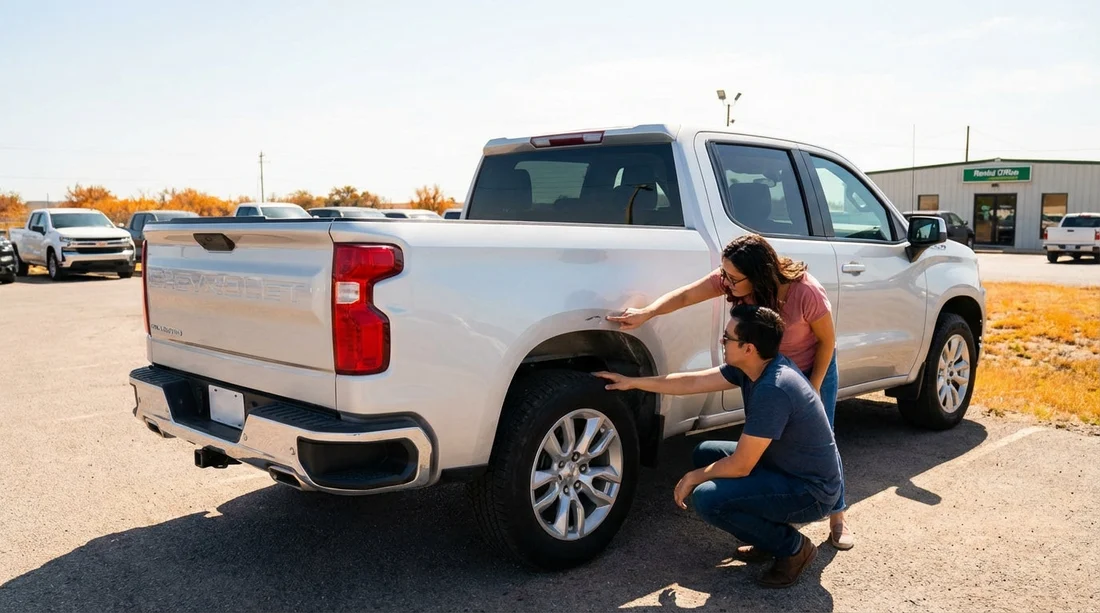
This is the single most important step. Walk around the car slowly, ideally with good light. In Texas, bright sun can hide dents and scrapes, so change angles, crouch slightly, and look along the body lines. Focus on areas that are commonly hit in car parks, bumper corners, wheel arches, door edges, and the lower front lip.
Take clear photos and a short video, and include context shots that show the licence plate and the whole side of the car. Photograph:
Paint and panels: scratches, scuffs, dents, cracks, and misaligned panels. Check the roof too, especially if the car may have been loaded with luggage or driven through low clearances.
Glass and lights: windscreen chips and cracks can spread quickly with temperature changes. Texas heat and cold air conditioning can worsen existing chips.
Mirrors and trim: loose mirror housings, missing caps, and damaged plastic trim should be noted.
If you find anything, do not just photograph it. Get it added to the damage report, or have staff confirm via the app or printed form. This matters because most post rental disputes revolve around “existing” damage that was never recorded. It is also why you should do the check before leaving the bay, not at the first petrol station.
3) Wheels and tyres: safety first, fees second
Texas roads vary from smooth interstates to rougher surfaces near construction zones. Tyres are your most important safety item, and tyre claims can become expensive if a blowout damages bodywork.
Check all four tyres and the spare if accessible:
Tread and sidewalls: look for bald patches, cuts, bulges, or cords showing. Sidewall bubbles suggest an impact and can fail at highway speeds.
Tyre pressures: if the car provides a tyre pressure display, confirm it is within a normal range and no warning lights show. If not, a quick visual check is still useful, one tyre looking lower than the rest is a red flag.
Wheels and hubcaps: curb rash and missing hubcaps should be documented as damage. Alloy wheel scrapes are common and often charged if not recorded.
Spare, jack, and tools: if the boot has a spare wheel well, confirm the spare and jack are present. Some cars have a tyre inflator kit instead of a spare. Know what you have so you are not surprised on a rural stretch.
If you are choosing a larger vehicle for family or luggage, it can help to understand what is typical for your route. For example, an SUV rental at Fort Worth DFW may suit longer drives and extra cargo, but you still want to check tyres because heavier vehicles place more load on them in heat.
4) Fuel type and fuel level: avoid the wrong pump
Most Texas rental cars run on regular unleaded petrol, but confirm the fuel type shown on the fuel door, cap label, or the agreement. If you are used to diesel availability in the UK, do not assume. Putting the wrong fuel in can end your trip immediately and can create major costs.
Then confirm the fuel gauge reading matches what is stated on the paperwork. If the agreement says full but the gauge shows three quarters, take a photo of the dashboard with the time and odometer visible, and request a correction. For “same to same” policies, you want the starting level recorded correctly so you can return it accurately.
5) Lights, indicators, wipers, and horn: quick tests that matter
Do a short functional check while still parked. Texas weather can switch quickly, and you may be driving into heavy rain or through dust and debris.
Headlights and high beams: ensure both work. If you will drive at night outside major cities, good headlight performance matters.
Brake lights and indicators: use reflections on a wall, or ask a passenger to confirm. Indicators that flash quickly can indicate a bulb issue.
Wipers and washers: run them briefly, and test washer fluid. Streaking wipers can be dangerous in a downpour.
Horn: a short tap confirms it works without making a scene.
Also look for warning lights on the dashboard when the engine is on. A check engine light, ABS light, or tyre pressure warning is not something to ignore. Ask for another car, or at minimum have the issue recorded before you leave.
6) Key features you must understand before joining Texas traffic
Modern vehicles hide critical controls in menus. Before you roll into a busy exit lane, learn the essentials. This is especially important if you have picked up at a high volume location such as Dallas DFW car hire, where you may be leaving straight into fast moving traffic.
Check and practise these features while stationary:
Handbrake or parking brake: is it a lever, pedal, or electronic switch. Confirm you can engage and release it confidently.
Gear selector: some automatics have push buttons or dials. Confirm how to select drive, reverse, and park, and how to use manual mode if present.
Mirrors and seat adjustment: set seating position, steering wheel reach, and mirrors before moving, including blind spot mirror settings if available.
Hazard lights: know the button location in case you need to stop on a shoulder.
Climate control and demist: Texas heat can fog windows when you blast cold air. Find front and rear demist controls.
Infotainment basics: pair your phone only when parked, confirm you can access navigation, and adjust volume. If using Apple CarPlay or Android Auto, test the connection now. Avoid holding your phone while driving, Texas law restricts handheld use in many situations, and it is unsafe anywhere.
Driver assistance: check if lane keep assist, adaptive cruise control, and collision warnings are enabled, and learn how to adjust or disable them. On unfamiliar roads, unexpected steering inputs can be startling.
7) Interior condition: cleanliness, damage, and missing items
Interior issues can lead to cleaning fees or disputes. Do a quick scan:
Seats and trim: note tears, stains, burn marks, and heavy wear. Photograph anything significant.
Odours: strong smoke smells should be reported immediately. It is harder to prove later that you did not cause it.
Floor mats: check they are present and secured, loose mats can interfere with pedals.
USB cables, charging ports, and 12V socket: confirm at least one power option works if you rely on navigation.
Boot space and parcel shelf: ensure it meets your needs, and that the boot opens and closes properly.
If you have selected a supplier specific deal, such as Dollar car rental at Texas IAH, the vehicle may come from a mixed fleet. That makes it worth checking for missing accessories, like a parcel shelf, cargo cover, or second key, before you depart.
8) Start up check and a short on site roll: catch problems early
With the engine running, listen and look. The car should idle smoothly without loud rattles. Check that:
Fuel gauge and range: matches expectations.
Air conditioning: blows cold, which is not optional for much of Texas.
Reverse camera and sensors: activate properly.
Steering and brakes: if permitted, roll slowly within the lot to ensure the brakes do not grind and the steering does not pull immediately.
If anything feels off, go straight back to the desk or the lot attendant. Fixing it now is faster than swapping cars later after you have loaded luggage and driven miles away.
9) Why this checklist matters specifically in Texas
Texas trips often involve longer distances than visitors expect, even between major cities. A small tyre issue in town can become a serious problem at 70 mph on the interstate. Heat can trigger warning lights, weak batteries, and tyre pressure changes. Sudden storms can test wipers, lights, and tyre tread in minutes. Add busy airport exits and unfamiliar multilane highways, and you want every basic function confirmed before you join traffic.
A careful inspection also protects you financially. Damage documentation reduces the risk of being billed for marks you did not cause, and verifying fuel type and level helps you avoid common add on charges. In short, spending a few minutes at pickup makes your car hire in Texas safer, smoother, and easier to close out at return.
FAQ
Should I photograph the rental car even if staff say it is fine? Yes. Photos and a brief walkaround video provide time stamped evidence of existing scratches, wheel scuffs, or windscreen chips that might otherwise be disputed later.
What damage is most commonly missed before leaving the lot? Wheel curb rash, small bumper corner scuffs, door edge chips, and roof marks are frequently overlooked. These are also areas often charged if not documented.
How do I confirm the correct fuel type for my Texas rental? Check the label on the fuel door or inside the cap area, then compare with the agreement. If anything conflicts, ask staff to confirm before you refuel.
What warning lights mean I should not drive away? Persistent check engine, ABS, brake system, or tyre pressure warnings should be questioned immediately. Ask for the issue to be recorded or request another vehicle if unsure.
Is it worth testing phone pairing and navigation on the lot? Yes. Setting up Bluetooth, CarPlay, or Android Auto while parked helps you avoid distracted driving, and confirms the car has working USB ports and audio controls.




























































































